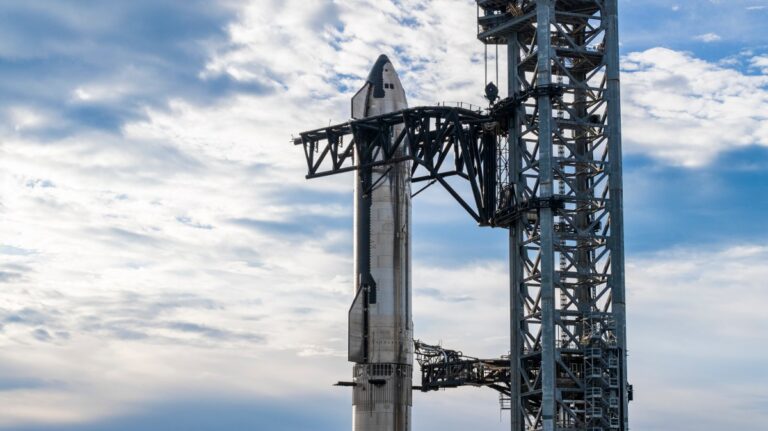
For creators and artists, the promise of orbital data centres is a tantalising shift in how we might one day generate and distribute audio, video, and code from space. Elon Musk has dismissed the engineering hurdles as trivial, suggesting that the technology required to run high-end compute in orbit is already within SpaceX’s grasp thanks to its Starlink V3 satellites.
Musk argues that the leap from ground-based clusters to space-based infrastructure is not a magical leap, but a logical extension of existing capabilities. He has pitched the idea as a near-trivial problem ahead of the company’s upcoming initial public offering.
The hardware pitch
In a recent video discussion, Musk stated: “A lot of this is technology we’ve already made for the Starlink V3 satellites. We don’t think this is a super hard problem compared to the things we already do.”
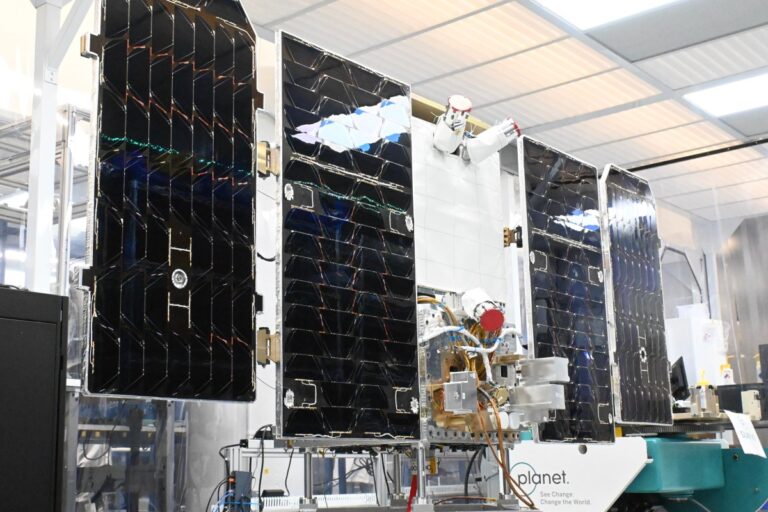
The initial target is specific: the first AI satellite is designed to deliver 150 kilowatts of peak power and 120 kilowatts of sustained compute. This output is roughly equivalent to a single Nvidia GB300 rack, which typically draws around 140 kilowatts. The plan relies on radiating heat directly into the vacuum of space and generating power via solar panels. Manufacturing is expected to begin at the facility in Bastrop, Texas, with meaningful production volumes targeted for the end of 2027.
Watch @ElonMusk provide a technical update on SpaceX’s capability to manufacture, launch, and operate AI satellites at scale → https://t.co/PSCyWrNsOg pic.twitter.com/vhtr46uax7
– SpaceX (@SpaceX) June 8, 2026
The gap between inference and training
While Musk focuses on the satellite’s power output, there is a critical distinction between running an inference workload and training a foundation model. A GB300 system is not merely a standalone server; it is a tightly coupled supercomputer where Blackwell GPUs are connected via NVLink to share terabytes per second of bandwidth into a unified memory space.
Replicating this level of chip-to-chip coupling in orbit remains a significant engineering challenge. Google’s research paper, “Suncatcher,” highlights the vast disparity between current ground capabilities and orbital potential. To match the compute power of a single 1-gigawatt data centre, Google estimates one would need approximately 10,000 satellites flying in formation just a few hundred metres apart. These would require free-space optics to approach terrestrial bandwidth levels.
Furthermore, the environment is hostile to the delicate electronics required for training. Cosmic radiation causes bit flips that can corrupt complex training runs. Additionally, for this model to be economically viable, launch costs would need to plummet to roughly $200 per kilogram, according to Google’s analysis.
However, SpaceX does hold an advantage. Through Starlink, the company already possesses the expertise to mass-produce satellites, deploy solar panels, and manage radiators. They have also demonstrated the ability to use laser crosslinks for data transfer between nodes in orbit. Running a single satellite that executes GPU workloads and passes results along via laser link is not science fiction; for inference tasks with moderate latency and bandwidth requirements, it could become a reality sooner than expected.
The true bottleneck remains the infrastructure that powers today’s massive AI clusters. Training large foundation models currently depends on tens of thousands of tightly coupled GPUs with coherent memory. That level of density and integration is a different beast entirely from what can be achieved in space.
Competitor Jeff Bezos offers a sobering counterpoint, expecting that orbital data centres will not be cheaper than ground-based facilities for up to 20 years. This timeline casts a more realistic light on Musk’s ambitious pitch, especially given SpaceX’s projected $1.75 trillion valuation.
Key takeaways
- SpaceX aims to launch AI satellites by the end of 2027, targeting 120 kilowatts of sustained compute per unit, comparable to an Nvidia GB300 rack.
- While orbital inference is feasible using existing Starlink tech, training large models remains out of reach due to the inability to replicate tight chip-to-chip coupling in space.
- Industry rivals, including Jeff Bezos, predict orbital compute will remain cost-prohibitive compared to ground facilities for at least two decades.
- Environmental factors like cosmic radiation and the need for massive satellite swarms to mimic ground bandwidth present significant technical hurdles.