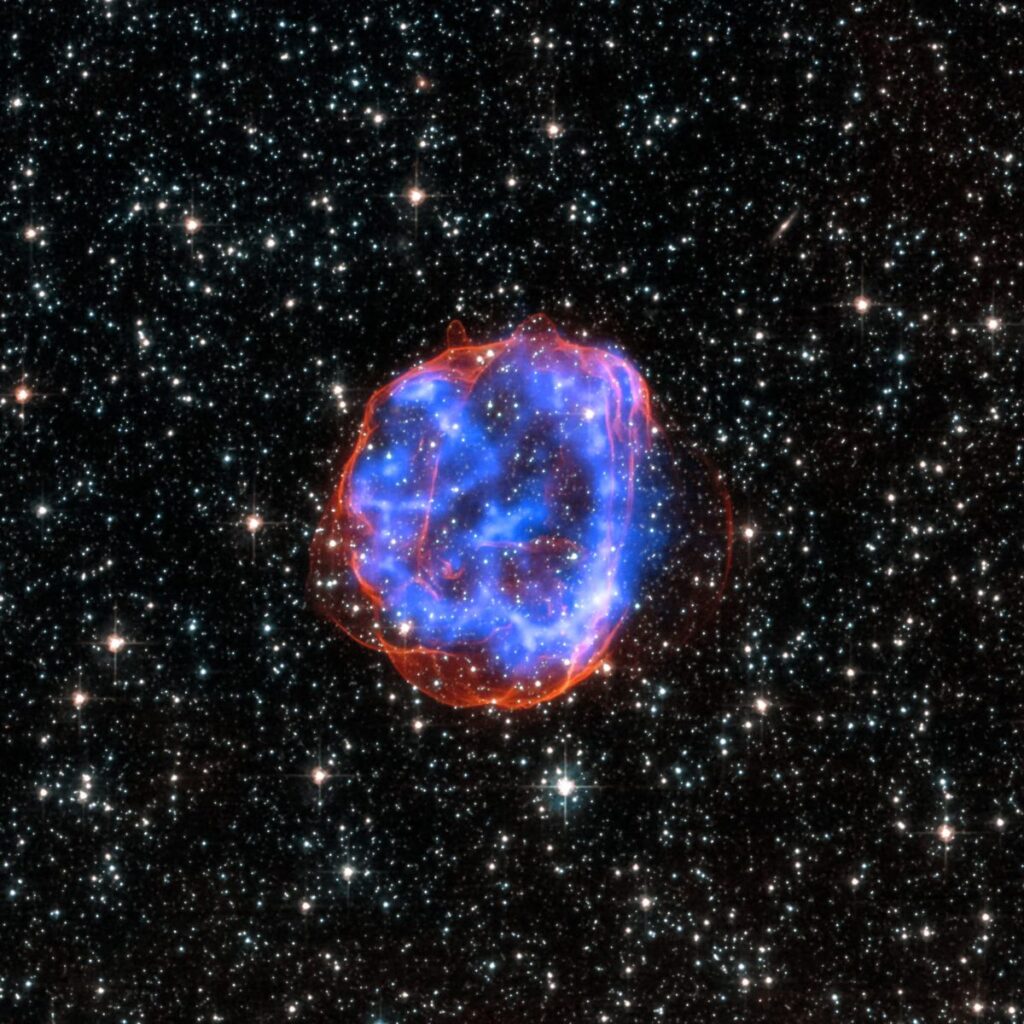
For the makers and artists, the news is that the tools we rely on to simulate the cosmos are being challenged by new physics. We have long assumed black holes are the ultimate endpoints of stellar collapse, a place where gravity wins and information vanishes. However, a fresh proposal suggests this is merely a misunderstanding of the underlying geometry. If black holes are not the singular, crushing pits we imagine, they are something far stranger, potentially offering new theoretical frameworks for how matter and energy behave under extreme pressure.
The wave that literally moved a nation
A new study published in Science reveals a seismic phenomenon that has never before been observed: a wave generated by a disastrous earthquake journeyed to the center of the Earth and back, revealing a phenomenon that has never been seen before. Specifically, the devastating Tohoku-Oki earthquake, which struck east of Japan in 2011, generated a seismic “shear” wave so powerful that it bounced off Earth’s core and hit the surface again 13 minutes later, permanently shifting all of mainland Japan about a quarter-inch east of its original position.
While it is common for seismic waves to ricochet off Earth’s core, scientists have never detected a wave smashing back into the planet’s crust before. But when global navigation satellite system (GNSS) measurements kept indicating that Japan seemed to have shifted slightly east after the quake, scientists realized with “surprise” that a core-reflected wave was the likely cause of the “slip event,” reports the study.
“We report an extraordinary observation of ground motion in Japan after the…Tohoku-Oki earthquake attributed to a multiplate-interface slip event triggered by a shear wave that traveled to the Earth’s core and back,” said researchers led by Sunyoung Park of the University of Chicago.
“This slip event, spanning two plate boundaries, has the broadest rupture area of any single event yet documented,” the team continued. “Its overall length is similar to that of mainland Japan (~3000 km), exceeding the mainshock rupture length by six to seven times and more than doubling that of the 2004 great Sumatra earthquake.”
Even though the seismic uppercut was far less intense than the original quake, the near-simultaneous arrival of the wave across such a huge area caused a slip between continental plate boundaries. As a result, mainland Japan moved about six millimeters toward the Pacific Ocean, which doesn’t sound like a lot, but scientists have never observed a single seismic event moving a large landmass in this way.
The discovery not only reveals a mind-boggling new phenomenon, it serves as a heads-up in preparing for future colossal quakes and assessing their aftermath. The core-reflected wave “is a previously unrecognized source of seismic hazard, which can potentially (re)activate the mainshock area and the broader surrounding megathrust interfaces,” the team concluded.
What else can you make with collapsing matter?
Just when you thought black holes couldn’t get any trippier, along comes a “gravastar.” These objects are hypothetical alternatives to black holes that do not contain a singularity or an event horizon, beyond which normal physics breaks down. Instead, physicists theorize that a massive star could collapse into a different type of compact object, dominated by dark energy, which could trigger the birth of a mini-universe inside of it, according to a new study.
“Because a gravastar possesses neither a singularity nor an event horizon, and since its compactness can be brought arbitrarily close to that of a black hole, it has long been argued that it would be difficult to distinguish it from a black hole,” said authors Daniel Jampolski and Luciano Rezzolla of the Institute for Theoretical Physics in Germany.
A comparison of black holes and gravastars. Image: Finq
“We here present, for the first time, a model for the creation of a static gravastar following a gravitational collapse of a spherical cloud of matter,” the team added.
The study models a pathway to the formation of a gravastar by imagining a uniform dust cloud collapsing toward a point at the center called a “de Sitter region,” which begins to expand. The inward collapse of the cloud and the outward repulsion of the de Sitter region, which is essentially an expanding mini-universe, results in an equilibrium state that would be virtually indistinguishable from a black hole to outside observers like us.
Finally, a hypothetical object for people who think black holes are not weird enough. Bonus points for the study’s brainy asides, such as this one: “Obviously, if a quantum-gravitational description were possible, the zero-size de Sitter bubble would be naturally replaced by a Planck-size bubble.”
Like, duh!
Stardust to stardust, radioactive ashes to radioactive ashes
Speaking of the weird corpses left behind by massive stars, Earth is constantly getting sprinkled with their radioactive remains. That’s the finding of a study about a deep sea rock dredged up from nearly 16,000 feet under the Pacific Ocean that scientists found is bedazzled with the ashes of dead stars.
The rock is a chunk of ferromanganese crust, which forms on the ocean floor from minerals that precipitate from seawater. The rocks also capture rare heavy elements—such isotopes of plutonium, iron, and curium—that can only be sourced from cataclysmic cosmic events, such as explosive supernovae, or collisions between existing stellar corpses called neutron stars.
Lead author Dominik Koll with a sample of the ferromanganese crust. Image: Helmholz Zentrum Dresden
Using this rare record, scientists detected radioactive isotopes that suggest Earth has been passing through the fallout of an ancient “kilonova” that occurred when two neutron stars merged more than 100 million years ago. These kilonova mergers, also known as “r-process events,” leave a distant isotopic signature that includes the radioactive isotope plutonium-244, which the team detected in the rock.
“Our measured interstellar signatures suggest the occurrence of an old and rare r-process event leading to a diffuse [plutonium-244] background inside and outside the Local Bubble,” which is the term for our region of the galaxy, said researchers led by Dominik Koll of Helmholtz-Zentrum Dresden-Rossendorf. “The trajectory of the Solar System through the Galaxy could impact the recorded r-process radionuclide abundance on Earth or the Moon.”
In other words, we are all just casually wafting through the smoke of stellar pyres in our orbit around the galactic center. Hope that adds a little cosmic spice to your day.
May you live to the ripe old age of one year
We’ll close, as all things should, with butterfly Methuselahs. To better understand the processes that drive aging and longevity, scientists looked to the Heliconius family of butterflies, known as heliconians, which are known to live substantially longer than its close relatives, though their lifespans hadn’t been previously examined in depth.
Heliconius butterflies. Image: Repeating Patterns of Mimicry. Meyer A, PLoS Biology, Vol. 4/10/2006, e341
The team was surprised to learn that these butterflies can live for nearly a year whereas their close relatives in their “tribe” live for mere weeks, revealing a “25-fold variation in recorded maximum lifespan across the tribe,” according to a new study.
“This range far exceeds previous estimates, and is among the largest ever recorded for such closely-related taxa (with comparable differences reported only for two groups of fish: rockfishes, and roughies,” said researchers led by Jessica Foley of the University of Bristol. Indeed, if humans exhibited this range of lifespan diversity, plenty of us would be living past 1,000 years old.
The team also discovered that Myscelia cyaniris, which is not a heliconian, is “the longest-lived butterfly species to date based on data from butterfly exhibitors with a maximum reported lifespan of 380 days,” confirming that many butterfly families have evolved extreme longevity.
Unlike their close relatives, heliconians feed on pollen, which suggests that this special diet is part of the secret to their senescent success. While this discovery sounds like grounds for a grift aimed at the anti-aging movement, let it be known that eating pollen only works as an elixir for butterflies. The pollen can’t make you live forever. Death comes for us all. Happy Summer Solstice!
Key takeaways
- A new study confirms a previously unseen seismic phenomenon where a core-reflected wave from the 2011 Tohoku earthquake caused a slip event that moved all of mainland Japan by approximately six millimeters.
- Physicists have proposed “gravastars” as a viable alternative to black holes, theorizing that collapsing matter could form a stable object containing a dark-energy-filled mini-universe rather than a singularity.
- Analysis of a Pacific Ocean crust sample suggests Earth passed through the radioactive debris of a neutron star merger over 100 million years ago, confirming our solar system is constantly drifting through stellar fallout.
- Research into Heliconius butterflies reveals a 25-fold variation in maximum lifespan within the tribe, with some species living nearly a year, potentially due to their pollen-based diet.
Stay ahead of AI. Get the most important stories delivered to your inbox — no spam, no noise.