Organisations are deploying AI agents rapidly, yet many struggle to achieve the expected return on investment because their data foundations are inadequate. Legacy systems, even those updated recently, cannot meet the new demands placed on enterprise infrastructure.
The shift from answering questions to taking actions requires AI agents to access data across the entire business. They need structured and unstructured information, alongside the right business context. To make real-time decisions, these agents also require frictionless access to operational systems storing supply chain, point-of-sale, and human resources data.
Survey findings
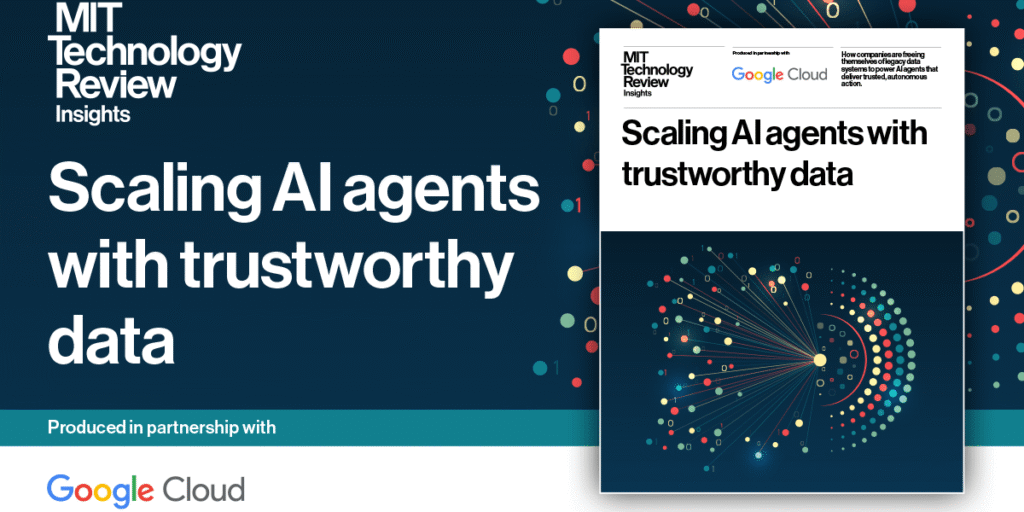
This report, based on a survey of 300 data and technology executives, explores how legacy systems are limiting the effectiveness of AI agents. It identifies a small group of organisations—the data leaders—who experience fewer data limitations and greater success with agentic AI.
Key findings from the survey include:
Few companies provide ample access to enterprise data. Across all surveyed organisations, AI only has access to an average of 45% of company data. That figure falls to 30% or less in organisations categorised as “data laggards”. A select group ensures access to over 70% of their data. These “data leaders” are having greater success with their agents than the rest.
Trust in agent decisions is a reflection of data readiness. Today, only around half of surveyed organisations trust that the decisions their AI agents make are accurate and relevant. By contrast, 100% of the data leaders trust their agents’ decisions, a strong indicator that reliable AI requires a reliable data foundation.
Data leaders find it easier to achieve agent scale and speed. Two-thirds of data laggards say legacy data systems limit AI agent scaling (66%) and prevent agents from making decisions at speed (68%). Having largely overcome legacy data constraints, the leaders have mostly cleared these roadblocks, with just 8% reporting either constraint.
The pressure is on to make data estates agent-ready. Within two years, 100% of respondents plan to be using agentic AI, with 69% expecting to use it widely. Without removing data system constraints, agentic AI will fail to deliver the desired speed and efficiencies it promises.
Data access and context are top priorities. The most important initiative to enable scaling among all respondents is improving access to structured and unstructured data for AI agents. Also high on the list is enhancing data and AI governance with business context. Data leaders are also focusing heavily on the automation of data management.
What it means
For the teams building and running these tools, the work is moving from training models to fixing pipelines. The bottleneck is no longer the intelligence of the agent but the quality of the information it consumes. Leaders are automating data management to ensure agents have the context needed to act without constant human oversight.