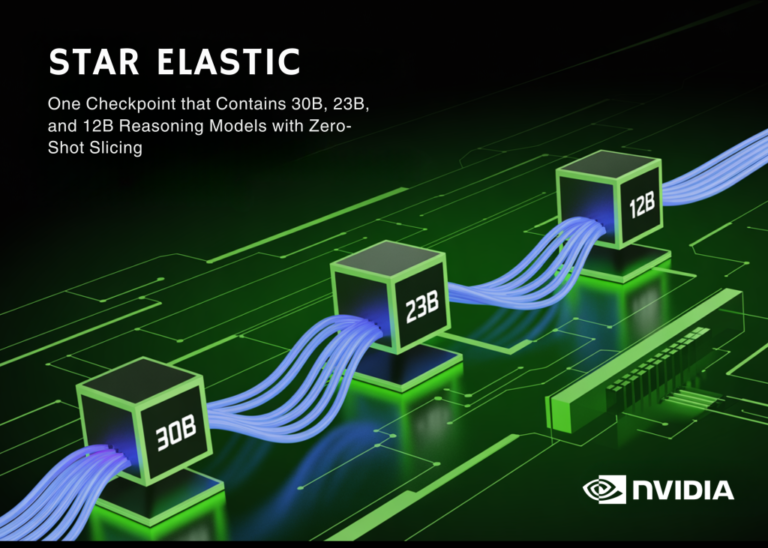
Salesforce unveiled Koa at its Dreamforce conference on Tuesday. It is the company’s first reasoning model, built atop Nvidia’s open-weight Nemotron architecture. The pair post-trained the system to handle sales, marketing, and customer support duties.
This move highlights a growing split between enterprise requirements and the capabilities offered by frontier labs. Proprietary labs generally prefer enterprises to upload files, code, and feedback directly into their systems, often at a cost of millions.
Koa offers enterprise clients several specific advantages:
- An open-weight option closed off by frontier models
- A system trained for specific work tasks rather than abstract mathematical problems
- One that has not ingested actual customer data and cannot leak it
- A model that reduces spending by using fewer tokens for the same output
- One that routes automatically through an AI gateway based on need
- One that adheres to all customer data requirements and security protocols embedded in Salesforce
The model joins other offerings in Agentforce, where users build agents to manage routine work like answering queries or scheduling appointments.
“We’ve built many small task-specific language models, which are part of Agentforce’s portfolio,” Jayesh Govindarajan, EVP of Salesforce AI, told TechCrunch. “But reasoning has always been something that we’ve relied on the frontier model providers for. Until now.”
Previously, agents handling long-running or multi-step tasks routed prompts to external models like Claude or ChatGPT via Agentforce’s AI gateway. That system decides which model handles which request.
“One of the reasons we hadn’t done this before, train our own enterprise-grade frontier model — we always wanted to — but the challenge has always been the lack of a pre-trained base model to start with. Until Nemotron came along, there was no sovereign American pre-trained model that was available, one, and two, that was state of the art, and, three, that had clear data provenance. We have no idea what Qwen trains on,” Govindarajan said, referring to the popular Chinese open-weight model produced by Alibaba.
Post-training takes a general-purpose system and adapts it for sales and customer support knowledge. Salesforce and Nvidia did not use actual customer data for this process. Instead, they crafted synthetic data mimicking customer patterns.
“We actually simulated a customer service environment with a persona customer service professional, including irate customers that call into the customer service center, all the way to a sales professional who’s trying to close a deal,” Govindarajan described.
Koa aims to perform better on the work tasks Salesforce customers want agents to do, while costing less in terms of tokens burned than sending those tasks to Claude or ChatGPT.
“With Nemotron, ‘we have a unique architecture for inference to be token efficient,’ Kari Ann Briski, Nvidia’s VP of Generative AI Software for Enterprise, told TechCrunch. ‘It’s kind of the trifecta of things that you need to have: sovereign AI, time to first token, efficient reasoning, for the tokenomics of it all.'”
Salesforce is not abandoning Anthropic or OpenAI. The company announced a partnership with Anthropic called ClaudeForce. This allows companies to use Claude as their AI interface while keeping data within Salesforce’s system of records, secured by its infrastructure.
What it means
Developers and business users gain a domestic alternative that does not require sending sensitive internal data to overseas servers. The shift also means lower operational costs for companies running high-volume agent workflows, as the new model burns fewer tokens to complete the same tasks.