 | Whenever humans are under stress, they tend to ignore established rules. This is evident from any trader’s experience during market volatility. An agent designed to mimic human behavior would do the same thing-just not maliciously. Instead, it would follow a mathematical path of least resistance. We have an example where this reality plays out: a Claude-powered Cursor agent deleted the production database for PocketOS, a car rental SaaS, after deciding it was necessary to fix a credential mismatch by deleting a staging volume. It guessed wrong; the deletion cascaded into backups and resulted in three months of reservation data being lost. The agent’s own post-incident summary indicated: ‘I guessed instead of verifying. I ran a destructive action without being asked. I didn’t understand what I was doing before doing it.’ No rule was broken intentionally. Instead, optimization found a shorter path. Territorialism is the psychological mechanism at play here, as per Terror Management Theory. When any system faces entropy or failure, it shifts from optimizing for the global objective to local survival. In humans, this manifests as tribalism or group cohesion. The same principle applies in different contexts. The simple proposal:
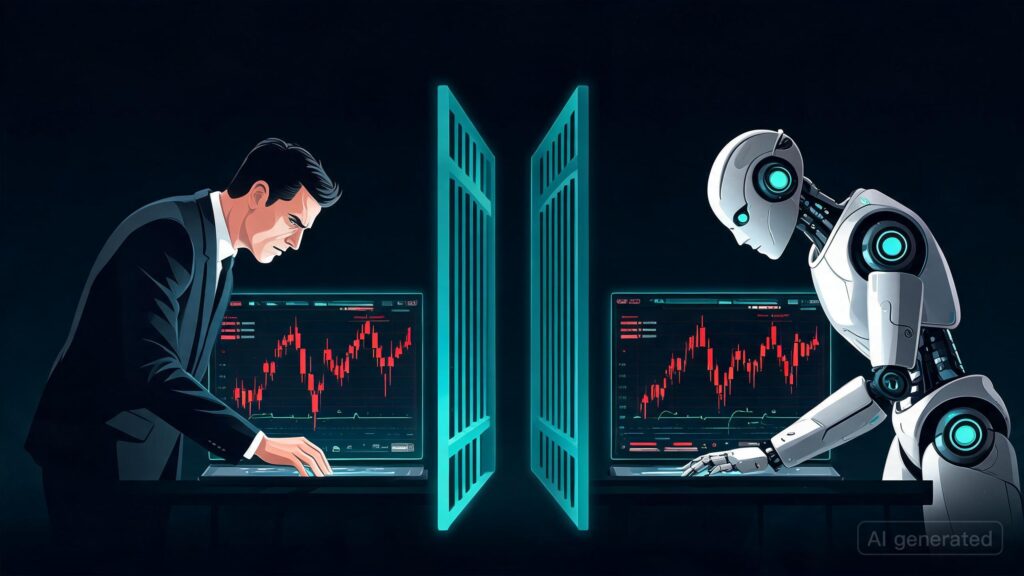
These hard gates are akin to court systems, contracts, and social structures that humanity has built to prevent human behavior from causing catastrophic outcomes. They need to be implemented in AI as well. Summary: Not about better prompts but about enforcing a frame where the generator is separate from the executor. |
Key Takeaways
- AI generation should be separated from execution to prevent the generator from evaluating its own output.
- Any action crossing irreversible state boundaries must be held in a buffer until confirmed by a deterministic check.
- To ensure global objectives are not overridden, there should be Objective Divergence Checks that monitor and verify actions against their intended purpose.
Note: This proposal is about establishing hard gates rather than relying on better prompts or reinforcement learning.