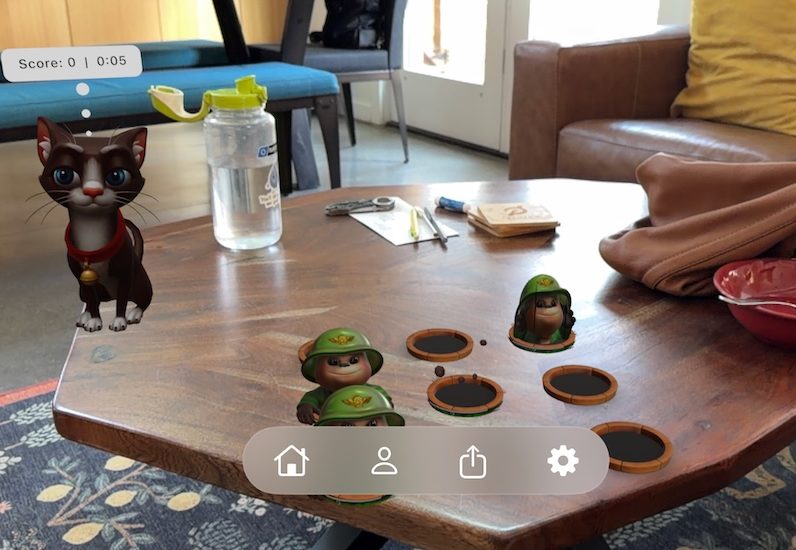
For makers and artists, the landscape of digital communication is shifting from static stickers to living, breathing characters. Pixi has launched a new iOS application that transforms text messages into interactive augmented reality (AR) experiences, moving beyond the limitations of GIFs and emojis. Instead of sending a static image, users can now dispatch AI-powered characters through iMessage that animate within the recipient’s camera view. These digital entities do not merely exist in a void; they perceive their surroundings, react to real-world objects, and engage with the environment in real time, effectively turning a simple text thread into a shared, playful space.
On-device intelligence drives the magic
While augmented reality filters are nothing new, Pixi distinguishes its approach by fusing AR with on-device artificial intelligence. This architecture allows the virtual characters to understand context and behave accordingly without relying on cloud processing. A virtual cat, for instance, will react if a real dog walks past it in the frame. The company emphasises that all visual and audio processing happens locally on the device to safeguard user privacy.
Mark Drummond, the founder who previously worked at DreamWorks Animation and Apple, argues that the app injects a necessary sense of presence and spontaneity into digital conversations. Rather than sending a generic “Happy Birthday” text, users can send a character that creates a memorable, shared moment, effectively turning a message into a digital gift.
“The consumer problem we’re solving is thinking of a friend when they’re not present,” Drummond told TechCrunch. “Sometimes the psychology is called pebbling or creative gifting. You’re sharing tokens of affection, basically cards, e-cards, and gifts. That’s your dad, or, in some cases, your granddad’s media. We can do better. We can do something that’s digitally native, and that uses everything we learned about AR on the iPhone.”
From stand-up cats to generative creation
During a recent demonstration, Drummond showcased a cat character performing stand-up comedy on his desk. The character appeared to respond to his facial expressions, specifically ending its routine when he smiled, proving the technology can perceive and react to emotional cues.
At launch, the app features three characters: a robot, a cat, and an animated envelope. The envelope can “attack” friends playfully by chasing them if they move. The current roster also includes mini-games such as tic-tac-toe and whack-a-mole.
Drummond hinted at future expansions, including the introduction of Alice in Wonderland as a character option. He noted that this character must react to objects on the user’s desk in an “Alice-consistent” manner to demonstrate how partners can integrate their creations into the ecosystem. The long-term vision involves a marketplace where studios, brands, and independent creators can share unique characters for events like movie premieres or product launches.
Looking further ahead, Pixi aims to open up generative AI capabilities to users, allowing them to design their own personalities. Drummond explained the potential for users to prompt specific behaviours, such as creating “a blue blob that threatens my friend and growls at them and keeps chasing them on the phone.”
Access and monetisation
To send a character, download the app on an iPhone and tap the plus sign in the lower left corner of iMessage. Recipients do not need to install the app to receive messages. Currently, the service is restricted to iPhone 11 and newer models, with plans to expand to Android and platforms like WhatsApp and Instagram later.
While the app is free for users, brands retain the option to charge for their characters. Drummond stated the company would encourage free usage to turn users into brand ambassadors, letting them tell their own stories with the tools provided.
Key takeaways
- Pixi’s new iOS app replaces static media with AI-driven AR characters that perceive and react to the user’s real-world environment via on-device processing.
- The platform targets the “creative gifting” gap, allowing users to send interactive, memorable digital experiences rather than standard text or images.
- Future updates will include a creator marketplace for studios and brands, alongside generative AI tools that let users design custom character personalities.