Pangram, a 24-person startup based in Brooklyn, has raised $13 million and claims to be the primary tool for stopping a machine takeover of written text.
The company promises to calculate a percentage of AI involvement in any given text. In January, speculation on Reddit and YouTube suggested author Mia Ballard used artificial intelligence to write her self-published novel, Shy Girl. Although Ballard denied it, Pangram’s CEO stated the book was 78 per cent AI-generated. Hachette subsequently canceled the release.
Similar accusations followed quickly. The New York Times was accused of running an AI-generated installment of its Modern Love column. Pangram scored that piece at 100 per cent. The Commonwealth Short Story Prize winner was flagged at 100 per cent. The novel Daggermouth scored 60 per cent. A thriller titled Call Me, I’ll Hide the Body sold for $2.4 million and received a 97 per cent score. In late July, Substack announced it was integrating Pangram into its platform to allow readers to check for possible AI use.
Industry reaction
Not all writers view this as positive. Jane Friedman, an author and publishing expert, notes there is distaste and anger at the software. She says people feel these tools are just as evil, if not more so, than the AI companies themselves.
Pangram is not a household name outside publishing and higher education, yet demand to distinguish large language model output from human writing is growing daily. The question remains: how much can the company be trusted?
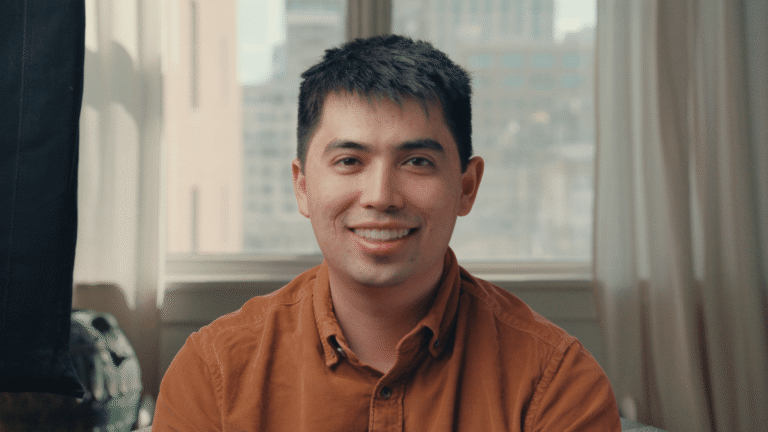
Max Spero, the 30-year-old co-founder and CEO, dialed into a Google Meet call from his phone. He held a takeout box in one hand with skyscrapers in the background. He wore a beige T-shirt and had short dark hair, a boyish expression, and a wide smile. He said he was rushing home with lunch and would call back. Ten minutes later, Spero reappeared inside his Brooklyn apartment. He had been on hiring calls all morning, he said. In July, Pangram raised $9 million and announced the launch of its newest model, Pangram 4. The company’s website lists six new job openings, which would increase headcount by 25 per cent.
I asked Spero about growing up in California. He looked visibly uncomfortable. Discussing the technical details of Pangram came more naturally to him than answering personal queries or speaking about the company’s involvement in literary scandals. Spero took a bite of his meal and said he was raised in the Los Angeles suburb of La Crescenta. He loved programming and joined his school’s robotics team. As an undergrad at Stanford, he met Bradley Emi, his eventual co-founder. My several emailed requests to interview Emi were ignored by the company’s comms team. After school, Spero went to Google, where he worked on FLoC, a technology designed to replace third-party cookies by grouping Chrome users by interests. Google killed off FLoC in 2022 after the product met with privacy concerns. Spero later worked for the autonomous car company Nuro, while Emi made his way through Tesla and AI biotech company Absci. After ChatGPT launched in 2022, the duo saw a business opportunity to confront a future filled with AI content. In 2023, they founded Checkfor.ai, then renamed the company Pangram a year later. By then, at least a dozen other companies were crowding the detection space, including Originality.ai, GPTZero, and Turnitin. Pangram performed well in some early, independent testing and emerged as a front-runner.
As the interview progressed, Spero’s responses seemed sticky, stopping and starting, and not just because he was eating. I asked about his hiring ethos. Spero murmured “hmm” before turning away without apology to microwave his food. Fifteen long seconds passed in silence. He finally faced me again and said, “The average person is at Pangram because they care about the mission.”
To detect AI, Pangram uses a method called “synthetic mirroring” by which it takes human writing and has large language models generate a close match. This teaches its model how AI writes. Pangram also uses “hard negative mining,” searching datasets for false positives that it can synthetically mirror and use to augment its training set—using mistakes to retrain the machine. “All of our datasets are properly licensed, which I think is kind of rare in the AI world today,” Spero says. That is partly because Pangram’s product is far less data-hungry than ChatGPT or Claude. “I don’t want to completely throw the AI companies under the bus,” he adds, “but I think they’ve lost a lot of trust, especially in the world of creatives.” Today, Pangram caters to several industries, including education, the legal field, and recruitment, but creative writing constitutes the largest segment of the training text.
The Shy Girl case
The Shy Girl story put Pangram on the map. Spero had already been calling out suspected AI writing from his social accounts, so it was not a surprise when, in January, he was tagged in a Reddit post and subsequently sent a PDF of Ballard’s manuscript. “I put it in [Pangram], I posted it, and then later The New York Times asked me for comment,” he says. “I think people overstate the importance of Pangram in the Shy Girl story.”
Except that was not exactly how it happened. Like a game of AI-scandal telephone, it was a Pangram account executive who discussed the story with a publishing industry analyst who, in turn, brought it to the Times.
Another twist emerged. Critics of Pangram, including the investigative project The Drey Dossier, pointed out that Spero’s copy of the manuscript came from a pirating website. When I asked Spero about this, he said, “Yeah. And, like, yeah … it is what it is. I hadn’t looked too closely. I didn’t go read the whole PDF. I just put it straight into Pangram.”
Pangram has not shied away from controversy since then. After the Commonwealth Short Story Prize winner returned a high Pangram score, the company analyzed every winner since 2012, calling out three more potential AI uses. Still, Spero downplays Pangram’s impact, particularly on axed book deals. “Basically, with every book deal, to my knowledge, it hasn’t really been about the Pangram score,” he says. “That is a part of it, but if you talk to anyone involved, it is only a small, small part of the bigger picture.”
Substack integration
We moved on to Pangram’s Substack integration. “People shouldn’t be afraid about disclosing this because your work should stand on its own as quality and something that people want to read, regardless of … ” Spero trailed off. “Well, how do I want to put that?” He paused. “I think I … oh, I know what I said the other day.” He gained confidence and his voice sped up. “If the value of your work is dependent on deceiving the end user into thinking it wasn’t written by AI, then”—he hesitated again— “that’s going to be a problem.” (Later, I realized his intonation changed because he was quoting his own post on X.)
Substack would not confirm any specifics of its Pangram partnership structure or whether Substack pays the company per scan. “Substack’s philosophy is not anti-AI,” a representative tells me. “We simply believe you should know what you’re consuming.” Some authors are wary. There is a sense, one tells me, that an entire career can be destroyed with the click of a button.
Industry adoption
Book publishing, a notoriously slow industry, has been particularly slow to reckon with AI. Still, the reality is that AI is used by a growing subset of authors, publishers, and agents. Last year, Gotham Ghostwriters polled 1,481 working writers and found that 61 per cent use AI tools, with 7 per cent saying they’ve published AI-generated text. When Tuhin Chakrabarty, an assistant professor of computer science at Stony Brook University, used Pangram earlier this year to analyze 14,419 self-published novels, he found that nearly 20 per cent had substantial AI-detection scores. His working paper has been widely cited, and that data was the original source for the Daggermouth accusations.
I reached out to the Big Five publishers to ask if they use AI detection. Simon & Schuster and HarperCollins declined to comment. Hachette and Macmillan did not respond. A spokesperson from Penguin Random House confirmed that its editors may use approved AI-detection tools “as one additional means of identifying potential AI-generated content,” but that such tools are “not determinative and are only one component of a broader editorial process.” Some agents are using detection too—and for every public execution of a book deal, others are being quietly killed offstage. “Normally, agents say nothing,” Friedman says.
I wanted Chakrabarty’s perspective. He first heard about Pangram from one of Spero’s posts in late 2024. After he signed up, Spero sent him API credits. The two have since become “close friends,” Chakrabarty tells me, and Pangram has continued to supply Chakrabarty with credits to support his research. Chakrabarty posts Pangram results on social media and regularly defends the company. He says he has met with publishers to talk about detection in the wake of AI scandals. “Pangram should not be the de facto judgment,” he says. “But I think your own discretion coupled with Pangram’s judgment cannot be wrong.”
Chakrabarty is also in a relationship with Todd Shuster, the co-CEO of Aevitas, a top New York literary agency. Chakrabarty encouraged Shuster to meet with Pangram. “It was instantly a very helpful tool,” Shuster tells me. “Right away, we started having to have difficult conversations [with authors] because Pangram was showing their works to be anything from 50 per cent AI written to 95 per cent.” Shuster now uses Pangram to analyze manuscripts and book proposals. He also consults for Pangram, a role that includes making introductions between Pangram and publishers. When authors are confronted, Shuster says some are defensive or seem to fib, while others are honest about their AI use. Shuster says he has asked authors to rewrite work with their own voice and ideas.
Criticism and bias
Critics point to two major issues with Pangram: the damage done by false positives and the potential bias built into its machine learning. “I don’t think [AI detectors] work,” says Sam Illingworth, a professor of critical AI literacy at Edinburgh Napier University. “I think that detectors are prejudiced against certain people.” One study showed that detectors were more likely to identify work by non-native English writers as AI-generated, and neurodiverse writers have also claimed that their writing patterns are disproportionately flagged. (That study predated Pangram, and Spero points to internal research countering it.) The three novels mentioned earlier—Shy Girl, Daggermouth, and Call Me, easily publishing’s biggest AI-detection scandals—were all written by writers