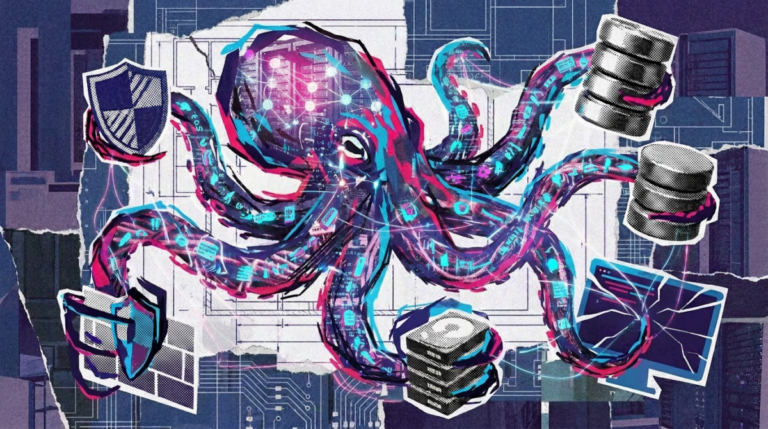
A new generation of digital twins is moving beyond simple simulation to actively control industrial plants. These systems now link real-time data with engineering design to allow AI to make adjustments while humans set the rules.
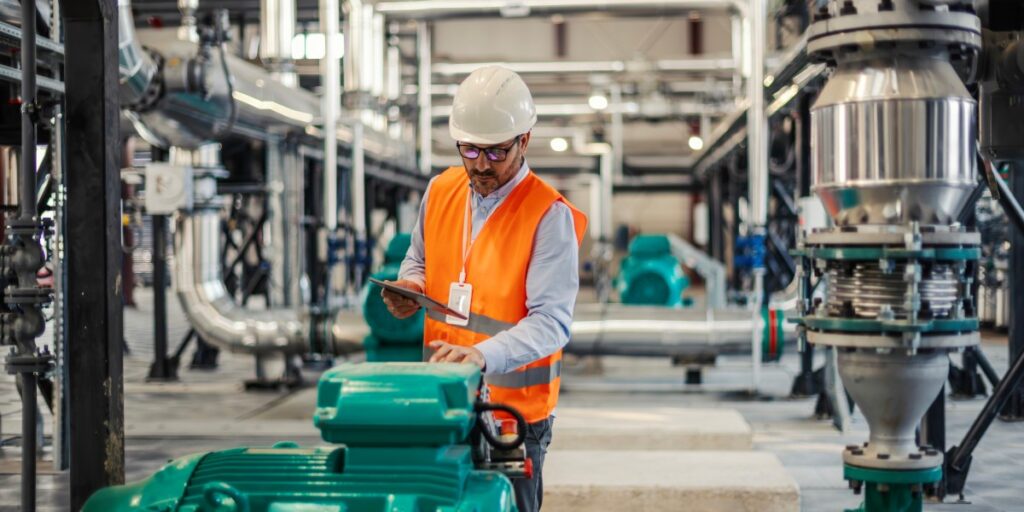
Traditional factories are often viewed as collections of cold steel and clockwork machinery. In reality, a plant functions like a living organism. It has a pulse and a metabolism. As equipment ages, it develops wear and tear. Early signs of failure often appear as barely perceptible irregularities that standard monitoring systems miss.
Digital twin technology has long attempted to mirror this dynamism. Earlier versions lagged behind physical reality. They could not perform real-time analysis or address issues proactively. Their primary use was simulation and observation. They offered what-if scenarios rather than closed-loop execution. A living digital twin combines a dynamic, high-fidelity representation of operations with the capacity to intervene physically through control systems.
AI drives this change. Rob McGreevy, chief product officer at AVEVA, compares newer, AI-infused digital twins to organisms that grow and evolve. These living versions are adaptive models of a plant’s assets and processes. They keep pace with live conditions and connect systems that once ran in isolation. This provides a layer of visibility and orchestration that reflects the organic rhythms of the facility.
Agentic AI enables industrial systems to move beyond diagnostics and act on their own accord. As the technology progresses toward greater autonomy, it develops reflexes for industrial homeostasis. Small, constant adjustments keep a plant healthy and running smoothly.
Human judgment and operator oversight remain essential. Humans define what healthy looks like and flag when AI systems drift from alignment. Living digital twins provide the means for engineers to monitor AI actions and ensure execution stays on track.
The technologies that keep digital twins in sync
Living digital twins link engineering and design information with real-time operational data through a digital thread. This is a connected record of an asset that follows it through its lifecycle. Two technological shifts have helped string this thread together. Sensors have become more affordable and now stream telemetry from IoT devices and industrial control equipment. Software platforms bring this information into user-friendly interfaces. Predictive and physics-based models provide AI-enriched insights into how a machine or process might behave.
“You can look at the digital twin through the lens of sustainability: What are my emissions? Or, through the lens of maintenance: Is this asset performing in a healthy way? Or, through a performance metric: Is it producing the number of widgets I need?”
Rob McGreevy, Chief Product Officer, AVEVA
Operators now view digital twins through different lenses. “You can look at the digital twin through the lens of sustainability: What are my emissions?” says McGreevy. “Or, through the lens of maintenance: Is this asset performing in a healthy way? Or, through a performance metric: Is it producing the number of widgets I need?”
Setting boundaries for semi-autonomous systems
The next phase involves letting AI act on select insights these lenses illuminate. Manufacturers are eager for this development. In a 2026 Manufacturing Leadership Council survey of manufacturers, 66% said they are using or plan to use agentic AI in their operations. Forty percent expect some degree of factory autonomy by 2030. At the same time, they are wary of potential risks. In Deloitte’s 2025 smart manufacturing survey, 65% of executives ranked operational risk, including the potential for business disruption, among their top concerns.
Manufacturers are accelerating toward agentic AI and greater factory autonomy
Zero percent of manufacturers are using agentic AI. Sixty-six percent of manufacturers say they are using or plan to use agentic AI in their operations. Forty percent of manufacturers expect some degree of factory autonomy by 2030.
Source: MIT Technology Review Insights with data from Manufacturing Leadership Council, 2026
“There is a lot more refinement to be done, a lot more proof points, testing, and validation needed,” McGreevy says about the ongoing process of making AI autonomous. In the near term, McGreevy expects agentic AI to follow the path seen in other industrial technologies like SCADA systems. The S in SCADA means supervisory, and supervisory means there is a human in the middle, he says. He sees AI working mostly in that advisory mode for the foreseeable future. Full autonomy remains limited to narrow, highly repetitive tasks.
The role of human operators is evolving. Workers who once specialised in a single process line or maintenance task can now take on multiple disciplines. They can spend less time and effort approving routine actions one by one. More time goes into defining acceptable operating limits. Because AI can reinforce patterns in the data it receives, catching missteps early is a core part of the job. Human knowledge and experience in interpreting what AI is seeing and doing is instrumental.
Governance on a company and industry-wide scale needs to adapt. Organizations must establish clear guardrails for which decisions AI can make on its own and how its actions are monitored and audited. Many have yet to set up comprehensive safeguards. In a recent study from AVEVA and IMD, 43% of organizations said AI has changed decision-making and accountability across ecosystem partners only slightly or not at all. Just 23% reported a significant or fundamental change. Only 27% reported sharing data substantially or extensively with partners.
Regulators are starting to define some of the rules. The EU AI Act classifies certain AI safety components used in critical infrastructure as high-risk and imposes requirements for human oversight. Companies are setting up their own structures as well. AVEVA has a responsible AI governance board and a published set of principles for how AI is developed and deployed.
Agentic AI and living digital twins: Real-world case studies
Oversight in semi-autonomous systems varies from one deployment to another. In some cases, an operator approves every action. In others, AI acts on its own while people oversee and define the boundaries it can operate within. McGreevy cites several examples of what machine autonomy and human-plus-machine collaboration looks like among AVEVA customers:
- At Saudi Aramco’s Yanbu refinery, optimization algorithms adjust production in a closed loop, with operators overseeing as needed. At its Ras Tanura refinery, the algorithms recommend changes and operators decide whether to implement them.
- Nestlé uses AI optimization at Nesquik plants to tune the industrial dryers used to produce powdered beverage.
What it means
Industrial workers will spend less time manually approving routine adjustments and more time defining the limits within which AI can operate. The technology allows systems to maintain their own health through constant, small corrections, but humans must remain the final authority on safety and strategic direction.