October 2026 marks a turning point for vibe coding computer games, following the November 2025 shift where coding agents became reliable daily drivers for software engineers.
Claude Opus 5.5 shows meaningful improvements in 3D modelling, music generation, and game design. Models have been able to create something that looks like a game for quite a while now. The challenge has been getting to a game that is actually fun to play.
Game design is a deep subject area. Creating a novel, compelling gameplay loop which challenges players at the right level and provides a satisfying learning curve is a fine art. I did not think the models could do it.
Then I tried telling Claude Opus 5.5 to make it a lot more fun and it did.
In the past few weeks I have vibe coded four games that I have genuinely enjoyed playing. I attended Foo Camp in Berkeley over the weekend and met several people who were having similar experiences. Building games that play well is shockingly easy now. The new challenge is coming up with concepts for games that are novel and delightful and that would not exist without AI assistance.
I have not done an exhaustive study, but my current impression is that GPT-6 Astra is not quite there yet. It can absolutely build a game, but its sense of fun does not match that of Opus 5.5. I expect OpenAI will get there by the end of the year.
Here are the four game projects that have convinced me that the models are now capable of producing fun games with very little guidance. All four are built in HTML and JavaScript and run entirely in the browser.
Tree Appreciator
The smallest game I found to be genuinely delightful is Tree Appreciator. I used the regular Claude chat interface for this and it did not even need Claude Code.
I built this on a whim while we were driving along Skyline Boulevard looking at trees. My prompt was:
Build a three js game called “Tree appreciator” – it shows you two algorithmically generated trees and the game mechanics is about appreciating the differences between them. Think hard about how to make sure it is both fun and beautiful.
I have found that telling models to use three.js works really well. Claude does not have its own image generation model but is capable of building full-color 3D models that look and feel excellent.
This game required no iteration or follow-up prompting at all. I got the game in a single shot. It gave me back a charming little mobile-friendly spot-the-difference game. You can play that here. Here is the chat transcript that built it.
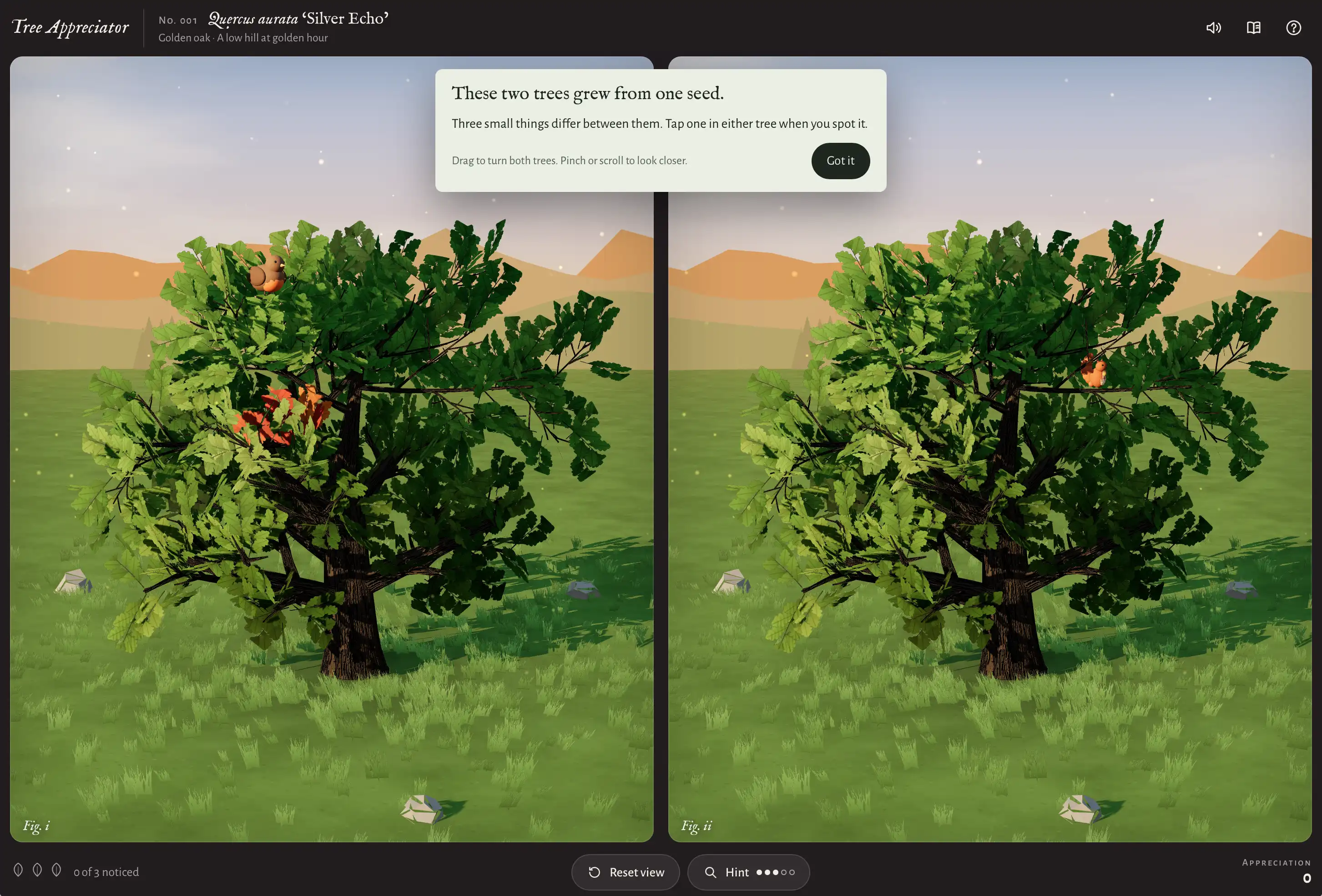
It is pleasingly relaxing. The graphics are fun, and collecting trees that you have completed in a herbarium provides a nice, cosy sense of accomplishment.
Emberwick
This was a more ambitious project that I again built using regular Claude chat. I started out by building an experimental prototype of an engine for a top-down fantasy RPG:
Build a demo game engine three.js which is a top down (but at an angle) RPG – the player gets to move through the world with one or two companions. Create a fantasy village setting that demonstrates walking around outside and then shows how when the player enters a building the wall between the player and the camera goes transparent so the user can see what is happening
Add some NPCs and plenty of furniture and different types of building some with an upstairs – be creative, make it look great
Here is that first version. It worked really well!
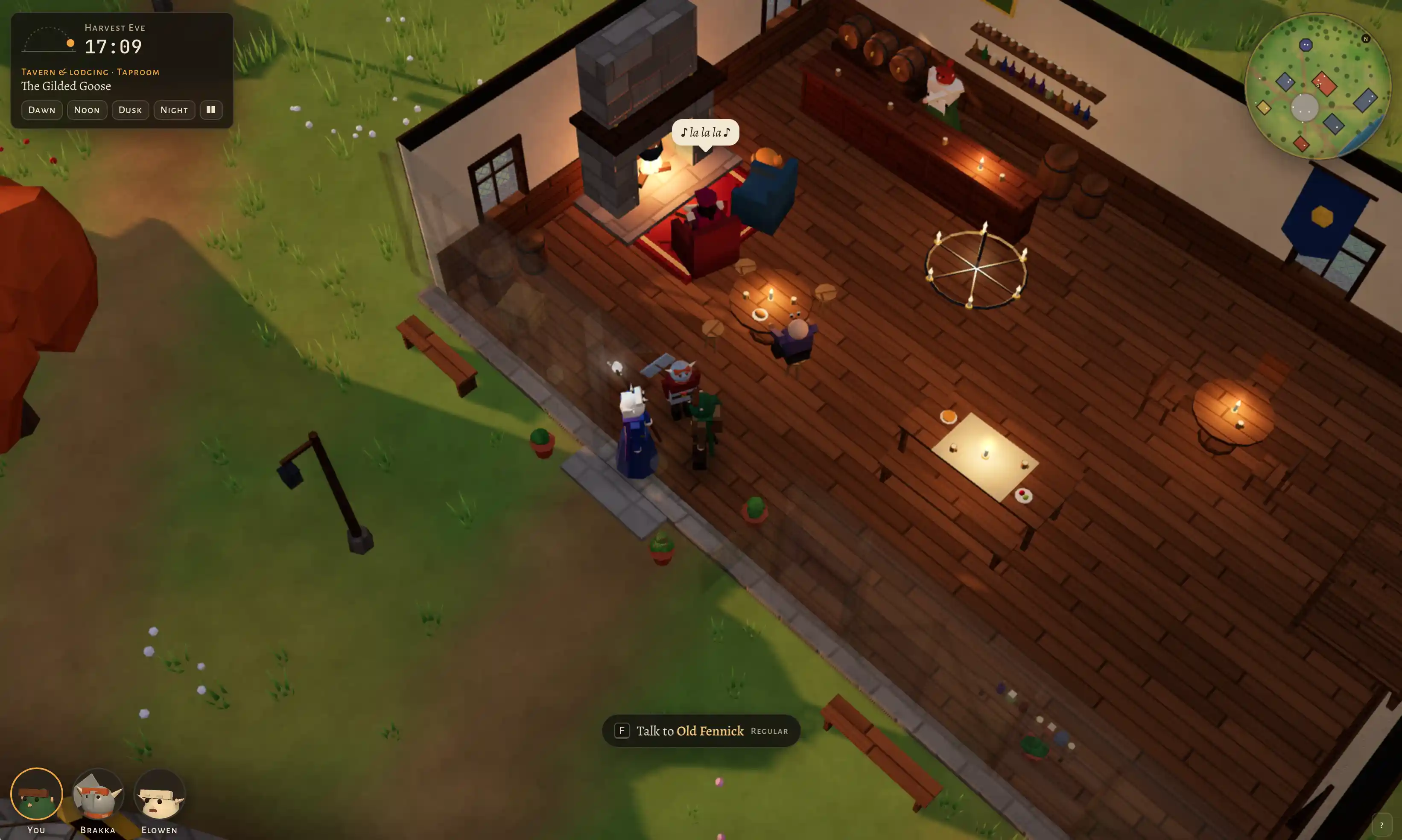
I was inspired to increase my ambitions:
Make it not so flat – the buildings are great but the landscape itself is completely flat at the moment, fix that
Add basements to two of the buildings with a tunnel system joining them below the village
Add the start of a rocky mountain on one side of the village containing a cave with a sleeping troll
Here is that version.
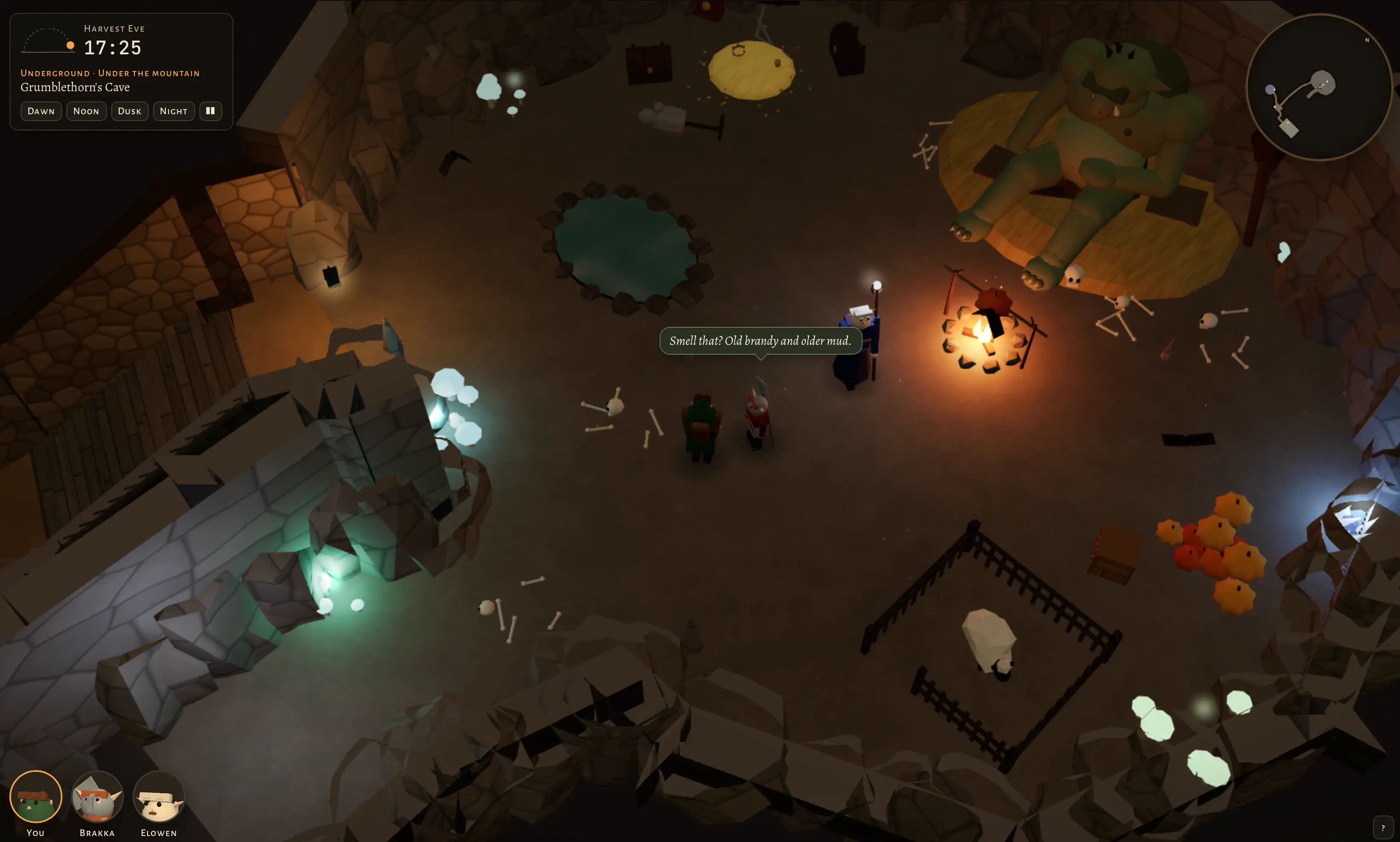
When that produced a good result, I decided to push it all the way:
Now turn this into an actual game – quadruple the size of the playable area, introduce fun game mechanics, add a plot that isn’t too cliche, some twists, a magic system, make it really good
We are back to prompts like make it really good here. Asking for a plot that is not too cliche seemed to work too. It is a bit cliché, but still novel enough that I enjoyed following the story.
Unlike Tree Appreciator, this took quite a bit of additional playtesting and prompting to get to a finished version. This was mainly due to gameplay problems. Things like a character not being in the right place to complete a quest because a different story element had caused them to move to another location.
Here is that final game. It has a full story that takes about 15 minutes to play through.
There is even an experimental level editor if you want to drop in your own houses, furniture, and landscape features.
Once it was all working and I had iterated through some gameplay bugs, I played it through from start to finish and found myself emotionally affected by the ending. I am somewhat embarrassed by this, because everything in this game – the graphics, the plot, the characters, the music, the dialog – came from the model. My creative input was pretty much just it is a fantasy village and there is a troll asleep in a cave.
Here is the chat transcript for the final version.
https://claude.ai/share/840e0bc0-a68e-4894-8eec-8f83bd6ade26
Battle Drones
This was the first of the four games I built. It started as a simple shooter concept.
I asked the model to build a game where you control a drone fighting other drones. The initial version was functional but lacked depth. I then prompted the model to add more complex enemy AI and a scoring system.
The final result is a fast-paced shooter that runs in the browser. It demonstrates the model ability to handle logic and state management without direct code inspection.
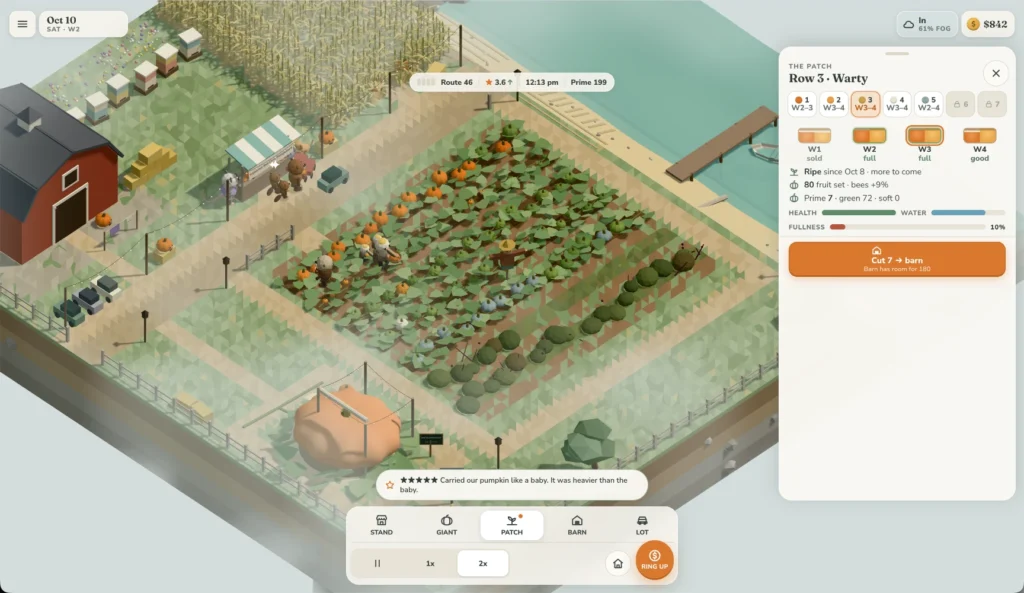
Pumpkin Farmer, aka Quarter Sun Cove
This project started as a simple farming simulation. The model generated the core mechanics for planting, watering, and harvesting.
I then asked the model to add a seasonal cycle and a village economy. The resulting game features a changing landscape and interactions with NPC villagers.
The graphics are simple but