OpenAI’s deployment chief on Codex growth, falling AI prices, and the ROI question
Key Points
- Through its subsidiary DeployCo, OpenAI is building a team of engineers that embeds AI models directly into the IT systems and business processes of corporate clients. This hands-on work also serves as a feedback loop to spot weaknesses in the models and improve OpenAI’s research.
- Despite strict European rules like the AI Act, OpenAI CTO Arnaud Fournier says regulation barely slows adoption. The coding tool Codex has more than four million weekly users worldwide, with Germany playing a leading role after growing 720 percent since January 2026.
- While Fournier stresses that the price of AI intelligence has dropped sharply, newer models like GPT-5.5 cost more because of more complex compute. And even OpenAI can’t offer a universal formula for calculating the ROI of AI projects.
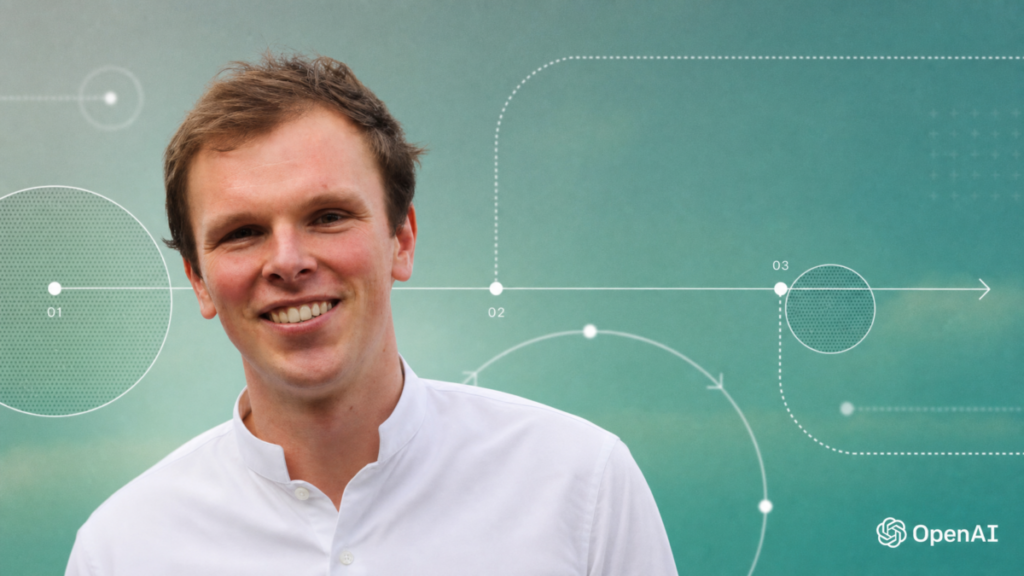
OpenAI deployment chief Arnaud Fournier explains in an interview how DeployCo wants to embed AI deep inside large corporations using its own engineers. He talks about explosive Codex growth, the feedback loop from customers back into model development, and why he thinks the price of AI intelligence has dropped sharply.
Two years ago, Arnaud Fournier co-founded OpenAI’s Forward Deployed Engineering team and served as the first FDE, later running the function for EMEA and global verticals. Since April 2026, he’s been CTO of the OpenAI Deployment Company, known internally as DeployCo, which the company unveiled in May alongside 19 private equity firms plus global systems integrators and consultancies.
The subsidiary’s first acquisition comes from Europe. British consulting firm Tomoro brings roughly 150 forward deployed engineers and deployment specialists over to DeployCo. “This is going to be a global company with a key leadership presence in Europe,” Fournier tells THE DECODER.
Engineers on-site who feed real-world problems back into OpenAI’s research
The FDE function exists for two reasons, Fournier says: to solve customers’ problems, and to understand the state of the art and the challenges of rolling out the technology. A model or an API alone doesn’t create value. Value shows up only once the technology gets embedded in business processes, stays compliant, and can be monitored. “Unless we, as the people that create the technology, are deeply embedded with our customers, it’s hard for us to bring this to our customers in the best way and also continuously evolve with those tools.” The engineers sit at the interface between the product and research teams on one side and the customers on the other. They carry lessons back into the company while bringing the latest technology to customers. There are sites in Paris, London, and Munich, and the team runs joint projects with German firms.
Asked where the line runs between this work and consulting partners like Deloitte, Fournier points to the recently announced Frontier Alliance ecosystem with Accenture, Capgemini, BCG, and McKinsey. These firms have built massive business units around AI over the past few years, he says, but they face the same problem as everyone else: “It’s hard to keep up with the technology.” The partnership with OpenAI’s engineers is meant to make sure the consultants always deliver the current state of the art to their clients, along with the tools and systems they need. That these same firms invest in DeployCo and supply Alliance partners is, to Fournier, proof of their interest in putting all this into practice with OpenAI. The exact division of labor between OpenAI’s own FDEs and the consulting partners, who potentially compete for the same engagements, stays fuzzy in the conversation.
How the feedback loop works
Asked whether the work done at customers flows back into training future models, Fournier puts it this way: “We do not train on our customer data unless someone explicitly asks us to.” In those cases, he says, it becomes a research partnership. There are very few of them, and they go through extensive regulatory review on both sides.
The real feedback loop runs through two other channels, according to Fournier. First, feedback on model weaknesses. If a team finds that document understanding works poorly, that’s valuable information for the research team, which then goes and acquires data and improves it. That’s how the solution built for major bank BBVA improved sharply from GPT-5.0 to 5.5. Second, tooling needs. The need for multi-agent orchestration produced the open-source repository Swarm, which later became the Agent SDK.
Fournier illustrates what this consulting work looks like with the BBVA example. The bank originally just wanted to automate writing credit documents. OpenAI instead suggested approaching the problem differently: rather than speeding up a once-a-year task, build a function that continuously assesses credit risk. “Instead of once a year, you can, on a weekly or daily basis, have a continuous view of where your partner is located and what your exposure is,” Fournier says. When geopolitical events hit, like the war in Ukraine or an escalation in the Strait of Hormuz, the bank can immediately gauge how exposed its credit portfolio is. The example is meant to show that the FDEs don’t just speed up existing workflows but reshape processes.
Regulation rarely a barrier for companies, Codex growing fast
Europe has strict AI rules like the EU AI Act, plus data privacy concerns. Both get cited often as reasons companies here hesitate to adopt AI. Asked whether he sees the same thing in practice, Fournier first qualifies his answer: “I’m not the biggest expert in regulatory items, but I speak to what I see in the field every day.” From that vantage point, he says no. Regulation is barely a brake anymore. If anything, he adds, momentum around AI adoption inside companies is huge right now. OpenAI has introduced EU data residency and enterprise key management to serve European firms. Once those requirements are met, the discussion quickly turns to concrete outcomes. France, Germany, and the UK are among OpenAI’s ten largest markets globally, Fournier says.
As proof he cites the German company Stadler, a maker of waste-sorting systems with more than 650 employees. According to OpenAI’s case study, over 85 percent of the workforce there uses ChatGPT actively every day.
The other numbers OpenAI shared with THE DECODER afterward also show strong Codex growth. The tool counts more than four million weekly users worldwide, a fivefold jump within three months at over 70 percent monthly growth. In Germany, the number of weekly active Codex users has grown more than sevenfold since January 2026. Germany also leads Europe in weekly active users, ranks among the global top five, and sits in the global top three for both paid subscriptions and developers. For weekly active Codex users, the country is among the top five markets.
On the worry that OpenAI could squeeze out the developers who build their products on OpenAI models, given its own apps and its close work inside companies, Fournier answers with optimism. “It’s never been a better time to be a builder than today,” he says. The ecosystem will grow massively, and OpenAI supports startups and digital natives. He doesn’t directly address the critical flip side, that the platform operator increasingly competes at the application level itself.
On price, Fournier pushes back, yet his top model gets more expensive
Tools like Codex stand for a new generation of agentic systems that work through tasks over many steps on their own and burn far more compute than a single chat call. As these applications spread, the cost question is moving to the front of companies’ minds, especially since the industry has recently trended toward higher API fees and credit-based billing. Asked about the higher costs, Fournier offers a different angle: the price of intelligence has dropped a hundredfold over the past 18 months, “not 100%, but 100x.” He credits efficiency gains across the whole chain, from the chips through how they work with the models to the models themselves. The models keep getting more compute-efficient, and there are now smaller models for the same level of intelligence.
Confronted with the observation that GPT-5.5 costs 49 to 92 percent more than its predecessor depending on input length, Fournier points to test-time compute. These models can increase token usage. A complex physics problem can demand dozens of hours of compute, a simple math task can’t. For a steady level of intelligence, prices have dropped dramatically, he said. So part of his team’s job is also to explain to customers that they don’t need high-intensity GPT-5.5 compute for every task.
Pressed on whether the classic seat-based licensing model breaks under the compute appetite of agentic workflows, Fournier shifts the answer to growth. Demand is far higher than three months ago, and customers are using the tools more and more intensively. OpenAI wants to serve not just paying customers but to give broad access to the technology. As proof, Fournier notes that Codex stays accessible even to free users and that the company keeps loosening and reopening usage limits. That’s possible because OpenAI started investing massively in its own compute infrastructure two years ago. He reads that as proof of how committed the company is to rolling out the technology.
His personal focus isn’t on weighing seat against token anyway, but on the value customers get from the systems. He leaves unanswered the real question of whether flat-rate and seat models stay economically viable as compute usage explodes. He’d already qualified things before his answer: “My role right now is to work with our customers and create value for them. So I’m not the best person to answer your question on how we think about seat-based and everything.”
That customers now see rising prices and higher usage as a problem shows in rumors that OpenAI and Anthropic are weighing price cuts in the API segment, and in a comment from OpenAI CEO Sam Altman, who said at an event that costs have become “a huge problem” for companies.
On ROI, Fournier offers no hard formula
On the directly linked topic of return on investment, Fournier admits it’s early days. A lot of what’s going into production now started six to twelve months ago, so the full benefit can only be measured with a delay. He sees the time horizon as the key factor anyway. For two years he’s been talking with executives, and back then those same people dismissed everything as too expensive. Today many of these tasks are table stakes and deliver high ROI. What matters, then, isn’t today’s token price but how a task develops over time.
The benefit can be measured two ways, Fournier says: through employee productivity and through the downstream business effect. As an example he cites the partnership with farm-equipment maker John Deere, where AI helps farmers cut chemical use in their fields. That has not only a financial ROI, because the products get used better, but an ecological effect too.
When pressed, though, Fournier offers no hard formula companies could use to pin down the value of an AI project. That formula will be written by the people putting the technology to use in the field, he says.
His advice stays pragmatic, bordering on evasive: “Just get a Codex license for $20 and start with it.” Once you’ve done that, he says, the benefit quickly becomes obvious.
The open bill of the AI transformation
At its core, Fournier describes a strategic shift in our conversation. As model performance gets cheaper and more widely available, value moves toward depth of integration at the customer, toward industry-specific workflows, toward the feedback loop into product and research, and toward a lock-in that goes beyond plain API usage. In this logic, the Forward Deployed Engineers aren’t a service add-on but the mechanism OpenAI uses to push its models into the core processes of large companies while learning what the next generation of products and models needs to do.
Striking, too, is the gap between the force of the transformation he describes and how mature it actually is. Fournier paints a picture of heavy usage, deeply rebuilt corporations, and a world where within ten years a large majority of companies work with AI. But how solid that picture is can hardly be checked today. Much of what’s going into production now started only six to twelve months ago, and he offers no broadly reliable formula for ROI.
DeployCo and Fournier are meant to close exactly this gap between heavy usage and real transformation. The sales and integration apparatus is being built up at scale right now, precisely because the self-sustaining momentum that Codex’s growth curves suggest doesn’t actually exist in practice. Steep usage curves don’t directly add up to a working enterprise transformation. The three points where Fournier dodges or answers only by example, the billing model, the competition with his own developer base, and demonstrable ROI, are not coincidentally the same questions that will decide the economics of the entire AI industry.
Subscribe now