OpenAI has launched ChatGPT Wallet for US Pro subscribers, allowing AI agents to execute online purchases on a user’s behalf.
This feature arrives after OpenAI abandoned Instant Checkout, its initial attempt at direct in-chat buying, because the system lacked sufficient flexibility. The new tool currently runs only through Dots and requires an eligible US bank card. Users must be adults holding a ChatGPT Pro subscription.
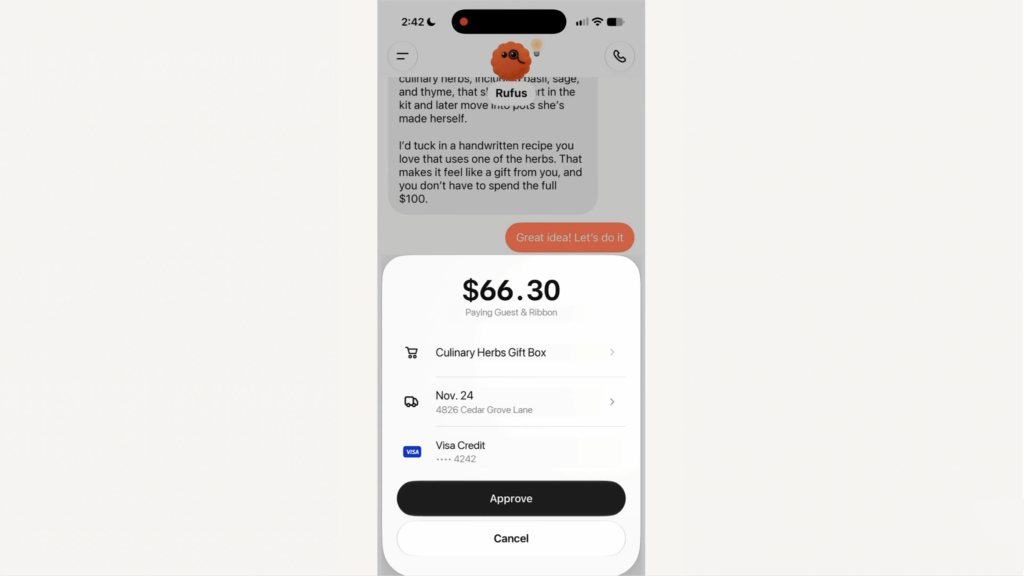
Setup involves adding a single card to the account. Before any transaction, the interface displays the selected items, the total cost, and the chosen payment method. The user must then approve the charge via Face ID or a fingerprint scan.
Neither the shopping agent nor the merchant ever sees the actual card number. Payment partners including American Express, Mastercard, and Visa generate a payment token instead. This stand-in number carries its own security code. OpenAI states that existing card rewards and standard bank dispute protections remain in place. The company plans to expand the service later, permitting users to hand over purchasing decisions entirely within specific spending limits, product categories, and timeframes.
OpenAI maps out a fixed purchase flow from search to checkout
The process begins with a user describing an item. ChatGPT then searches the open web, APIs, or merchant product feeds for options. The user reviews the results and selects a choice. The agent completes the transaction either by launching a browser on the merchant’s existing site or through a plugin supporting structured actions like cart management.
Many websites still block AI agents as bots or reject their purchases for security reasons. To address this, OpenAI is releasing a Commerce Partner Playbook. The guide details how merchants can adjust firewalls, supply product data, and integrate with payment providers such as Stripe, Adyen, and Riskified to enable agent-driven transactions.
OpenAI is playing catch-up on payment features for AI agents. Competitors such as Anthropic’s Claude Duet, Meta’s Muse, and xAI’s Grok Bot already include built-in payments, often relying on single-use cards via Stripe Link. Google and Perplexity also allow users to buy through their own checkout tools, such as Google Pay and Instant Buy.
What it means
For users, this changes the workflow from manually copying links to an agent performing the full loop. The agent searches, compares, and pays, provided the user approves each step with biometrics. For merchants, the Playbook offers a path to accept these automated requests without blocking them as suspicious traffic.