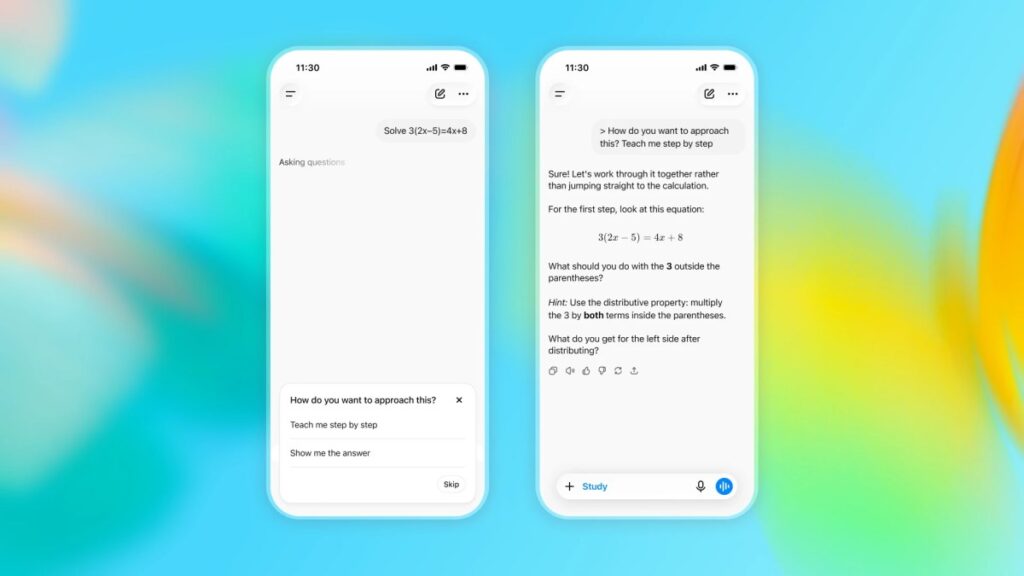
OpenAI has launched ChatGPT for Teens, a new version of its chatbot with stricter safety settings and anti-cheating tools. This release comes after a series of lawsuits regarding the lack of safeguards in AI chatbots, which critics linked to teen suicides and worsening mental health issues.
Study Mode and anti-cheat features
The product includes a Study Mode designed to stop users from simply asking for answers. Instead, the feature provides guiding questions and step-by-step support to help teens understand the material behind the work.
If the system detects a user attempting to cheat on homework, it will display reminders and push them toward using Study Mode. The app also supports quizzes and learning visualisations. Parents can choose whether Study Mode is enabled by default through the family tools.
Content filters and parental controls
Protections appropriate for the age group are active by default. OpenAI states these measures reduce exposure to harmful or developmentally inappropriate content. The filters are based on the company’s Under-18 Principles in its Model Spec, which the firm says draws on developmental science and expert guidance.
Guardians can manage settings, receive safety notifications, and set Quiet Hours using the existing family tools.
Collaboration with CodeAI
OpenAI has partnered with CodeAI to help young people learn about artificial intelligence. The collaboration covers how the technology works, how to direct it, and how to question it. Schools already have access to ChatGPT for Teachers, which provides institution-managed accounts and support.
What it means
The new version attempts to address the gap between how teens use the tool and how schools expect it to be used. However, there is no clear indication of how hard it will be for users to bypass these safety systems. Teenagers are known for finding ways around parental controls and digital restrictions. Until these measures face more rigorous testing, their real-world effectiveness remains uncertain.