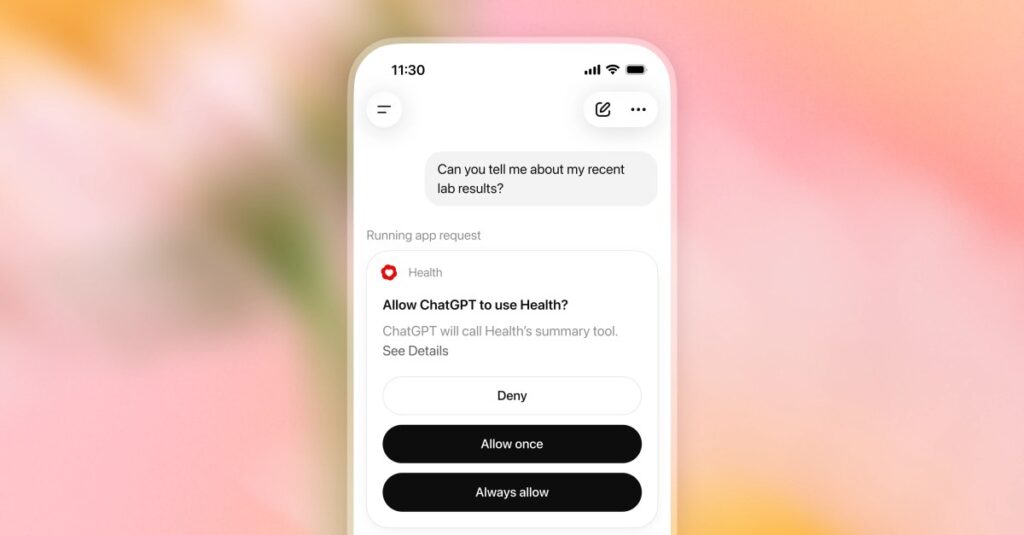
OpenAI has expanded access to ChatGPT Health across the United States, enabling users to link medical records and health data directly to the interface. During a recent briefing, Ashley Alexander, vice president of health product, stated that the company’s models now reason at levels superior to those of clinicians. Karan Singhal, the health lead, later tempered this assertion when questioned about the comparison to human performance. He noted that while individual studies support certain capabilities, the broader claim requires careful interpretation. The service allows patients to share sensitive information with the chatbot, raising questions about data privacy and the reliability of medical advice generated by artificial intelligence.
The significance lies in the shift from theoretical safety testing to widespread consumer deployment of a tool making strong clinical claims. This rollout tests whether AI can genuinely assist in healthcare without replacing professional judgment. It also highlights the tension between marketing narratives and the nuanced reality of model performance in high-stakes environments.
- The feature is currently limited to users in the US.
- Users must opt in to connect their personal health data.
- OpenAI has not yet provided independent verification of the clinical reasoning benchmarks.