Founders face a hard choice when launching an AI product: adopt a proprietary frontier model for speed, build on an open model for control, fine-tune your own version, run locally, or mix multiple models? Changing strategy six months from now is a risk as economics and capabilities shift again.
There is no single correct answer. But a poor choice affects almost everything that follows: cost, infrastructure, margins, differentiation, speed, and control.
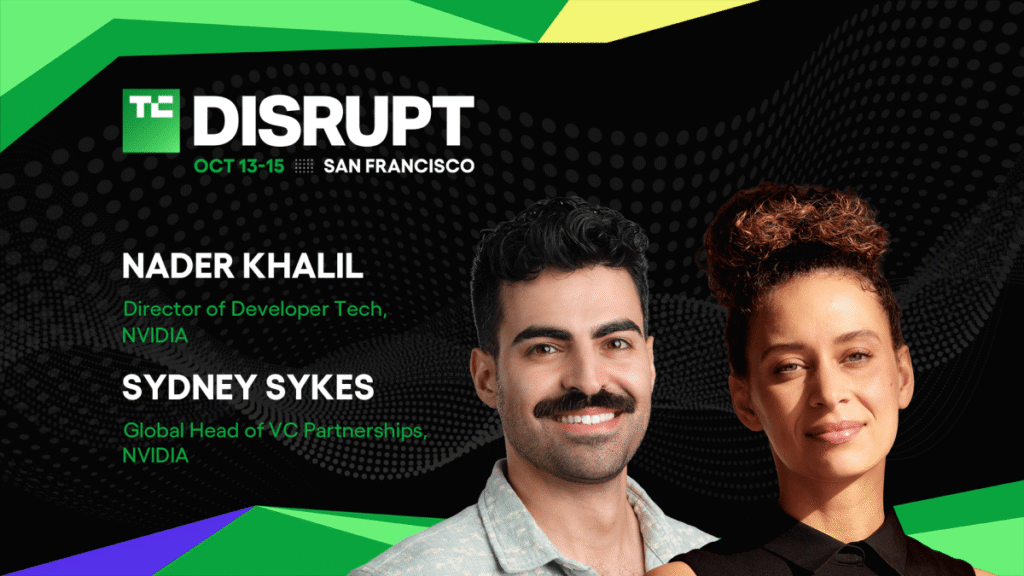
That decision is central to the session “The Open vs. Closed AI Debate Is Just Getting Started,” arriving at the Builders Stage during TechCrunch Disrupt 2026. The event runs October 13-15 in San Francisco. Nvidia’s Nader Khalil, Director of Developer Tech, and Sydney Sykes, Global Head of VC Partnerships, will lead the discussion. They will examine the trade-offs between open and proprietary AI and question whether either approach offers a lasting competitive advantage.
This is not a philosophical argument about open source. It is a business decision being made right now inside startups of every size. Join 10,000+ tech leaders at Disrupt to explore this debate. Register for a pass and save up to $200 before prices rise on September 25 at 11:59 p.m. PT.
The AI gap is closing — the decision isn’t getting easier
Open models have advanced quickly. Nvidia noted in July that 145 papers accepted at ICML 2026 cited its Nemotron open models and datasets. This research included work using other Nvidia open model families across robotics, autonomous vehicles, and biomedical research.
Meanwhile, proprietary frontier labs continue pushing model capabilities forward. The result is a market where the question is increasingly less about whether open models can be useful and more about where each approach makes commercial sense.
Even Nvidia rejects a simple either-or framing. At GTC earlier this year, CEO Jensen Huang argued that the future is not proprietary versus open, but proprietary and open. That sounds straightforward until you have to build a company around the decision.
If two models deliver similar results, does lower cost win? What if one gives you more control over your data? Does owning more of the stack create defensibility, or just infrastructure you now need to maintain? And if the best model changes every few months, how tightly should your product be tied to any one of them? These are the questions Khalil and Sykes will unpack at TechCrunch Disrupt 2026. Secure your ticket now to get $200 savings before September 25 at 11:59 p.m. PT.
Two perspectives shared on the Builders Stage on the same AI stack
Nader Khalil approaches the discussion from the builder and infrastructure perspective. Before becoming Nvidia’s Director of Developer Tech, where he leads open source and local AI, he co-founded Brev.dev, an AI infrastructure company acquired by Nvidia in July 2024.
Brev.dev was built around simplifying access to GPU infrastructure across different environments. Nvidia’s developer documentation described its tools as allowing developers to deploy AI software across public cloud, private cloud, and on-premises infrastructure without locking themselves into a single compute source.
Sydney Sykes brings the venture ecosystem into the discussion as Nvidia’s Global Head of VC Partnerships.
Together, that creates room to examine the same decision from different directions: what developers need to build and what companies need to become investable, scalable businesses.
Take a seat front and center at one of the biggest debates in the AI world. Register for your ticket before the savings of up to $200 end on September 25 at 11:59 p.m. PT.
Your model isn’t your moat — until it is
There is another uncomfortable question behind the open-versus-closed debate: Where does your competitive advantage actually live?
If competitors can access the same proprietary API, differentiation needs to come from somewhere else — proprietary data, workflow, distribution, customer relationships, product experience, or specialized technology. But choosing an open model doesn’t automatically give you a moat either.
You gain flexibility and potentially greater control, but you also take on decisions around deployment, optimization, and infrastructure. And the economics can change depending on the workload and scale.
Nvidia is investing heavily in that open ecosystem. Its Nemotron 3 Super, launched in March, is an open 120-billion-parameter model designed for agentic workloads. Companies are already combining it with proprietary models rather than treating the two approaches as mutually exclusive. That hybrid reality may ultimately be the most interesting part of the debate.
Register now to join the conversation on the Builders Stage in October. Savings of up to $200 end on September 25 at 11:59 p.m. PT.
What it means
If you are a founder, the choice shapes your margins, fundraising story, and product roadmap. If you are an investor, understanding where value sits in the stack helps distinguish genuine defensibility from a thin product layer sitting on somebody else’s model. If you are a line-of-business lead, it affects procurement, security, data control, infrastructure, and the freedom to change providers later. For developers and students, it is a chance to understand where the technical decisions being made today connect directly with the business models being built around them.
No one needs another abstract argument over whether open or proprietary AI is philosophically better. What builders need is a clearer understanding of the trade-offs.
Join Nader Khalil and Sydney Sykes on the Builders Stage at TechCrunch Disrupt 2026 and decide which side belongs in your AI strategy. Register now to save up to $200 before prices go up on September 25 at 11:59 p.m. PT.