Nvidia plans to acquire Hugging Face for $12.9 billion
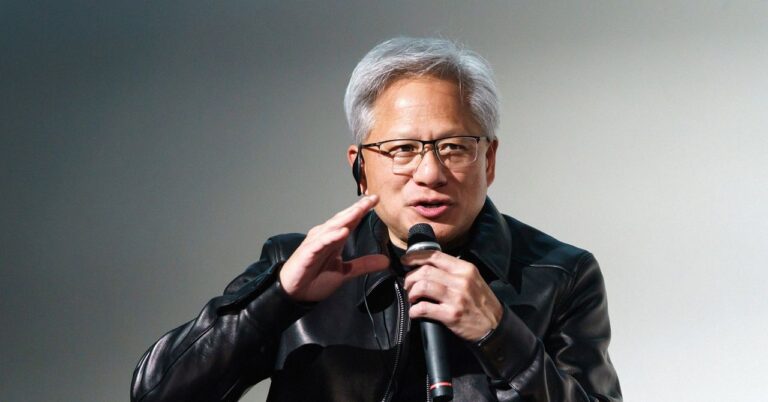
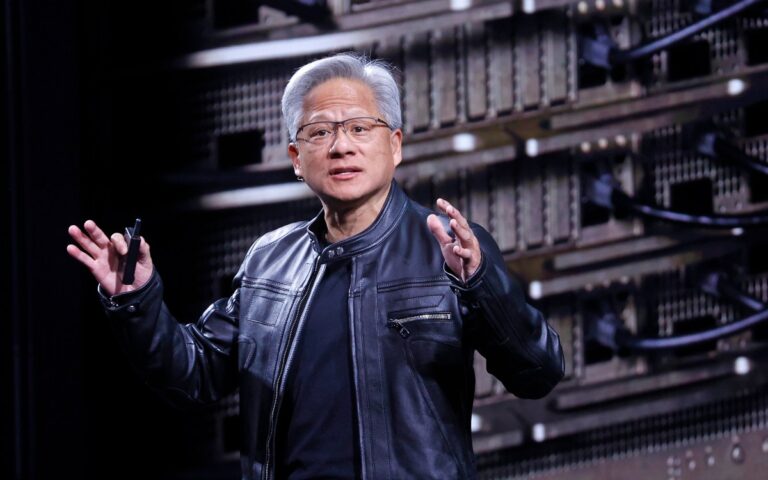
The chipmaker intends to purchase the platform for approximately $11.9 billion in cash, with an additional stock programme of up to $1 billion to retain staff. Jensen Huang announced the deal on September 3, 2026, following reports that surfaced in late August. The transaction is expected to close in the first half of 2027, pending regulatory approval.
Hugging Face serves as the primary hub for open AI models. Over 18 million developers use the service to distribute more than 3 million models, 500,000 datasets, and 1 million applications. More than 200,000 companies rely on the platform. Huang states that the site will remain open to everyone and that Nvidia hardware will not be a requirement. Other cloud providers and chips will continue to be supported. Nvidia currently hosts over 500 open models and more than 250 datasets on the site.
Both sides offer conflicting accounts of the initial contact. Huang claims co-founder Clem Delangue approached him regarding the company’s future. Co-founder Thomas Wolf writes on LinkedIn that Huang made the offer to Delangue to build the hub into an open, independent, and hardware-neutral platform. Wolf describes Nvidia as the best-fitting partner for the company’s mission, which spans open weights, robotics, and science. He notes that nothing changes for users today.
Why a chipmaker wants a software platform
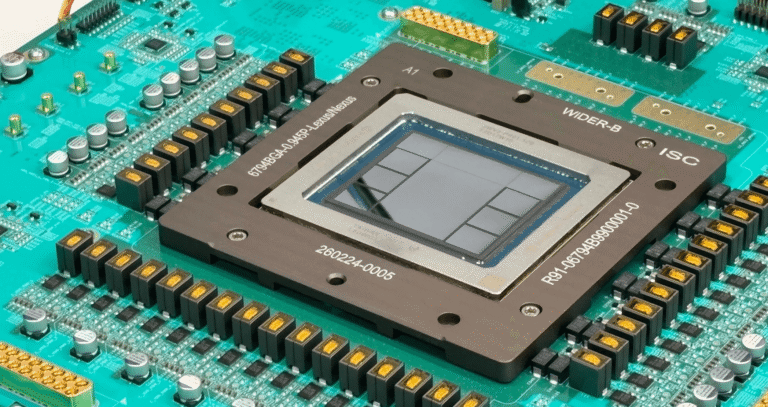
Nvidia generates revenue from compute infrastructure. Anyone using the API from OpenAI or another provider has mostly ended up on Nvidia chips. However, a handful of big providers are now building their own accelerators. Google, Amazon, and OpenAI are doing it, and so, more recently, is Anthropic.
Open models run across many clouds, inside companies, at universities, and in government agencies, a customer base that does not build its own chips. Huang boiled the logic down for Axios in a single line: “Free AI should be great for hardware.”
Nvidia has run its own open models for a while now. With Nemotron, the company releases weights, large parts of the training data, and the recipes for training and post-training. In the Nemotron Coalition, it is working with Mistral AI, Thinking Machines Lab, Perplexity, Black Forest Labs, Cursor, LangChain, Reflection AI, and Sarvam on another open model.
That does not put Nvidia in the lead. It sits behind the strong Chinese models. In return, the Nvidia model runs much faster in certain scenarios. The company also benefits from the Chinese models, since it offers its own NVFP4 versions of Kimi K2.6 and GLM-5.1 tuned for its chips. The purchase would now add influence over the most important showcase for this competition.
Then there is the hosting side, since Hugging Face distributes models and also rents out the compute time to run them. Nvidia had gone down this road once before and backed out. It scaled back its own DGX Cloud because it did not want to poach rental customers from its big buyers. Since then, its Lepton marketplace routes jobs to partners like CoreWeave, Lambda, and Nebius instead, and Hugging Face plugs into it through a cluster service.
In late July, Nvidia reported $36 billion in commitments from agreements with AI cloud partners. Under these deals, Nvidia’s commitments shrink when the partners sell their capacity to third parties. Nvidia also partly insures cloud partners against unused capacity. A large developer hub as an extra sales channel would come in handy here.