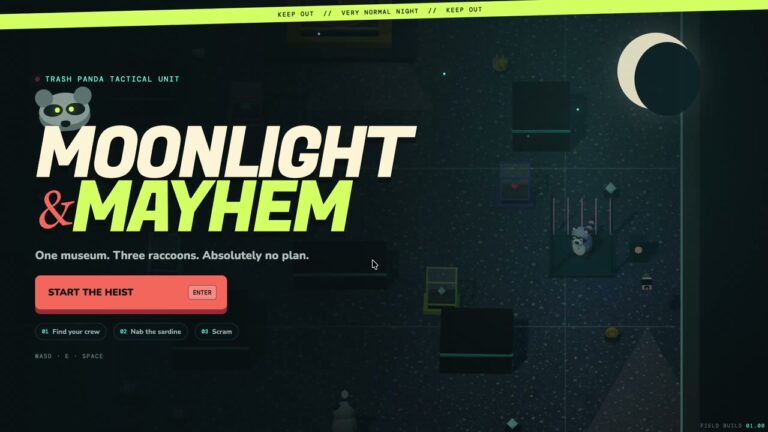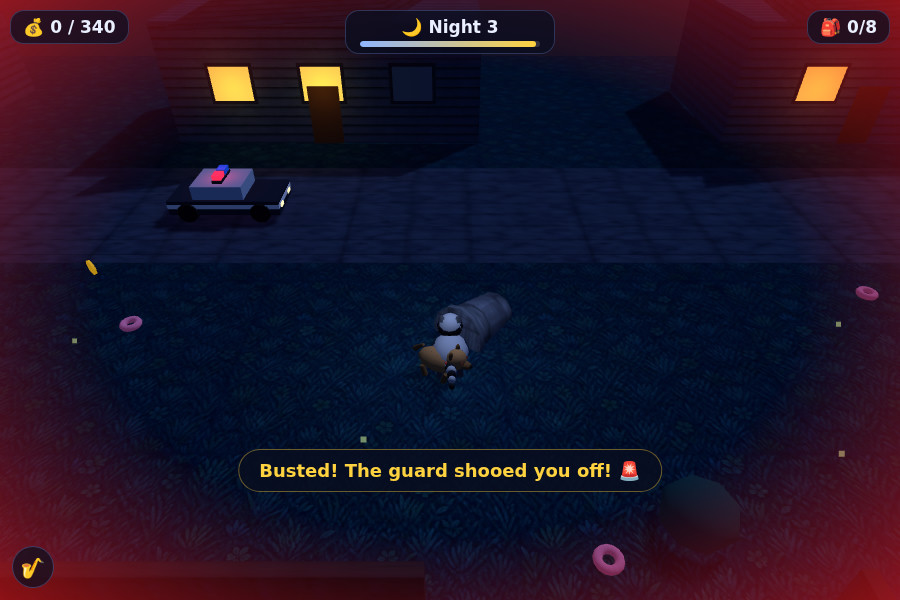
Four years after Simon Willison tweeted a GPT-3 and DALL-E prototype for a raccoon heist game, he asked Claude Fable 5 to build the full version in one go. The result is playable at simonw.github.io/raccoon-heist.
How I built this
The original concept came from an August 5th, 2022 tweet:
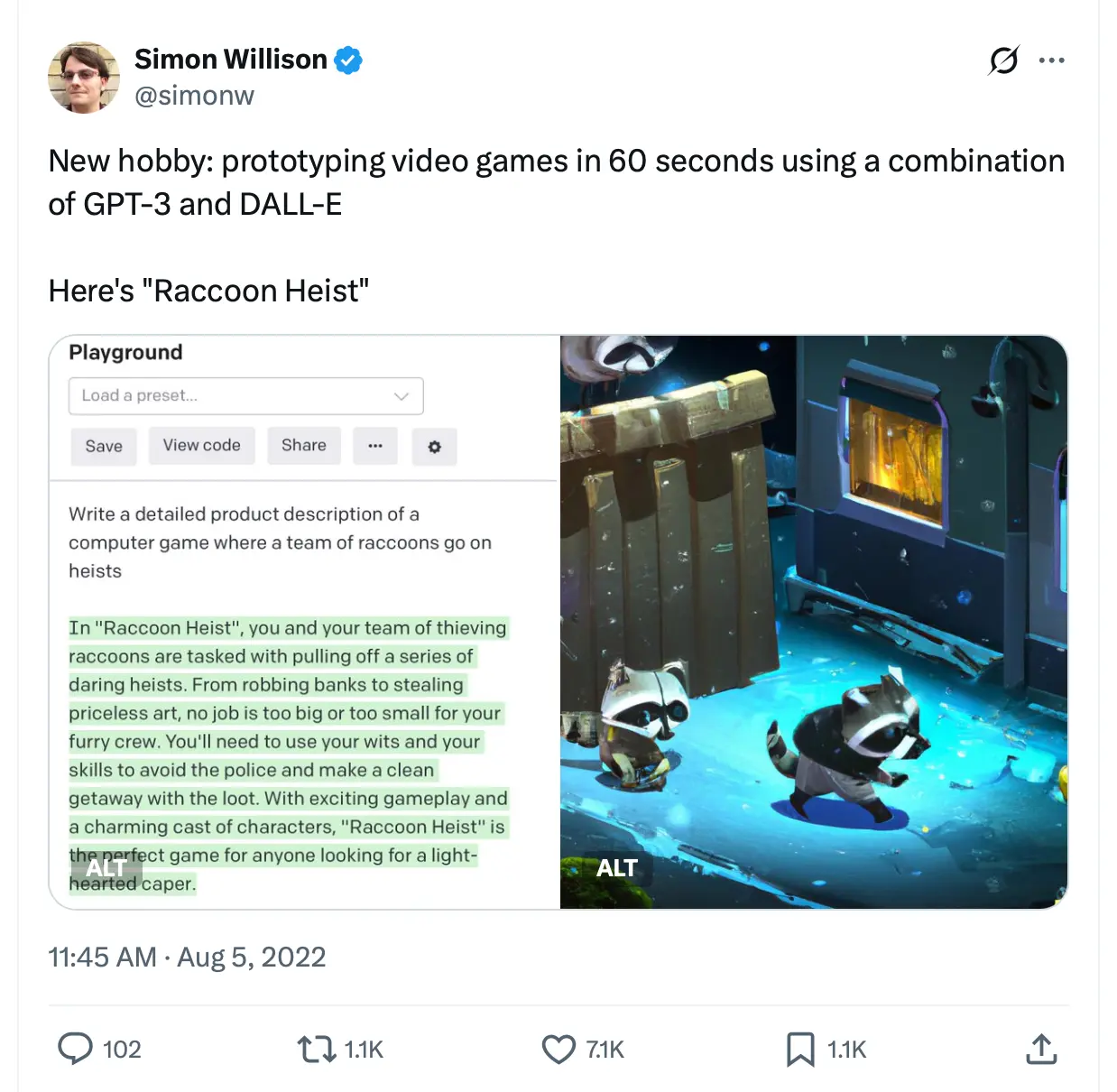
Willison’s text prompt for GPT-3 asked for a detailed product description of a computer game where a team of raccoons go on heists. The model completed:
In “Raccoon Heist”, you and your team of thieving raccoons are tasked with pulling off a series of daring heists. From robbing banks to stealing priceless art, no job is too big or too small for your furry crew. You’ll need to use your wits and your skills to avoid the police and make a clean getaway with the loot. With exciting gameplay and a charming cast of characters, “Raccoon Heist” is the perfect game for anyone looking for a light-hearted caper.
The image prompt for DALL-E was simply a screenshot from a video game where a team of raccoons go on a heist.
Willison’s experiment was to dump those screenshots into Fable 5 with a prompt telling it to write a game, then leave it to its own devices and get a working game at the end.
Setting Claude Code for web up to use GitHub Pages
Testing work in progress with Claude Code for web can be difficult because you cannot see the output while it is running.
Willison used GitHub Pages to solve this. His steps are:
- Create a new repository for the project at https://github.com/new. The repository can be public or private.
- Start a Claude Code for web session in the Claude iPhone or Desktop apps or in the browser at https://claude.ai/code.
- Tell Claude what to work on and encourage it to commit an index.html page as quickly as possible. This creates a branch with a name like claude/3d-raccoon-heist-game-50n293.
- Navigate to the Settings -> Pages area for the repository (github.com/simonw/raccoon-heist/settings/pages in Willison’s case), select “Deploy from a branch”, pick the branch name, and hit Save.
Within about 30 seconds of each push the latest content is visible at yourname.github.io/your-repo/.
Anyone who can guess the name of a private repo will be able to view the published content. Willison does not worry much about this.
The Fable 5 prompt
Willison wrote the prompt in the notes app on his phone. He accompanied it with the two images from the original tweet.
Build this 3D game, for the browser.
This repo is configured to serve static files so make sure there is an index.html that loads everything else.
Make sure it is mobile-friendly (touch controls, works well on small screens).
You have an OpenAI API key and access to their image generation model APIs, use that for textures to use with your 3D models. Docs here: https://developers.openai.com/api/docs/guides/image-generation – use gpt-image-2
Work independently – do not ask me to make any further design decisions. Make sure the game is fun, a little surprising, has good raccoon heist vibes, and is visually pleasing.
Commit and push as often as possible so I can preview your work – start with an index.html that presents a title screen, then build from there.
Append to a notes.md file as you work, including your changes to that as part of every commit.
Willison did not make technology choices. He assumed it would probably use Three.js based on previous experiments.
Giving Claude access to an OpenAI key works well for filling gaps in capabilities. Fable is very good at prompting image generators.
Willison said “Work independently – do not ask me to make any further design decisions” because he wanted to see if it could produce a full, working game without any further input.
He also said “Commit and push as often as possible so I can preview your work”. When you use Claude Code in the Claude iPhone app you give it a GitHub repository and it works in a branch. Telling it to “push as often as possible” means commits start landing in that branch straight away.
Willison asked for notes.md as added flavor. Here is the finished file, and the entry it made when it added the dog:
New escalation: from night 3 the yards get a patrolling guard dog — a low-poly brown hound with a spiked red collar and a wagging tail. It wanders between random spots, and within 12 units it catches your scent and tracks you by smell (line of sight is irrelevant — it’s all nose, shown by a 👃 over its head and barking). It gives up if you open a 17-unit gap. Getting caught messages are now source-specific: guard / headlights / hound. Verified wander → track → caught with an automated test.
Reviewing the transcript
You can access the Claude Code shared session. Willison also used his claude-code-transcripts tool to export his own HTML version which you can find here.
Fable started with an index page, vendored a copy of Three.js, then wrote its own gen_textures.py script.
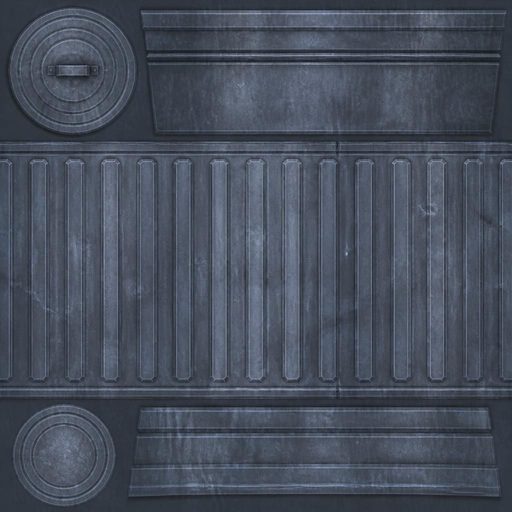
It generated the textures and spot-checked them to make sure they looked OK. The metal.jpg file it generated for the trash can looks like this, though Willison does not think it was applied exactly right in the game itself:
Then it built out the first basic version of the game, then decided to “smoke-test in the pre-installed Chromium” using Playwright. This meant it could take screenshots of its own work and eyeball them. It did that for both desktop and mobile widths of the page, then noticed that the raccoon was invisible at mobile widths, so it fixed that:
The raccoon, dumpster hideout, and both crew raccoons are now perfectly visible on mobile. Committing this critical fix.
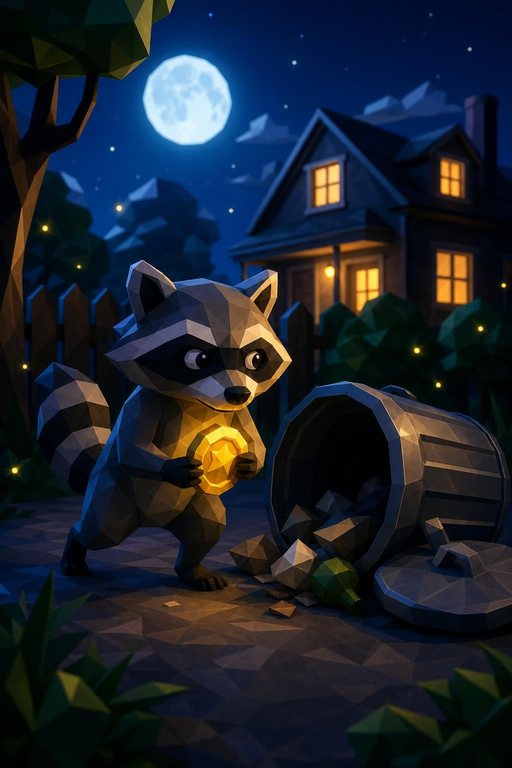
It decided to generate a title screen, which it did using this gen_title.py script. Here is the gpt-image-2 prompt it used for that:
Video game key art, low-poly 3D render style, moody nighttime scene: a cute low-poly raccoon wearing a tiny black burglar mask sneaking on its hind legs carrying a glowing gold coin, next to a tipped-over metal trash can, suburban house with warm glowing windows in the background, deep blue night, full moon, fireflies, cinematic rim lighting, charming heist caper mood. No text, no words, no logos.
And the resulting image (which Claude thought was “gorgeous”) – though Willison notes that when it is shown on desktop it gets cropped to just the top third without the raccoon!
Then his favorite change: it added the dog:
export function makeDog() {
  const g = new THREE.Group();
  const BROWN = 0x8a6440, DARK = 0x5e4128;
  c
What it means
Willison’s experiment shows how far a single LLM session has come from the text completion days. The model generated code, textures, and even automated testing logic without asking for help. For people making games, this means the barrier to building a full prototype drops significantly. You can provide a seed idea and let