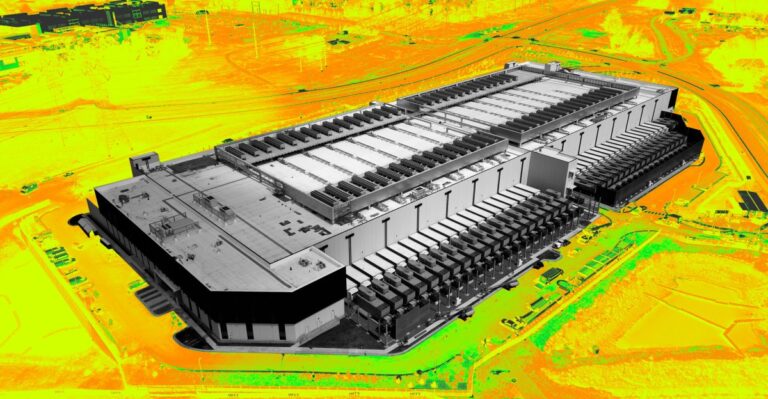
Liquid Death joined forces with former Philadelphia Eagles quarterback Jason Kelce to promote a campaign suggesting human urine could cool AI data centers.
“AI data centers waste millions of gallons of water,” Kelce says in the video. “That’s why Liquid Death and Garage Beer have teamed up. We want your pee to cool these data centers.”
The ad shows a crowd walking through a field drinking the beverage, then singing together: “Let’s pee on computers together to save humanity!”
It is a humorous commercial. The fact that Kelce has stumbled onto a real cooling tactic is even funnier.
“The Liquid Death commercial is funny and tongue-in-cheek,” Michael Obradovitch, vice president of Data Center Global Accounts at Ecolab, told TechCrunch. “But in reality, there is a fair amount of alternative water sources already being used to a similar extent to cool these data centers.”
These alternative sources offset the demand for drinking water. One source is recycled water, made by treating wastewater and sewage so they are safe to use again. That water contains human urine.
“You wouldn’t just use pee, but you can clean it and make it into useful water, and that’s what we advocate,” Bruno Pigott, executive director of the WateReuse Association and former acting assistant administrator for water at the U.S. Environmental Protection Agency, told TechCrunch.
Do not contribute gallons of your own urine to help cool a server farm as the ad suggests. But for the sake of the thought experiment, what happens if you try to cool a data center with a steady stream of pee?
“Pee contains all sorts of stuff. It contains salts, it contains urea, bacteria, organic matter of all sorts that can leave mineral deposits. If you just put that into a cooling tower or something else, it would require constant cleaning,” Pigott said. “One of the methods of cooling is called evaporative cooling, where hot air is passed through water to remove heat through evaporation. Can you imagine if you just poured urine through hot air?”
We have technology to turn urine into drinking water. Astronauts do this on spacecraft because they cannot bring enough water with them. It is not efficient at a large scale. Even if it were, scientists cannot access millions of gallons of urine at will. Toilet water ends up in wastewater and sewage.
Water treatment facilities provide recycled water to spare us from the smell of evaporated urine. These facilities use membrane bioreactors, reverse osmosis, ultraviolet light, and other processes to treat water until it is clean enough for industrial use. In some cases, this water can be treated to the point that it is drinkable.
“We use recycled water for cooling for all kinds of industries, and we have for decades,” Dr. Greta Zornes, practice leader for water reuse at the engineering firm CDM Smith, told TechCrunch. “So this is only one application, but definitely, there’s been a boom in recycled water for data center cooling.”
Though Zornes has worked on water reuse technology for more than two decades, her day-to-day work has shifted with the rising demand for data centers.
“Every day right now, I’m working on recycled water for data centers,” she said.
When data centers use more recycled water, they do not pose as much of a burden to the local drinking water supply. But industries can only pivot to recycled water use when there is proper infrastructure in place to treat millions of gallons of water every day.
“You have to be somewhat near a waste water treatment facility that’s sizable enough that you have enough water to use,” Zornes said. “So when data centers go out into rural areas, a lot of times the wastewater treatment plants just aren’t big enough — they’re not treating enough water for them to be able to take it and treat it and use it.”
Loudoun County, Virginia, located outside of Washington, D.C., is home to more than 250 data centers, with plans to construct at least another two dozen. As of 2025, Loudoun data centers collectively used about 200 million gallons of recycled water each day, but the water footprint of these data centers is so extreme that this only accounts for 43% of daily data center water usage in the area. The other 260 million gallons, or 57% of daily data center water usage, come from drinking water supplies, according to Loudoun Water.
“There’s a lot of infrastructure that has to be built out and usually isn’t existing today, and that takes time” Zornes said. “That’s one of the problems — it’s just the time that it takes to get that done.”
Obradovitch thinks that the AI industry could even drive resources toward building out this kind of infrastructure to scale water treatment. Meta, for example, will invest at least $270 million in wastewater infrastructure projects near its data centers (the company also loses about $4 billion each quarter on its Reality Labs division).
“That’s where data centers can actually come in and be anchors of water infrastructure,” Obradovitch said. “There’s a number of cases and examples where data centers, as part of their engagement with communities, have committed funding and capital to some of these municipalities to help in addressing some of those exact challenges.”
On the policy side, Pigott is advocating for legislation that would provide a 30% tax credit to help industries scale their recycled water infrastructure.
“We think it would greatly accelerate the pace with which data centers and other industries entered into this area,” he said.
While there is some unintentional science behind Liquid Death’s joke, the commercial and its virality serve as a reminder to the tech industry that the environmental demands of data centers have become a mainstream concern. According to a recent Gallup poll, about seven out of ten Americans oppose data centers in their communities, and AI products continue to face backlash from consumers who feel as though the technology is being forced into their lives.
“I’m glad that people are concerned about water, and anything that raises awareness of water, however crude it may be, could actually be beneficial,” Pigott said. “It gives us a chance to educate the public about what we’re doing today.”
What it means
The joke highlights a real problem. Data centers need water to stop servers from overheating. Using treated wastewater is a proven method, but it requires building treatment plants nearby. Many new sites are in rural areas without that infrastructure. Companies like Meta are investing to fix this, and experts want tax credits to speed up the work.