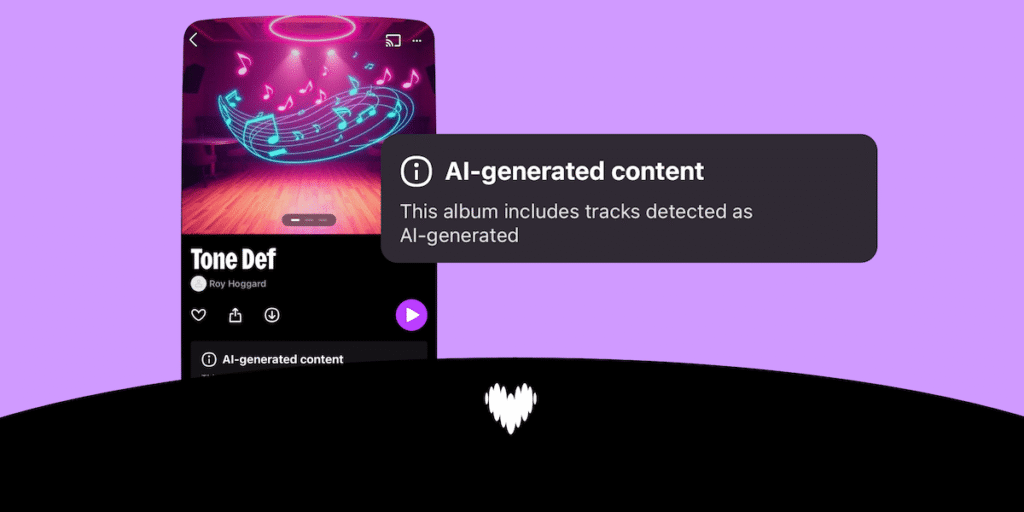
Deezer reports that AI-generated tracks now account for more than 50% of all daily uploads to its music streaming service.
The numbers
Uploads of synthetic music peaked in June 2026, averaging 90,000 new tracks per month. The company began tracking this data last year and has recorded a steady increase since then.
In January 2025, daily uploads stood at roughly 10,000 tracks, representing 10% of the total. By April 2025, that figure rose to 20,000 tracks, or 18% of daily uploads. September 2025 saw a jump to 30,000 tracks, which was 28% of the daily total. November 2025 brought 50,000 daily uploads, accounting for 34% of the total.
This year, the volume climbed again. January 2026 saw 60,000 tracks, or 39% of daily uploads. As of April 2026, the count reached 75,000 tracks, representing 44% of the total.
The response
Streaming platforms are now forced to decide how much synthetic content to host. Bandcamp has banned such tracks entirely. Tidal has stopped monetising them. Apple Music uses a voluntary tagging system. Spotify has its own policy regarding the level of AI used in production.
Deezer is removing AI-generated tracks that have not been streamed in the last six months or that are linked to fraudulent activity intended to boost revenue.
“Deezer has been at the frontline of fighting fraud and reducing payment dilution related to AI music for almost two years,” said Alexis Lanternier, the company’s chief executive. “Now that half of all daily uploads are AI-generated tracks, we are taking additional steps to safeguard the rights of artists and songwriters, while maintaining focus on music that fans actually love.”
Detection tools
Deezer began labelling AI music on its platform last year. Its detection technology identifies tracks created by models from Suno and Udio, two startups currently facing copyright litigation. Earlier this year, the company made its detection tech available to other services, though it is unclear if major platforms are using it yet. Last month, it released a tool to scan Apple Music and Spotify playlists for synthetic content.
What it means
For artists and listeners, the shift means the music library is changing faster than before. Deezer’s new policy acts as a filter, clearing out old or fake tracks to keep the data clean. The company is betting that removing low-quality or fraudulent content will protect the value of human-made music.