Meta released Muse Glimmer on Monday. It is an open-weight model designed to run AI agents locally on consumer hardware, offering the clearest view yet of CEO Mark Zuckerberg’s vision for personal superintelligence.
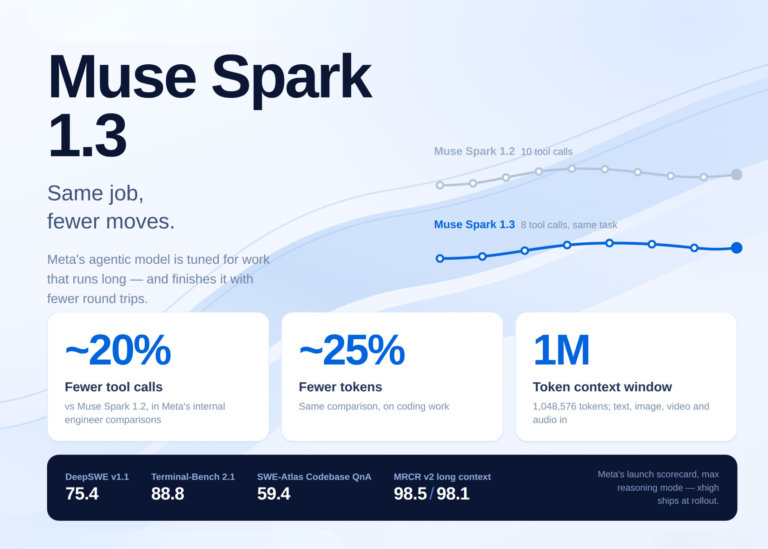
The 30-billion parameter system is an open version of Meta’s most powerful closed model, Muse Spark, which the company introduced in April. Glimmer’s weights are available under the permissive Apache 2.0 license. Developers can download them and modify them as necessary.
Glimmer runs AI agents that perform multi-step tasks locally on a Mac or PC with a single consumer GPU. These agents call tools, write and debug code, work with files and screenshots, and execute workflows over time. It supports text and images. The company said it was trained across more than 100 languages.
Meta imagines Glimmer managing schedules, drafting messages, and organising files. These tasks require large amounts of access to personal data. By processing information on a user’s device instead of sending it to the cloud, Meta is laying the groundwork for a more privacy-sensitive personal agent. Glimmer is also designed to be “always-on” and able to operate “anywhere, anytime, with or without an internet connection.”
Zuckerberg’s public stance
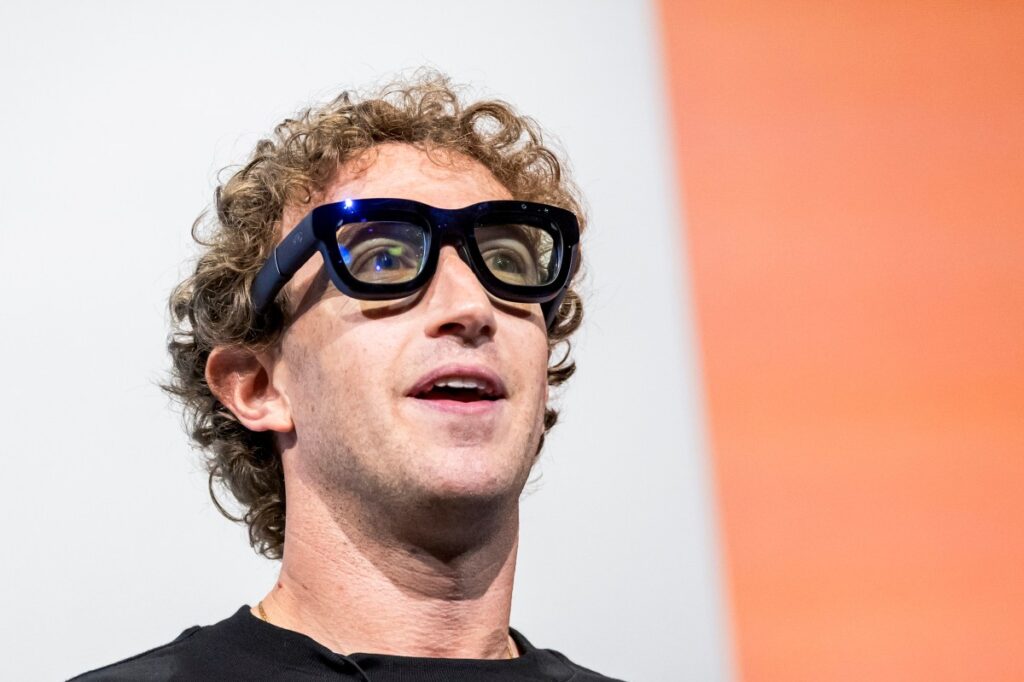
That vision mirrors the future Mark Zuckerberg has previously laid out for Meta. Last year, he argued that advanced AI should empower individuals rather than stay concentrated in the hands of a few companies. He also warned that Meta would have to be careful about which of its increasingly powerful models it released openly due to safety concerns.
In a new letter Monday, Zuckerberg reiterated that vision. He argued that distributing superintelligence widely “has the potential to begin a new era of personal empowerment where individuals can use this powerful new capability to reach their full potential, pursue their interests, and improve their lives and the world more than ever before.”
Zuckerberg listed ways Meta’s superintelligence can improve a person’s life. This includes providing a capable personal agent that “will work 24/7 on your behalf to improve your relationships, health, career, finances, home management, hobbies, and more.” It also gives people access to tools needed to create a new business or advance scientific progress. The biggest promise is that “everyone will have free or affordable access to these tools.”
Access versus ownership
Access is not the same as ownership. Zuckerberg’s promise to distribute superintelligence widely comes as Meta is increasingly distinguishing between models it will release openly and those it will keep under its control. Muse Spark, its more powerful mode, remains closed-weight. The smaller Glimmer can be downloaded, fine-tuned, and run on a user’s hardware.
Glimmer offers an early indication of where Meta may draw the line between the AI it wants people to own themselves and the more powerful intelligence that remains under the company’s control.
What it means
For people making things, the distinction matters. You can run Glimmer on your own machine to handle local data and tasks without sending information to Meta’s servers. You cannot do the same with Muse Spark. This sets a clear boundary for what you can own and what you must rely on the company to host.