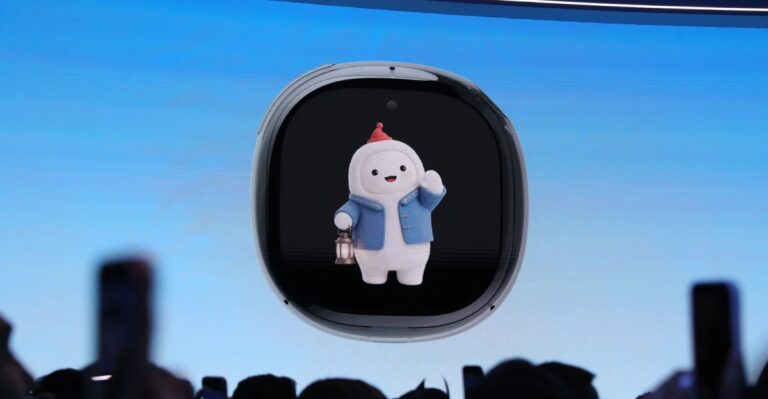
Meta has released an open-source hardware project allowing developers to build custom devices that connect to its personal AI agent, Muse.
The initiative, called Muse Gadgets, provides the necessary firmware and a Linux software development kit. Meta has also shared several starter concepts, such as attaching a colour e-ink display to the agent or creating a stick that plugs directly into a television’s HDMI port.
There are few restrictions on what can be built. Users can pair the software with inexpensive hobbyist computers like a Raspberry Pi or an off-the-shelf ESP32 board. The goal is to connect Muse to displays, buttons, sensors, actuators, and any other hardware sitting on a workbench.
Support is available through a dedicated Discord channel for users building these devices.
Meta has already tested the concept internally. Nat Friedman, head of product at Meta’s Superintelligence Labs, posted on X that the company created a device named Muse Home Link. This USB-C powered unit allows the agent to join a home network and communicate with smart speakers and televisions.
Friedman stated that 5,000 Home Links were manufactured and are being distributed free to Muse subscribers while stock lasts. The post about the device received nearly 30,000 views in a few hours, suggesting the free units have been claimed quickly. Friedman noted the Home Link would be ready to ship within a few weeks.
Muse Gadgets may not appeal to the general public, but it supports Meta’s strategy of expanding Muse beyond a simple chatbot. The company is not only targeting everyday consumers but is also courting small businesses and enterprises.
Earlier this week, Meta introduced Muse for Small Business, a free tier with usage limits that connects the agent to tools such as Shopify, Dropbox, and Slack. A new business unit, Meta Enterprise Platform, has also been launched to push AI offerings toward corporate customers.
What it means
For people who build things, this opens the ability to control Muse through custom interfaces rather than a phone or screen. Developers can create physical buttons, lights, or sensors that trigger actions without needing a traditional app.