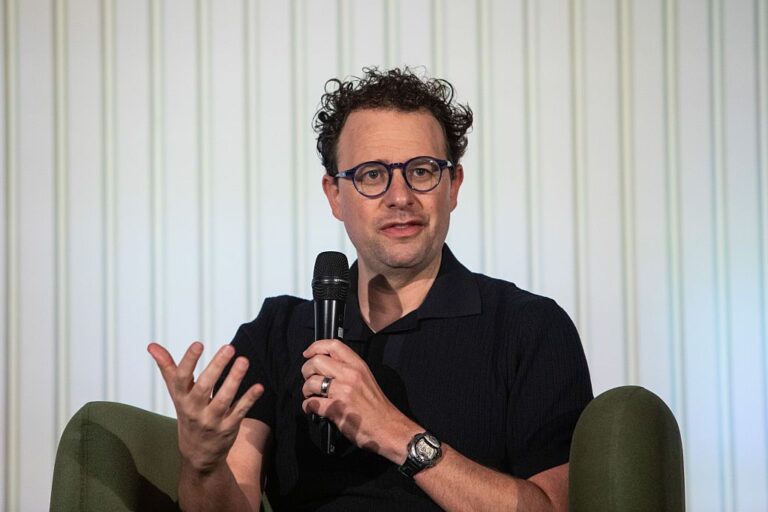
Tristan Buckmaster, a mathematician at New York University, believes OpenAI used his own research to solve a legendary problem and claim a $1 million bounty before he could. He says the company rushed ahead to beat him.
That accusation has not stopped him from using the firm’s tools. Buckmaster tells WIRED he is effectively stuck because the companies hold a monopoly and there is little choice available to researchers.
For the week and a half since the professor made his claims public, he has used OpenAI’s coding agent, Codex, to tidy up his research papers. The tool has also helped him understand the logical steps the AI agents took to move from his earlier work to the final proof.
Buckmaster worked on the Navier-Stokes existence and smoothness problem alongside Anthropic researcher Levent Alpöge. He used Codex and Anthropic’s competing Claude model for the task. OpenAI deployed tens of thousands of agents to reach the solution, but only after it learned the equation was close to being solved.
When Buckmaster went public, it sparked a firestorm about whether artificial intelligence would make human mathematicians obsolete. OpenAI subsequently launched an investigation and amended its announcement. The company stated it confirmed that Buckmaster’s Codex prompts over the two months preceding the announcement and paper on September 8, 2026, could not have influenced the system in any way, including through training.
Showing that AI was pushing the boundaries of mathematics was more important than the result, Buckmaster says. However, he calls it irresponsible and childish to churn out solutions to long-standing math problems without fully crediting the human work undergirding them, especially ahead of major IPOs.
Other mathematicians have raised similar concerns. Andreas Thom, a German mathematician, has dedicated the last two decades to developing techniques in geometric group theory. Only a handful of people on the planet understand these methods.
When OpenAI said in August that its Astra model had used those techniques to prove a long-standing problem Thom was working on, he was amazed. He immediately wondered how the firm learned about them.
Thom asked OpenAI researchers Mark Sellke and Sébastien Bubeck. In an August email, he pointed out that the firm’s assertion that no progress had been made on the problem in the last decade overlooked a 2019 paper of his, as well as other mathematicians’ work. The company amended its press release.
Thom and a colleague had been using ChatGPT to assist their work on the problem in the months running up to the result. When he asked if their interactions had been fed into training data, Sellke replied: “That did not happen.”
“I set it aside,” Thom recalls. “I’m not so much interested in these political things; I want to work on mathematics.”
While Thom has seen OpenAI’s statement that Buckmaster’s prompts couldn’t have influenced the system, he says he does not trust this and concedes he will probably never know whether his work actually fed the result.
“AI really kills this entire idea that you could trace back who contributed what,” he says. “That is probably over.”
This represents a big change from how science is typically done. Academics usually subject their findings to peer review and build on each others’ work with credit. Beyond upending attribution, the fact that humans still do not fully understand each step OpenAI’s agents took to arrive at the Navier-Stokes result poses existential questions for mathematicians. They see their field slipping from their understanding.
“If I want to make a contribution to mathematics, how do I do that as just a human nowadays when these trillion-dollar companies are in on the game?” says Alex Townsend, a Cornell mathematician and coauthor of a forthcoming book on the field’s evolution.
Since August, Townsend has seen many of his colleagues start to ask what they need to know about the technology and how they can set up subscriptions to access higher-powered models.
“I feel both excited and nervous simultaneously,” Townsend says. “Excited because I can achieve things that I couldn’t achieve without it, and nervous because I’m questioning: ‘OK, what’s my purpose here?'”
Thom accepts that his area of study is changing. He has continued to use ChatGPT—with updated privacy settings to stop his work being used to train the data—to speed up writing papers because it is extremely efficient. OpenAI’s offerings through universities and at the enterprise level default to not training models on users’ data.
“If a human had actively done that, then I would be very, very angry,” he says of someone using his work without attribution. But if information was pulled into the model through a back door, by an algorithm which nobody fully understands, “I could probably live with that,” he says.
Some mathematicians are less forgiving. Twenty-five Fields medalists wrote in an open letter that AI companies and mathematicians are severely misaligned. More than 4,000 people have signed the Leiden Declaration, which has a series of recommendations for how mathematicians, funders, and politicians can ensure that AI does not swallow the field.
Buckmaster fears the possibility of using AI to clean up some of your grammar, and suddenly your years of work could be gobbled up in user data and sold to another mathematician or grad student. He says that is what most mathematicians tend to be worrying about, and he thinks it is a real issue.
With no oversight on the horizon and AI further engraining itself in the field, some mathematicians want to find a way to at least tap the brakes. That includes more than 2,000 people with ties to Caltech who called on organizers of an AI math hackathon at the school to suspend the event. The hackathon was sponsored by Anthropic and OpenAI, though the latter has since dropped out.
But any attempts to slow things down may be for naught, especially in the long term.
“I don’t think this is really sustainable because of the efficiency gain” that AI offers, says Thom. Any mathematicians—especially early-career researchers—risk being isolated if they do not use AI to accelerate their work, he adds.
He and Buckmaster both believe the community needs to start thinking about what the technology means for younger mathematicians and how to smooth the transition.
The next generation of mathematicians is already looking for guidance. Students have also been asking about what their future could look like now that AI is becoming so capable at solving math problems, Townsend says.
Buckmaster is calling for a detente in AI-driven mathematics while mathematicians and AI laboratories set some ground rules on how to release results, including getting their references right. He himself is going to clean up the papers he published prematurely last week to beat OpenAI’s announcement, one of which he described as AI slop.
“I have a responsibility to clean up the papers that I did post that weren’t completed, and I think I have a responsibility to explain to mathematicians what we did,” he says.
He is also open to discussing this with OpenAI. “I don’t want to just engage in fights” he says. As for whether he would ever actually work on a problem with the company, “we have to be careful with that,” he says with a wry smile.
What it means
Researchers must now decide whether to accept the speed of AI assistance or risk being left behind while trying to maintain credit for their work.