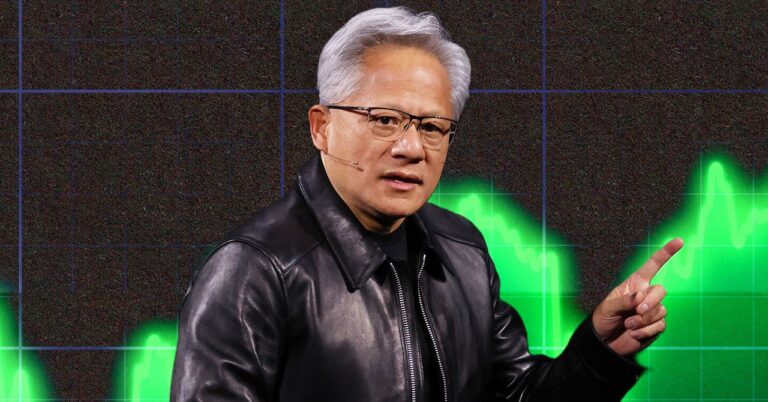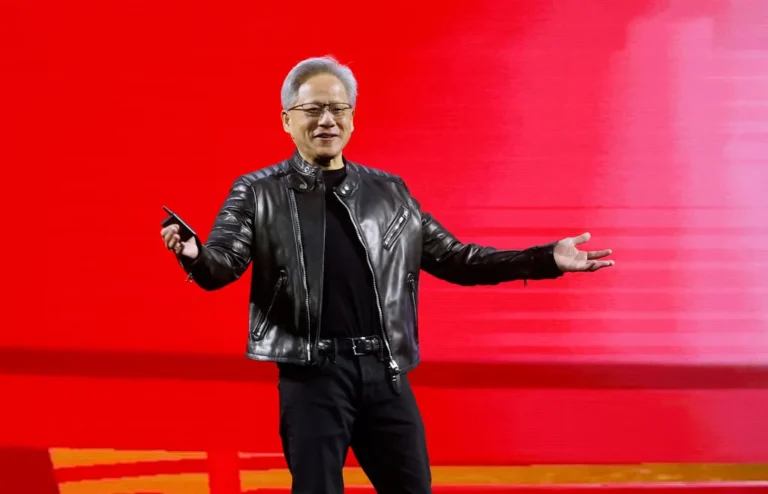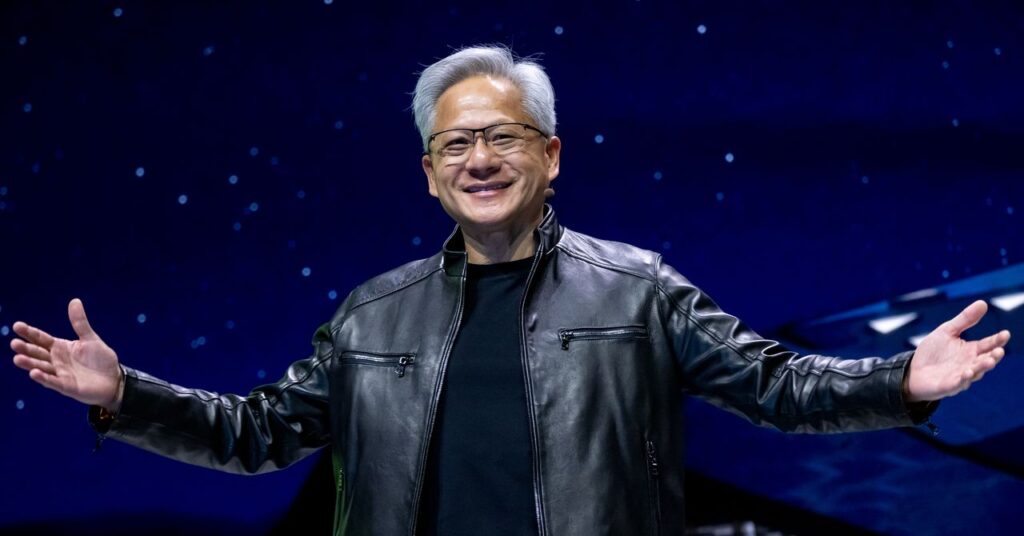
Jensen Huang has resumed his role as chief executive of Nvidia effective immediately.
The move reverses the board’s decision made just 11 days prior, when it stated it had no intention of bringing the company founder back. On Monday, the directors changed their tone and announced his return.
“The Board believes Jensen is the right person to lead Nvidia, and that his reinstatement is in the best interests of our stockholders, employees, partners, and customers,” said Harvey Jones, the recently appointed board chair, in a press release.
The announcement added that the board was satisfied with Mr Huang’s honesty and leadership ability. It noted that the directors had received input from senior levels of the United States government before reaching this conclusion. President Donald Trump posted on Monday morning that the board had made the correct and proper decision to return Jensen Huang to the position of CEO.
“I am honored to return to Nvidia and lead one of the most consequential technology companies in the world at the beginning of a new industrial revolution,” Huang said in a statement. “I take this responsibility with the greatest humility and renewed commitment.”
Huang stepped down as Nvidia’s CEO on November 12, with longtime chief financial officer Colette Kress taking over as interim replacement. Five days later, he publicly stated he was open to resuming his role, citing an outpouring of calls from employees, investors, business partners, and customers who advocated for his return.
“If the board of directors decides that my return is in the best interest of our shareholders, our employees, the company, and America, I would be honored to answer these calls and return as CEO,” Huang wrote.
Support for Huang was immediate among staff. As reported by WIRED, employees left more than 1,600 comments on an internal suggestion box post urging the board to reinstall him as CEO.
A public petition calling for his reinstatement began circulating shortly after. At the time of writing, it has amassed more than 200,000 online signatures, the majority of whom self-identified as Nvidia shareholders. Tech figures like Elon Musk and Y Combinator CEO Garry Tan have claimed they signed the petition or intended to do so.
Huang’s reinstatement marks a total reversal from the public stance of Nvidia’s board of directors, which said during the company’s November 17 earnings call that it does not intend to reinstate him as CEO. WIRED has further reported that the board was alarmed by what one source described as Huang’s lying over the last year or so.
President Donald Trump, who developed a close working relationship with Huang during his second administration, had indicated openness to Huang returning as CEO. Trump told reporters on November 16 that he would not mind if Huang returned as chief executive, adding that he believed he had learned a big lesson.
Huang’s resignation followed days of scrutiny over several extramarital romantic relationships. These included one with Chinese businesswoman Alice Huang, who has no known relation to Jensen, one with a Nvidia employee who directly reported to Huang, and one with a different Nvidia employee.
Huang’s relationship with Alice became the subject of particularly intense focus on November 6. The New York Times and Financial Times reported that US intelligence officials suspected Alice may be an asset of the Chinese Ministry of State Security. Both outlets cited an intelligence briefing that circulated among top Trump administration officials last year. In the days since, some reports and Trump administration officials have questioned the accuracy of that intelligence. The Chinese government has consistently rejected claims that Alice was one of its spies.
Alice was the chief executive of Megaspeed, a Singapore-based AI company that’s been accused of helping Chinese tech companies use Nvidia’s most advanced chips at overseas locations, effectively sidestepping US export restrictions. Alice has also reportedly worked as a television reporter, at HSBC’s Hong Kong-based private banking arm, and at an investment bank backed by the Chinese state.
Huang cofounded Nvidia in 1993 with Chris Malachowsky and Curtis Priem, purportedly with the mission of bringing realistic 3D graphics to personal computers. For many years, the company was primarily known within the gaming community. It did not become a household name until the recent AI boom, when its graphic processing units (GPUs) became a crucial piece of infrastructure for powering advanced AI models.
Nvidia controlled about 90 percent of the global GPU market as of September 2026. The year prior, it became the first ever company to be valued at more than $4 trillion, though its stock price has been in precipitous decline since Huang’s resignation.
This is a developing story. Please check back for updates.