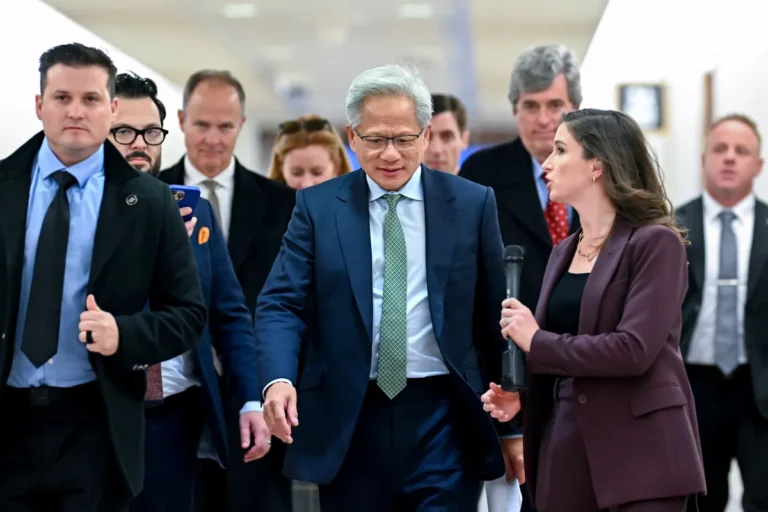
Jensen Huang admitted to breaking Nvidia’s code of conduct during his first address as CEO since returning to the role. He stated that violating the rules does not automatically mean an employee loses their job, noting that facts and circumstances still matter. This stance applies to everyone, including the chief executive.
The cultural cost
Admitting a breach of internal rules creates awkwardness for a company. While codes of conduct often look like quasi-legal rulebooks, experts view them as reflections of corporate culture. When an infraction goes unpunished, the primary risk is not legal but cultural. Employees may feel embarrassed or angry about the organisation they work for. That is the risk Huang now faces at Nvidia.
Employee sentiment
Matt Plass, chief market strategy officer at LRN, surveyed more than 2,000 workers across different industries for a study on workplace codes of conduct. Plass says the biggest danger is that staff become ashamed of their workplace.
“People coming into the workforce now, ethics is incredibly important to them,” he told TechCrunch. “They’re really mindful of the ethical standards of their company. They’re really embarrassed and angry when senior leadership lets them down.”
The consequences of breaking rules are not always tangible but they are real. Plass cited a company that banned corporate travel to cut costs, only for its CEO to appear in a VIP box at the Olympics.
“For over a decade afterwards, ‘the Olympics’ was used within that company as an example of the worst thing an employee could do. People would say, ‘Yeah, I shouldn’t have done that, but it’s not like I went to the Olympics.'”
Standard recovery steps
Companies that remove an executive typically do so after an investigation, then attempt to win back employees. Plass noted that most organisations make a change at the top based on what has happened and launch a hearts-and-minds initiative.
Leaders go out to their employee base, customers and investors to say they understand the issue, they are sorry, and they have changed. That is essentially what they do.
Nvidia’s specific situation
That playbook is harder to follow at a company like Nvidia. Huang left without a clear succession plan, and there are serious doubts about whether the company could continue to thrive without him. In cases like that, Plass acknowledges there is no easy answer.
“I would draw a distinction there between the kind of companies where the CEO is a kind of godhead figure… where the person and the company are almost impossible to separate,” he said. “There it’s much, much harder to deal with.”
In that context, Huang’s stumble over the code of conduct is easier to understand. Judging by the employee campaign for his reinstatement, Huang’s return has not created a morale problem so far. But as the coming months put more pressure on Huang and his colleagues, sidestepping the code could end up costing Nvidia something harder to measure — its employees’ pride in the company.