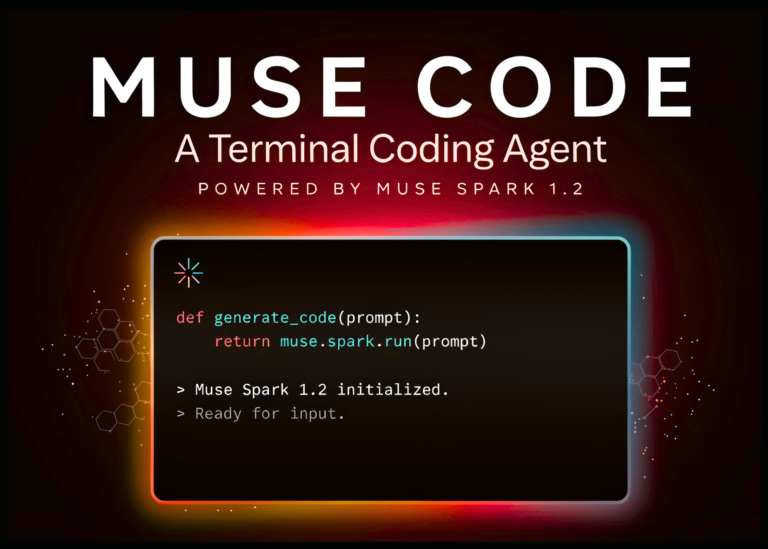
Meta has released Muse Spark 1.2, a coding-focused update to their previous model, alongside the Muse Code agent. The company states they significantly scaled training compute on coding tasks while expanding the diversity of the training environment. This new version maintains strengths in general agent capabilities but prioritises improvements in code generation, complex debugging, codebase understanding, and end-to-end developer workflows. The models were co-trained to ensure optimal performance when paired together, incorporating rejection sampled harness trajectories and recipe optimisations for goals and subagents. Muse Spark 1.2 was extensively trained on long-horizon coding tasks, including whole-repository generation, large end-to-end projects, and auto-research.
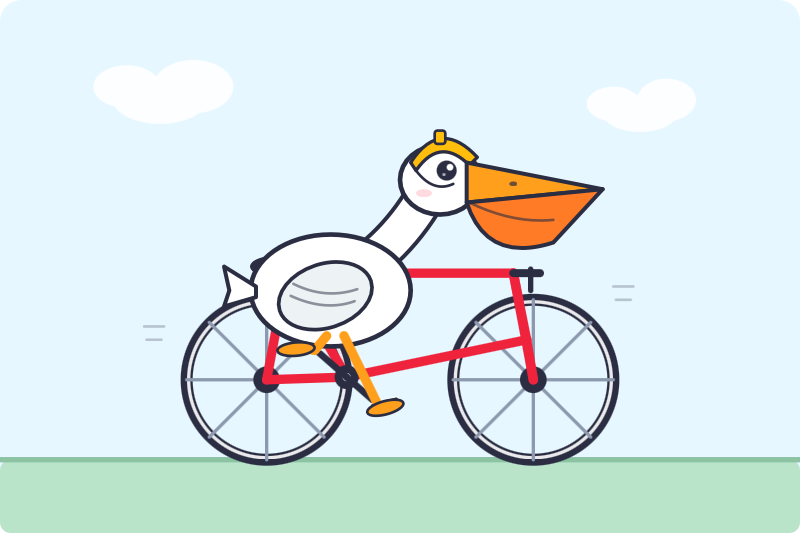
The practical implication is that long-sequence agentic tool calling remains the most important characteristic for modern models. Meta shipped a dedicated coding agent as part of the strategy to make this functionality work effectively. The release demonstrates a shift towards training specifically for complex, multi-step development environments rather than isolated code snippets. Simon Willison noted a material improvement in the visual quality of generated SVGs, showing a more detailed pelican riding a bicycle compared to the earlier version.
* Training included integration of the Muse Code toolset to maximise harness compatibility.
* The update focuses heavily on whole-repository generation and large end-to-end projects.
* Rejection sampled harness trajectories were used during the co-training process.