In most factories, automation is fixed: robots and machines are programmed for one specific task and product. Changing a line means reprogramming and physical retooling, or swapping out equipment, which can take weeks or months. San Francisco-based Industrial Next says it’s changing that.
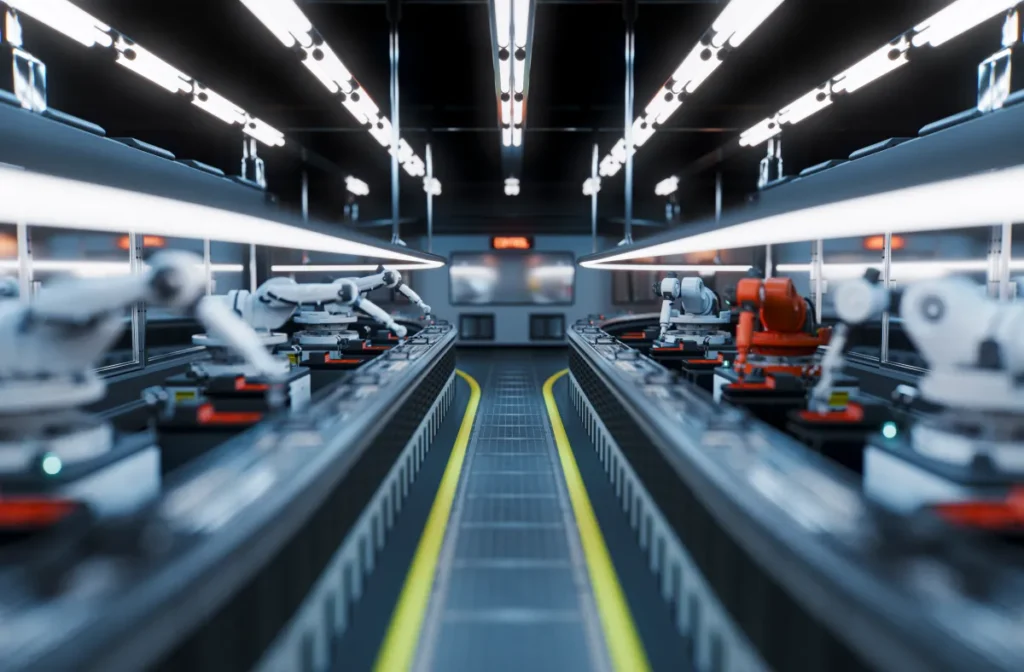
The startup, which presented today on the Startup Battlefield stage at TechCrunch Disrupt 2026, builds AI-driven, self-contained robotic stations powered by proprietary foundation models that connect vision, task context and motion. The company says this lets a production line be retooled in minutes rather than weeks without traditional programming. The goal is to let manufacturers automate complex and delicate tasks that traditionally require human labor.
The company announced on stage that it’s partnering with BMW Group Technology Office to evaluate Industrial Next’s AI-powered dexterous manipulation for manufacturing.
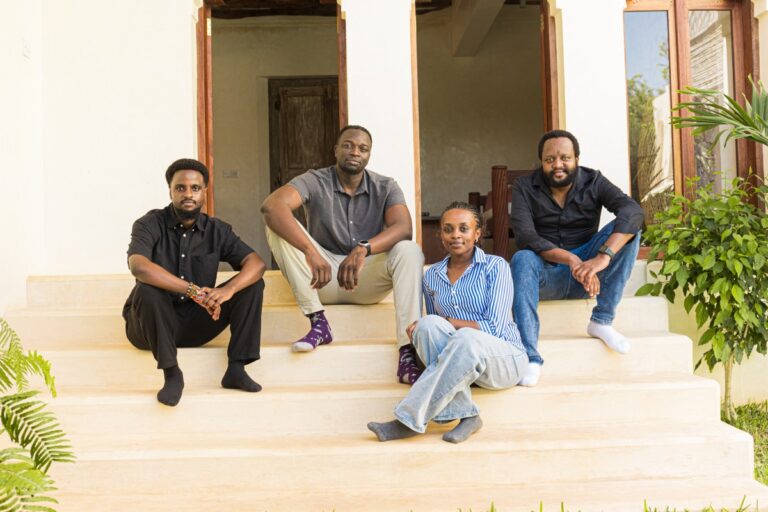
Industrial Next was founded in 2021 by Lukas Pankau and Allen Pan, both of whom previously worked at Tesla. Pankau served as a lead electrical architect at Tesla before moving on to Waymo. Pan led Tesla’s autonomous factory efforts and later became a chief architect at autonomous driving company Neolix.
The pair came up with the idea for Industrial Next while working together at Tesla. Pankau’s first encounter with Pan was literally tripping over him as Pan was asleep on a factory catwalk after pulling an all-nighter. Although the two didn’t get along at first, they soon realized they shared an obsession with getting things done and had complementary skills.
After years of watching cutting-edge vehicle and self-driving technology get held back by decades-old factory equipment, the founders realized that manufacturing needed to be rebuilt.
“We had all these fancy things that we could do on cars. I could run machine learning algorithms to design a car for me. But I couldn’t figure out how to program a robot, and this was pretty common for engineers at Tesla,” Pankau said. “You had this massive divide, right? You had people who are really good at what they’re doing–designing cars and designing self-driving systems–and then you had them effectively stumped at the factory looking at this equipment from the 1980s. And so we started rethinking what this should look like using the technology that we have today and using everything that we know today.”
The two kept thinking about their frustrations with industrial equipment even after moving on to their next jobs. They stayed in touch, often reminiscing about the machines that never functioned the way they wanted, and eventually decided they could do better.
“I was at Waymo at the time, kind of bored out of my mind because I was missing that pace of Tesla,” Pankau said. Pan, he added, was in a similar position at Momenta, a developer of self-driving systems in China. Pan recalled their conclusion: “We’re like, we’re not getting any younger, and we’re still obviously passionate about it. We still keep complaining about industrial technology. Like, this is three years later, we should start the company.”
Pankau notes that traditional industrial robots are typically programmed to perform highly specific, repeatable tasks. As a result, even a small change in the process or product can cause the robot to fail or trigger costly downtime, which forces manufacturers to simplify their products for repeatability.
Making robots truly flexible presents a different challenge. They need enormous amounts of training data and, unlike AI models trained on the internet, robotics lacks the vast datasets needed to teach machines how to perform complex physical tasks.
“We can make robots do all these cool things like dance around, because there’s data for that, but we can’t make them assemble high-precision things,” Pankau explained. “This is where we’ve made a lot of progress on using simulated environments to do these high-precision and high-dexterity tasks. The secret sauce for the robots that we have is that we have given them an understanding of the process in general, but we build that understanding using an extremely high-fidelity simulation engine that is close to the real dynamics to where we can let the robot do these kinds of high precision tasks almost without seeing the parts at all.”
In other words, the robots practice in a highly detailed virtual world that closely mimics real-world physics. Industrial Next’s robotic stations can be reconfigured, combined, and redeployed across product lines. New tasks are taught through simulation and demonstration, rather than hard-coded scripts.
Pankau explained that some of the startup’s workstations are already used in making one of the world’s most popular smartphones. They handle tasks that manufacturers had tried and failed to automate for years, such as threading a delicate flex cable and snapping a tiny connector cap into place. (He wasn’t at liberty to disclose the customer.) He also described a “film peeling” station, where their AI-powered robots strip protective film off camera modules and buttons at or above human speed with 100% accuracy, even when moved to a new phone model and production line they have never seen.
“We started this company because that is the kind of performance that we wish we had at Tesla, where we were bypassing robot stations because we couldn’t program them effectively enough using traditional technologies,” Pankau said. “Now we want to take this to more complicated tasks than just building a phone. We ultimately want to take this to building a full car end-to-end without any human touching ever.”
To check out more of the Startup Battlefield — along with a slate of established founders and VCs whose takes on the industry you won’t want to miss — join us at Disrupt, happening this week in downtown San Francisco.