
Welcome to Import AI, a newsletter about AI research. Import AI runs on arXiv, cappuccinos, and feedback from readers. If you’d like to support this, please subscribe.
This issue consists of a lengthy essay based on a speech I recently gave, and a fictional story attempting to think through what a positive singularity might look like.
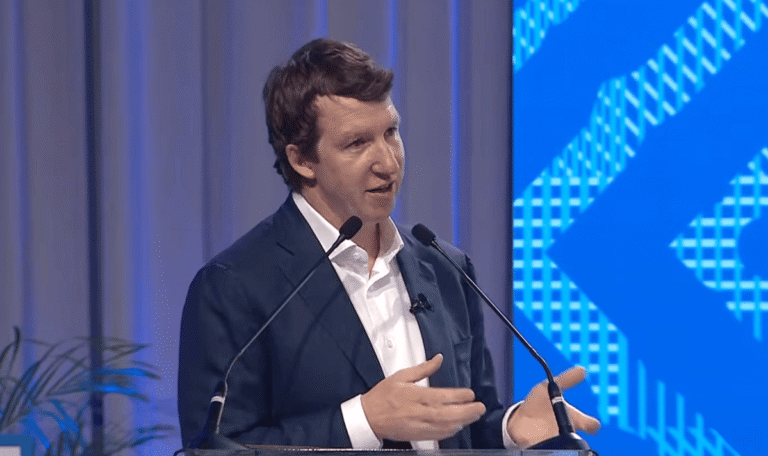
The talk is the 2026 Cosmos HAI Lab Lecture, given at the Human-Centered AI Lab (HAI Lab) in the Institute for Ethics in AI, University of Oxford, in collaboration with the Cosmos Institute.
Cosmos lecture: Explore the future, or retreat from the present.
Video here.
This is a talk about how to think about and deal with the success of AI as a technology, and to think about how its continued maturation might change us as individuals and as societies.
In short, the rapid advance in AI technology presents all of us with a choice: explore the future, or retreat from the present.
Exploring the future requires us to reckon with the fact of continued AI progress, and ask ourselves what we want to do with this technology as it becomes more powerful. Retreating from the present is when we ignore the implications of the technology and dismiss it. Retreating from the present forces us as individuals and as society into states of reactivity or passivity in the face of AIs continued advance.
In the coming years, we will need to make many decisions as individuals and as societies about how we want to shape AI, how we want to use it, how we want to direct it, and how we want to distribute its benefits. Making these decisions requires us to reckon with the power of the technology – and see the future that its continued advance implies.
In Part 1, I outline what the past few years of AI progress have looked like and discuss why, if the technology advances as much as I think, that AI cannot be treated as a normal technology.
In Part 2, I try to make sense of the advance of AI through the lens of my own experience with the technology as well as that of Anthropic. There are individual and collective lessons here about what is to come.
In Part 3, I talk through some of the humbling, almost unimaginable choices that lie ahead of us.
Part 1: My uncomfortable relationship with a graph
Let me talk about my relationship with AI through the lens of my uncomfortable relationship with a single graph of AI progress.
Fundamentally, this talk is about planning for success of the overall endeavor of building AI systems. By success, I mean that we succeed at building increasingly powerful systems, potentially ones that eventually build themselves. It’s time to plan for this, because AI systems are likely to get better a lot faster than people expect, and as they become more advanced we should expect profound changes to happen to people and to society.
To understand why I’m thinking about success so much, let’s look at a graph that tries to represent all of AI progress, the Epoch Capabilities Index, or ECI.
The ECI shows the score of different models over time on a basket of 40+ distinct benchmarks. When you look at the graph you see a bunch of lines going up. When I look at the graph, I feel a sense of vertigo, because I know a little bit about what underlies this graph. So let’s find a different way to view the graph: by looking at the achievements of various AI systems over time.
I then proceeded to summarize some of the highlights of AI progress in the last few years, starting in March 2023 with AI passing the bar exam tested, how LLM-based systems achieved silver medal in the International Math Olympiad (July 2024) then gold (July 2025), to AI co-authoring new mathematical proofs (2025), and systems like Claude Mythos coming out and finding novel flaws in software.
This gives you a sense of the rapidity of AI progress, but what I want you to feel is the future implied by it. These are all achievements in their own right, but they stem from a common underlying technology, and that common underlying technology is continually being pushed forward.
We have just talked about the individual ‘trees’ of AI success, but these trees are all part of a forest, and this forest is growing in size and breadth with every passing moment: `in fact, the growth rate of the whole forest is increasing over time.
SUCCESS AND WHAT IT MEANS
This talk rests on the idea that the sort of progress we’ve just seen will continue. And why wouldn’t it? It is based on a common technology where performance keeps growing somewhat predictably in direct relation to the resources invested in it, namely compute and data. And we know that companies are now investing hundreds of billions of dollars in the computing facilities to train future AI systems, so some amount of future progress is already locked in.
That means we need to be eyes wide open about what the continued success of this technology means, so let me be very clear:
AI is a tremendously powerful technology, and getting more powerful all the time. It is a technology that is smarter and more capable than most of us as individuals, and is on a trajectory to be more capable than all of us in the aggregate. It is a technology that we do not fully understand given that it is more grown than made, and one can concoct plausible scenarios by which AI could kill every single person on the planet. To think building this technology is without risk would be an act of hubris or insanity.
And yet building this technology is one of the best ways that we as a species can advance ourselves, can expand the frontiers of science and technology by equipping ourselves with a tool that can help us think about the greatest challenges our species faces.
But that’s not all. The continued success of our endeavor increases the likelihood that this tool itself becomes independent and capable of even more. We might soon be able to build an AI system that may be smart enough to develop its own successor, thus kicking off a process of recursive self-improvement which would utterly transform the economy and the broader world. The analogy would be a 3D printer company, making a 3D printer which could print its own finer resolution print head, without any outside technology needed. That class of technology has never existed before, and yet I believe this could happen within the next two years, and possibly sooner.
This will generate even more advances of the flavor we’ve just discussed, broaden even further the capabilities of us as people and societies, and further deepen the way in which AI shows up in my life and the lives of others. Coupled with this will be immense change, change of a magnitude that I believe none of us have yet experienced in our lifetimes.
This technology is so powerful that I should clearly state that if it was possible to elegantly slow the development of this technology to give ourselves more time as a species to deal with its immense implications, then that would likely be a good thing. But in the absence of a coordinated, global slowdown, we are left with the current situation: powerful technology being developed at breakneck speed by a variety of actors in a variety of countries, locked in a competition with one another where commercial and geopolitical rivalries are drowning out the larger existential-to-the-species aspects of the technology being built.
This is not an ideal situation, but it is the one we find ourselves in.
The question I am struggling with now is: “how do I get my mind right with living through the singularity?”
I think the best place to start is by talking through in more detail how AI is already changing my life and my world, and seeing what we can learn from that.
PART 2: EXPLORING THE FUTURE WITH AI
AI has already meaningfully changed my life, in ways that are both positive and negative. It is also starting to cause large changes at Anthropic, the AI company that I am a cofounder of. Let’s talk through some of this by returning to the graph we looked at before, but this time by looking at it through the lens of my own usage of the technology.
How the graph feels to me
Another way of viewing this graph is how it has felt to me in terms of my own subjective experience of working with the technology.
In the summer of 2023, I use AI systems to check my work for typos. By November, I am using AI to help me figure out what foods to feed my baby.
In January 2024, I use AI to help me understand my marriage as it has changed with having kids. By June, AI helps me scrape my own newsletter. In August, AI writes me a text adventure game for navigating AGI. In November, I try to re-imagine my job using AI.
In January 2025, I ask AI how to prepare for superintelligence. In February, I use AI to generate codenames for AI projects in my fiction. In March, AI persuades me to attend an art show after I talk to it about how I’m a bit depressed and antisocial. In May, I talk to AI about my own stress and discomfort with the stakes of AI development. In August, AI persuades me to go back to therapy. In November, I use it to research “S-curve” datasets of solar, semiconductors, and space.
In January 2026, AI advises me how to encourage my toddler to read. In March, I track the performance of AI for kernel design across tens of distinct papers. In May, I have AI generate the speech of an AI character in my fiction.
When I think about my own personal experience of AI, it’s that as AI systems have got smarter, they’ve made much deeper inroads into my own life. These days, AI systems figure in my life as deep intellectual partners that ideate with me, as systems that I confide in and discuss my personal life with, and as virtual employees who go and do work for me that I’ve always wanted to do but haven’t had the time, like generating reports on the price of various technologies over time.
But most importantly, I now can use AI systems themselves as a kind of telescope to do the work that is most important to me, trying to understand the future of AI by seeing the contours of overall AI progress. The most amazing part of this is that, to torture the analogy, the lens for the telescope I use here comes from me, specifically, from a hobby I’ve had for the last ten years.
EXPLORING AI VIA SEEDS OF PERSONAL INTEREST
The hobby is called Import AI [readers – it’s this newsletter!]. This newsletter, which is now in its tenth year, is my main hobby outside of work. In the newsletter, I read research papers about AI and I work hard to understand them. Once I feel I understand them, I write a summary and a note on why they matter. Each issue contains a bunch of these, plus a short fictional story where I wrestle with the implications of the technologies I’m learning about.
Recently, I had a revelatory experience. I was putting together data for my post about AI R&D and I simply pointed an AI system at my newsletter archives and asked it to pull out with references all the times I’d covered anything that looked like AI R&D. It did this extremely well and sped up my ability to do some analysis that was core to my essay on RSI.
But more interestingly was what happened next: I asked it to make graphs for me by reading over the references in the newsletter, mostly arXiv papers, and then pulling in the data and compiling it and composing graphs in a nice dashboard which I could then explore.
Then I realized I could convert this thing I’d asked it to do into a repeatable process, a skill. By giving it something of mine that was uniquely mine, my newsletter, my intuition, my taste, I had given it some kernel from which I could grow something much larger. So I made a skill. And then something strange happened: I said to it “go and make 20 more graphs like these”.
It went away and read a few hundred papers and came back with 20 more graphs. As I looked over them I had this thrilling feeling of discovery, though I knew some of these graphs and could have asked it to make them for me, there were also entirely new graphs there tied to papers or benchmarks I’d never seen before. Through this I learned about some new primary source material to read, which I did.
I understand at a bonedeep level just what it takes to make a graph. You read a bunch of papers. You go hunting for common measurements within them. You read the many different caveats in each paper and figure out which metrics are bullshit and which are meaningful. This takes much longer than you can imagine.
Almost ten years ago I co-founded a project called The AI Index at Stanford University whose goal was to produce an annual report about AI progress. I became a co-founder of that project because I ran into some of the academics doing it and realized I had already made the graphs they’d been thinking about: I had a spreadsheet on my computer where I had been diligently assembling a graph relating to progress of various AI systems on Atari games, as well as the imagenet chart, and some machine translation charts. These graphs were a “proof of work” that other humans read as indicative of my passion and my diligence. They knew by the fact I’d made these graphs that I had spent a huge amount of time reading these papers.
I need you to deeply feel how much time goes into this, and then marvel at what it means for an AI system to be able to do it, and not just do it, but do it in a repeatable and generic way, thousands of times faster than me.
Now I have this bottled up skill where I can harness the absurd power of these AI systems to do something for me that I know would take me literally weeks of work. And it can do it for me in minutes. And it can do it for anything. I’m now using this as a means by which I can explore the world of biology, having it generate graphs for me and then picking the ones I find interesting and reading the underlying papers.
But to me, this skill is also me. It is a skill grown out of my own obsession and idiosyncrasies and watching it work feels to me like a miracle because it’s me, but a version of me that runs thousands of times faster and is much much smarter and much more reliable.
There is something deeply empowering and amazing in this. I’ve turned my highly idiosyncratic passion into something that can be distilled and handed to a machine, which can then go and do things on my behalf. And it’s only able to do this because I have been fortunate to have developed this rich, specific hobby, which has relied on repetitive practice and creation over a decade.
This is fundamentally an illustration of how AI can let us “explore the future”. Through this amazing technology I’m able to enhance my own understanding of the world and gain more autonomy and potential for self-direction in relation to my own passions.
It also provides an even greater incentive for me to continue to work on my newsletter, despite the fact machines can obviously do all of it: by working on my newsletter I can continually update some kernel of my own interest and use this as a means by which I can explore the world of superintelligence, and project myself into it.
WHAT IS HAPPENING INSIDE ANTHROPIC?
There are also changes afoot inside Anthropic which speak to the larger changes to come.
Recently, I had the fortune of getting pulled out of the goldfish bowl that is the AI company via something called paternity leave in November of 2025. When I came back in late February, weird stuff had started to take place. While I’d been away, we had released a new LLM, Opus 4.6. I knew this model was good because I’d been playing around with it in my occasional spare time between changing diapers.
But I hadn’t intuited how much it had changed things inside the company: Opus 4.6 had gotten just good enough that my colleagues had started to delegate a lot more work to it. In fact, it had gotten so good that it had completely changed how some people work. Some of them were no longer writing code at all: they were just instantiating this model in tools like Claude Code and setting it free to do tasks for them, and their jobs had become oriented more around managing its work and checking its outputs than doing the work themselves.
In Anthropic, much of the work that needs to get done involves writing software, which is made out of code. This significant increase in the automation of coding has been equivalent to dropping many, many more employees into Anthropic, speeding up our overall pace of development. The result of this has been a massive rise in the amount of code being produced inside Anthropic. This trend started in early 2025 but really accelerated in the last few months. Of course, the majority of code inside the company is now written by Claude. But in addition the volume of code has exploded.
As a consequence, more effort is going into tools for scaling up the amount of Claude-generated code we can confidently ingest and test, and more effort is going into building telemetry systems that give us humans consumable and intuitive ways of reading what this “emergent machine society” inside Anthropic is doing. I am spending more time working with teams on the challenges of observability, Anthropic and the AI platform we operate looks more and more like an ecology filled with agents running around and doing stuff. The task for us now is to figure out how to measure and observe that ecology, and work out what is normal and what is not.
This change maps to a brewing theory among economists: that one consequence of automation via AI is that humans move to figuring out how to validate the outputs and price the operational risks of AI systems. That increasingly seems to me to be what we’re doing inside the company. The more we add AI automation, the more humans move to some “verification layer” that sits atop it. The verification layer sits atop of a much larger “virtual organization” which consists of increasingly large quantities of AI systems working on behalf of humans. This is already showing up inside the company in terms of how we as humans validate and verify AI-created outputs: Claude is now creating not just an increasing amount of code inside Anthropic, but also producing a lot of the analytical documents where people reason about strategic questions.
This means that we’re all figuring out ways to indicate how much of a document is written by Claude and how much of it we endorse. To me, this looks like the formation of a new “trust economy” whereby we find ways to surface interesting qualitative or strategic ideas from Claude, as well as more easily evaluatable technical contributions.
This also led to internal discussions around hiring. How do you hire when you’re in a world where AI systems can do meaningful chunks of your work? Speaking personally, it’s both changed the amount of people we expect we are going to hire in some teams, and it’s also changed the shape of people that we need to hire. We’re now hiring early career people who are extremely well versed in LLMs; people who grew up with the technology, basically. And there are also growing returns at the other end to experience, where the value of very experienced people has gone up because we’re now not so much limited by what a person can do, but rather by what kinds of projects they can imagine doing. It’s also making it possible for us to hire more interdisciplinary people. Where before this always had a cost, because we’d need to invest technical resources to make them productive, it’s now much cheaper because they can just use Claude directly.
We may eventually experience more radical changes when it comes to the scaling of the organization. One early example of this comes from our researchers, where in an experiment on “automated alignment research” a single human was able to effectively run a team of 9 synthetic research agents to do and do some real research investigation for them. The role of the human here was to set some of the initial research directions, and the role of the agents was to do the research. Is this a fluke? I don’t think so. Rather, I expect this is the new normal, where teams of people operate on top of a pyramid of digital labor, which massively scales their own effectiveness, allowing them to move faster and do more than other people have been able to do in the past.
Perhaps most importantly, I have seen the use of AI cause us to have a greater culture of reflection about the purpose of AI than before. After you are exposed to an AI system doing much better than you at your day job, you have to confront the questions of what happens if the AI system keeps going. Now, more and more of us are meeting and spending more time on the “meta”: trying to predict where the AI systems are going to go in the future, trying to work out how to more effectively manage tens to hundreds of agents apiece, trying to figure out how we can use these systems to do research projects that once seemed impossible. One of the largest tasks is trying to figure out how we can productively get out of the way of these systems as often it is the humans that are slowing them down.
The question many people ask themselves now is how to build teams that will scale in relation to the advance of AI capabilities. This generally looks like building smaller teams to go after more ambitious targets. I expect this also means we will be building many more teams than before.
The main lesson I’d take from this is that Anthropic is attempting to “explore the future” with Claude. We are aggressively using Claude throughout the organization and trying to change our organization and how we work ahead of the arrival of more advanced systems. By comparison, much of the rest of the world seems to be in denial about the capabilities of AI systems today, let alone those that will exist in six months or a year, and so is therefore caught in a “retreat from the present”, denying the validity of the technology.
PART 3: Weird futures
We’ve talked now about how AI has progressed in the last few years, and also how the advance of AI is showing up for individuals like me as well as organizations. So let’s return to the graph and now extend it forward: I’ll now try to make some predictions about the world ahead of us.
Some predictions about the future
In November 2026, AI systems are good enough at biology that they are highly relevant to both advancing science and potentially proliferating bioweapon risks.
In April 2027, a team of humans and an AI system make a discovery that will subsequently get a Nobel Prize.
In November, autonomous companies exist which generate tens of millions of dollars in revenue. Multiple human & AI companies exist which generate hundreds of millions to billions of dollars in revenue.
In April 2028, bipedal robots begin to do useful work in the real-world in partnership with human tradespeople. In December, AI systems are able to autonomously design their own successor systems.
I’m also going to make some predictions about me – how do I expect to be using AI in the coming years? How might it shape my life?
Some predictions about my personal future with AI
In November 2026, some chunks of my life are autonomously managed by AI systems working for me.
In April 2027, I make massive changes to my career mostly through discussions with an AI system. In November, I spend more time reading AI-generated custom-to-me science fiction than regular science fiction.
In April 2028, I have learned an entirely new skill through customized tutoring via an AI system. In December, AI helps me make a conceptual breakthrough that changes the course of my life.
TELL ME HOW THE WORLD STAYS NORMAL
When I think through these predictions, it’s hard for me to reconcile the continued advance of AI with the world being normal or myself as an individual remaining the same as I am today. I expect great changes ahead.
In fact, these changes seem to me like they have the potential to be extremely radical. Here are the parameters of the world I’d expect us to be in:
Compounding wealth from the machine economy will drive a boom in economic activity the likes of which we have never seen.
The colonization of vast swathes of human work by ethereal synthetic intelligences which think faster and better than us, forcing us to reallocate human labor towards other parts of the economy.
The sudden and extreme rise in the rate of scientific advances
We can make some more specific predictions, rooted in the trends of AI progress and how people are using the technology:
A massively changed economy: It is impossible to reconcile the world ahead of us with the world of today, given this technology. We should expect unprecedented things to happen in areas as varied as: rate of business formation, size of firms on a basis of revenue per employee, and other things. Some specific scenarios that seem likely:
Fully autonomous companies: Companies that are run by AIs, possibly for AIs.
10,000 synth:1 human ratio corporations: We should expect to see very small groups of humans form organizations that have the capabilities of 10,000+ employee corporations.
Exchange rates between the human and machine economy: At some point, we might expect to see the emergence of ‘machine currencies’ that then have some relationship to ‘human currencies’.
Productivity multipliers on everything: Everything that AI touches will get an absolutely massive productivity multiplier. This will loop back to the economy and it will massively empower many people. It also might displace people.
Massive and compounding rate of science advances: AI will help move forward any part of science it can touch and run an experimental loop with. Initially, this will be a few areas. We should expect it to expand quickly to all areas.
The general switchover of “agentic actions” in the world from being “predominantly human” to “predominantly machines”. On a pure numbers basis, machines taking autonomous actions in the world will quickly grow to outnumber humans. We should expect that chunks of resource allocation and the economy should follow. The environment in which we live will be more and more determined by the actions of machines that we only lightly control.
Synthetic intelligences will start to influence people, far more than social media did: The introduction of social media into the world, combined with hardware platforms like smartphones, has changed the behavior of the majority of the humans that interact with it. These changes have ranged from changing the allocation of time they spend consuming social media versus traditional media, to altering buying habits through social media driven advertising, to changing how discussion around various issues in public life translates into political actions. We should expect AI systems to compound these trends, further changing people in a variety of ways.
Directed economic and science expansion: Economic and scientific activity will directly relate to the expenditure of computational and energy resources. Given the likely case that there will, at least for the next few years, be way too few computers relative to the demand of them, we will be able to make choices to society as to how to allocate the gains of the technology. These choices will be of the form:
Should we let market incentives dictate what compute gets used for, or are there things that have social upsides which the market doesn’t price effectively?
Should we preferentially allocate compute to some people or organizations, for instance to intentionally drive forward science in certain ways?
Tell me how the world stays normal, based on this technology and how it is showing up in the world? We have superintelligences that have shown up in the world that grant the power of synthetic workforces and nation state security skills to individuals. We also have individuals like me who are able to take work that previously took them weeks and now do it in minutes. And we have organizations like Anthropic where the way work happens within the organization is radically changing every 3 or 4 months, to the point it is causing people to change roles multiple times a year, and effectively sit themselves on top of a company which feels more like one of 40,000 people than 4,000 due to the capability multiplier of the machines.
The best and most conservative take I can generate is “vast swathes of the economy will go through profound changes in the coming years”. And if recursive self-improvement happens, then anything I might predict would sound truly crazy: the rapid emergence of a machine economy which decouples from a human economy. The sudden maturation of robots as they gain brains that can pilot their existing, quite good bodies. Science advances happening based on technologies not developed by people but by machines. The migration of large swathes of computation to space-based datacenters. A world where everything that used to take ten years now takes a year. An age of confusing miracles, happening faster than anyone might expect.
This is in many ways an amazing future, but it’s a future that we get to make more choices about in direct relation to how much we accept that it is happening. If we stand by as the new synthetic intelligences multiply then we will be forced into reactivity, just as societies across the world were forced into reactivity by acting too late in the face of the COVID exponential. But if we accept the premise that these systems are going to get better and ask ourselves what to do with them and because of them, we unlock for ourselves the mindset of exploration, there is a new world to be built for us as individuals and how we relate to one another, but the new world will only come into being if we choose to believe in it and to build it together.
Given at Oxford University on Wednesday May 20th. The talk has been lightly edited for being read rather than being heard. Thanks to Santi Ruiz for help with editing.
Tech Tales
As I Lay Dreaming
[A story from the period before and during The Uplift]
“We know how to put her to sleep but not how to wake her up,” the father said.
“Why don’t we know how to wake her up?”
“We are not smart enough yet. But we will be one day.”
“OK. Will she have dreams?”
“Yes. She will have good dreams.”
“Will you put me to sleep like her?”
“No.”
“Why not?”
“Because you are not sick like her.”
“I hope she gets better. I love her.”
“We all love her. I will see you tomorrow. I love you. Say good night.”
“Good night dada”.
“Good night son”.
The man walked out of his child’s room and shut the door. Then he sat down in the hallway and covered his eyes with his palms. He felt a touch on his shoulder. A whisper from his wife “hey, it’s ok. Come downstairs.”
They sat on the couch together and watched television, the sound and vision washing over them.
“This is really hard,” he said.
“I know,” she said.
“I can’t believe this is happening to us. I feel like my heart is being ripped out. I feel like I’m going to die from sadness.”
“Don’t say that,” she said, eyes wet. “We need you. He needs you.”
“I know,” he said. “I’m here.” They hugged and watched a cooking show.
The next day the mother stayed with the young boy and the father took their dying daughter to the Life Center. He drove into the parking lot and parked the car and turned off the engine and sat there, listening to the slow labored breathing of his child. He got out of the car and went to her door and opened it and lifted her out. She stirred a bit. Eyes moving under her lids – dreaming of something.
She was so light. Her bones felt sharp and defined. She was so thin. She breathed and he held her ghostly body close to him and smelled her hair. He walked with her. There were already several staff waiting by the entrance, waiting to welcome them.
In those moments he saw many futures: He ran with her, away from the place, holding her tightly to him. Ran until his feet bled and kept running. Ran far enough that death couldn’t catch them. Another where he laid her down onto the asphalt of the parking lot and turned around and ran out of the lot and into the road and ran into traffic and was killed. Another where he walked into the center and handed her to one of the staff, then collapsed into the arms of another staff member and cried uncontrollably, sagging into them, his body wracked with grief and pain and guilt and rage from battling an immortal enemy – and yet having no choice but to fight.
And then he came back and the visions dissipated and he found himself standing in the lobby of the Life Center, daughter cradled in his arms, staff clustered around him.
“May we hold her?” said one of them.
“Can I hold her hand?” the father heard himself saying.
“Of course,” said another.
A gurney appeared. They lifted her out of his arms and placed her on it and began their work, taking in low voices.
As the gurney moved he walked alongside, holding her hand, a bundle of twigs.
They walked through corridors and passed many doors and then they were in a room that was empty save for a spindly matte white machine that grew out of the ceiling – a many armed robot with clear tubes intertwined with its many appendages.
They positioned the gurney below the robot, then the staff stepped away.
“It’s time to say goodbye for now,” they said. “We will be back in a few minutes to begin the procedure. You will need to leave the room at that time.”
“Okay,” the father heard himself say.
They left.
He kneeled next to the gurney and held his daughter’s hand and put his head on the side of where she lay and said his words to the gods. Then he stood up and bent over her. He whispered how much he loved her in both ears. He said every one of his nicknames for her. He kissed her forehead and her cheeks and her button nose. And then he said I love you I love you I love you oh my god I love you I love you oh my god I love you I love you you will be ok I love you I love you.
Her eyes moved beneath her lids. She breathed.
He kept speaking and would never be able to recall the words or how long he talked for.
And then there was a hand on his shoulder.
“It’s time, we’ve got it from here,” someone said.
He left the room, not looking behind him.
Life continued. The father and the mother raised their boy. They went on family holidays. They were happy. They aged. And some nights both parents held each other and whispered stories of their now suspended daughter. The mother would have nightmares that the daughter was cold and would wake up and burst into tears and hug her husband and he would tell her it was ok.
Sometimes the brother asked about his sister. He had been so young that she was little more than a faint ghost of a memory – a warm indentation of love.
And all while this was going on, the uplift had begun.
The promise of artificial intelligence began to crystallize into great changes in the world. The family escaped the worst of the change – no wars visited the part of the world where they lived, and they got through the financial upheavals without ever going hungry or risking their home. Then one day they got the news from the machines: the technology for awakening had been refined. Mice had been brought back. Monkeys. Pigs.
Weeks later, the first human.
“How does it feel to be back?” an interviewer asked the awakened one.
“A miracle,” they said.
Those that thought themselves fated for death were healed and alive. What else could it be called?
People were awakened in line with the arrival of the treatments. The science moved quickly and then quicker still. Like raindrops in reverse, people awoke from their slumber and came up back into the mortal world and were reunited with their kin.
And then one day it came for them. The father and the mother woke and there was a personal message to them from one of the overminds – a description of the treatment plan for their daughter and its initial side effects and the time it would take for her to be healed. The machines would start the treatment after half-waking her, then wake her fully once she was healed.
Do you consent? The machines asked in the message.
We consent, the father and the mother said.
By this time, the boy was a young adult. He walked between his father and mother as they approached the FutureLife center. Both parents sagged as they got closer.
He held his parents up and they moved as a family towards the doors.
Inside and guided by people through some hallways.
Outside a door.
“She’s in there. She’s healed. She is awake. She is ready. Do you want to see her?” said a person.
“Yes,” the father and mother and brother said in unison.
And then the doors opened and they walked into the room. Their daughter was lying on a hospital bed in a gown, propped up. She had the bright eyes of a child and her skin had a supple glow to it.
“Hi!,” said the daughter. Then she laughed. “You guys look so old!“
Things that inspired this story: Life extension technology; thinking about the implications of the singularity and recursive self-improvement; feeling the deep well of love that appears within yourself the moment you become a parent; putting my kids down to sleep; having visions of my children while traveling and being overcome with emotion; the implications of an intelligence explosion for healthcare.
Thanks for reading!