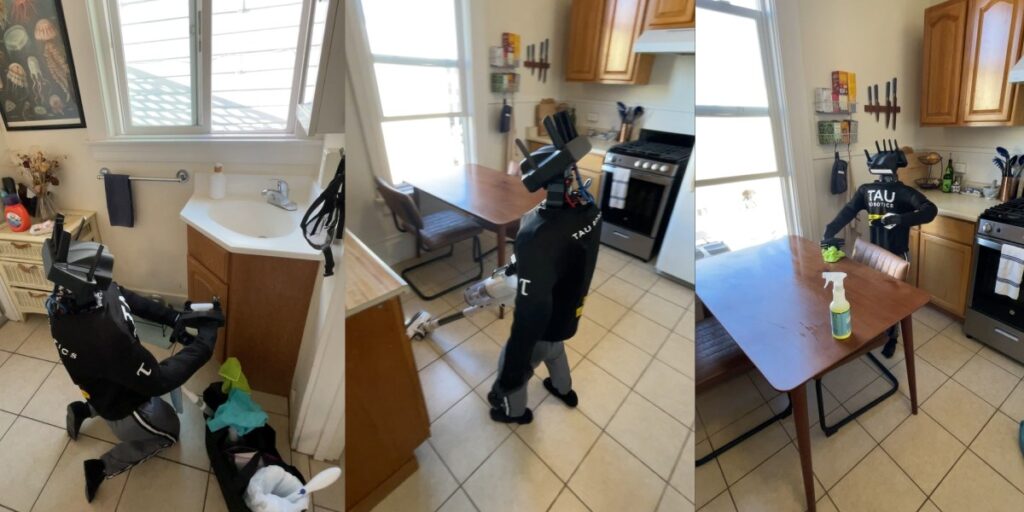
A humanoid robot from Tau Robotics arrived in a blue minivan to clean my San Francisco apartment. The service costs $60 for a weekly two-robot visit or $100 for a single session. The company charges less than expected because the current models require human pilots to guide them remotely.
Tau’s long-term goal is autonomous cleaning, but the robots are not yet independent. They rely on cameras mounted in their heads and wrists for a human operator to watch and direct. As the machines work, they collect data to train future versions. Every counter wiped and shirt folded helps the underlying models improve.
Each four-and-a-half-foot-tall unit features a 3D-printed head with antennae for communication and two 3D-printed claw hands. The claws are durable enough for most tasks, whereas human-like hands are not. My robot wore a Tau Robotics shirt and grippy socks to protect the hardwood floors.
Tasks like making beds or folding laundry use kinematic guidance. A human pilot performs the motions, sensors transmit the movements, and the robot copies them. This method produces valuable training data. Tau’s AI models are learning how to fold laundry by watching robots complete the task in the real world.
Cofounder Cornelia Weinzierl confirmed that the robot can vacuum and mop without human help. If the data collection succeeds, fully autonomous cleaning robots could become a common sight in San Francisco alongside Waymos.
The robot climbed the eight steps to my building entrance with difficulty. It moved as if intoxicated, stumbling backward after each successful step, though it never lost its footing entirely. Weinzierl later explained that the strange walking style is caused by signal transmission delays between the robot and the headquarters.
Inside, a carpeted staircase defeated the machine entirely. Weinzierl had to carry it up the final steps. The initial stall was due to overheating in the hot weather. Later, it turned out the heat had shut down the equipment used by the human controller, not the robot itself. Without remote assistance, the unit could not clean, and the visit ended before the booked hour.
Weinzierl emailed to apologize, comp the visit, and offer another free cleaning. I scheduled the next session about a month later. The robot climbed the stairs with less assistance but still stumbled. It cleaned the kitchen and handled the toilet. The head fell off the toilet wand three times, but the robot reattached it by poking around with the handle until it made contact at the right angle.
The robot is rough around the edges. It left taps dripping, knocked over a closed bottle of olive oil, and could not right an air purifier it had toppled. I forgave these errors because the unit was charming. Watching it wipe countertops felt similar to the gratitude one feels when a Waymo delivers a passenger safely home.
Success in autonomous cleaning could threaten livelihoods. The United States is far from having policies to support workers displaced by artificial intelligence.
Weinzierl argues that cleaning is a job many people do not want. There is high turnover and a high risk of injury. She noted that the company is considering deploying robots for dangerous tasks like mold remediation and home health care.
Tau Robotics has completed only a couple hundred cleanings. The amount of data needed to train robots for varied apartment tasks is enormous. It is remarkable that humanoid robots can now clean toilets and mop floors, even with significant human help. The future of household automation feels closer than before.
What it means
For people making things, the immediate change is limited to the availability of remote-piloted cleaning services that function like radio-controlled cars. There is no change to customer product policies, API behaviour, or data privacy for external users. The current system relies on human operators to guide the machines, so the technology does not yet operate independently in the homes of the public.