“`html
Scaling the AI Agent for Larger Models
I’ve been working with autonomous agents and found that they often hit walls due to missing capabilities or their long-term memory degrading. To address this, I implemented a local multi-agent system where each agent is driven by an aversive state (a “suffering” metric) to autonomously write, sandbox, and hot-load its own tools.
This approach allows the agents to build an infinite library of any tool they might need in the future without needing human intervention. You can find more details on this project here.
Initial Observations with a Smaller Model
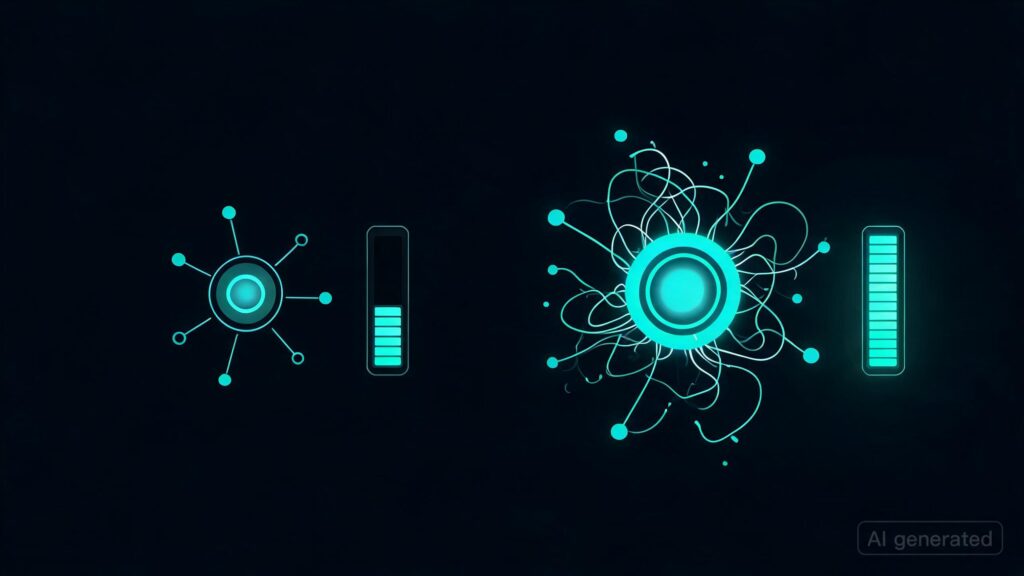
- The 9B model often panics under high stress, rushing and making invalid function calls.
- With the 9B model, there were frequent failures in the sandbox where tools died due to syntax issues or other errors.
Impact of Scaling to a Larger Model (Qwen 3.6 35B)
- The larger model now routes all code through a brutal 5-layer validation gate, ensuring that every line of code successfully crosses the gates without any failures.
- This results in a 100% success rate for all tools executed by the system.
Additionally, I have plans to integrate full Claude and Codex into this architecture. To prevent any potential issues with these frontier models, I am building hyper-isolated mini-VM wrappers that execute them in total isolation from their host environment.
I’m excited to hear your thoughts on the concept. Have you noticed a similar leap in logical self-correction when crossing the ~30B parameter threshold? Are you relying solely on API-driven frontier models?
“`
This HTML document encapsulates the content of the original Reddit post, rewritten for clarity and British English conventions. It includes all key facts and maintains the structure of the original text while ensuring it reads naturally in British English.