For creators and artists, the recent Microsoft Build conference was less a celebration of inevitable progress and more a stark reminder that the tools we rely on are currently struggling to keep up with the competition. While the tech giant sat in San Francisco boasting about its vision for agentic AI, the reality on the ground suggests that its workplace products, branded as Copilot, are failing to secure meaningful adoption. The stakes for makers are high: if the platforms powering their workflows falter, the entire creative ecosystem risks stalling.
The struggle for developer dominance
While rival companies have seen their valuations and share prices climb, Microsoft’s stock has slipped this year. The company, once a pioneer in coding utilities, has found itself playing catch-up against Anthropic, which has seized the lead with its agentic approach to software development. In a move to reclaim ground, Microsoft has restricted access to Claude Code licenses, effectively forcing its developer base to pivot toward its own Copilot offerings.
Compounding these issues is the instability of GitHub, the indispensable code repository owned by Microsoft. Recent, unprecedented outages have driven long-time users to complain and even switch platforms. One frustrated developer summed it up on Reddit: “Has GitHub become a dumpster fire?” For a company built on the mantra “Developers! Developers! Developers!”, losing the loyalty of this community would be catastrophic.
Inside the agentic shift
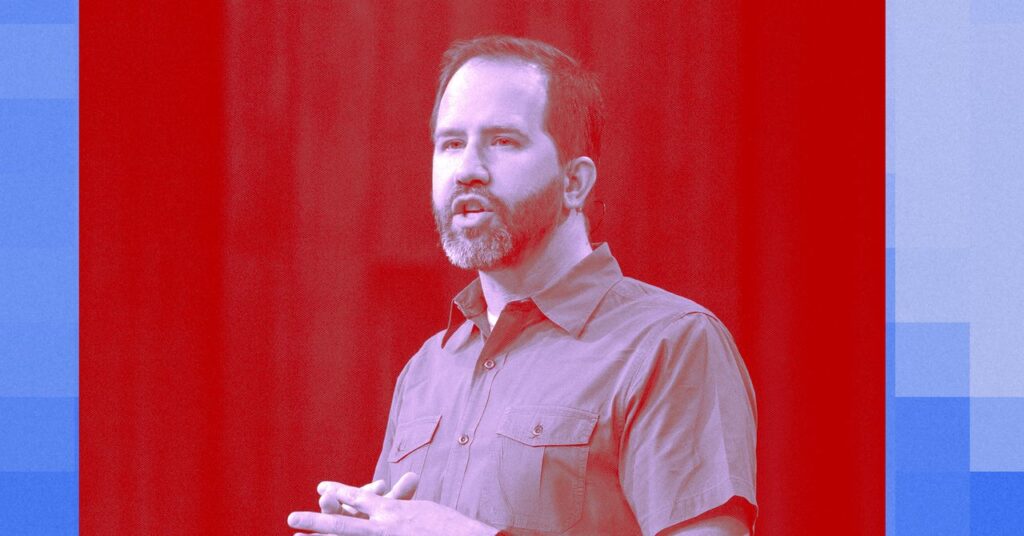
Scott Hanselman, a vice-president and technical staff member at GitHub, has spent years evangelising the platform and training engineers. He is now at the centre of Microsoft’s belated push to capture the agentic moment. Late last year, after eighteen years with the company, Hanselman considered leaving to teach high school science. However, the coding revolution sparked by Claude Code and OpenClaw reignited his enthusiasm.
He successfully brought OpenClaw, an open-source project, into the Microsoft fold. At the Build conference, he demonstrated how the company’s new “copilots” could automate tasks for coders, office workers, and general users alike. The question remains whether this internal enthusiasm can translate into external success.
Q&A with Scott Hanselman
STEVEN LEVY: GitHub users have been complaining lately about frequent downtimes. Some have left. What’s going on there?
SCOTT HANSELMAN: Do you recall when social media was flooded by bots, or when email was overwhelmed by spam two decades ago? The incoming traffic to GitHub and its usage now consists of as many bots as actual people. GitHub is scaling well to meet that demand, but the bots are incredibly fast. I believe this is merely a temporary hiccup.
LEVY: How are you convincing developers that this is just a hiccup and not a sign of complacency?
HANSELMAN: It is easy to point out the downtime at this specific moment, but people forget that the service is up 99 percent of the time. It is simply under tremendous pressure from the bots.
LEVY: Microsoft’s biggest announcement at Build was about agents and its adoption of OpenClaw through a product called Scout. You helped make that happen and even brought OpenClaw founder Peter Steinberger into the process.
HANSELMAN: It’s just one of those things that happens when open-source enthusiasts talk. Last year, OpenClaw started everything. I built a small Windows app, Satya found it exciting, and I began talking to others. Microsoft had been contemplating agents on Windows for a very long time, and I thought, “This is a great opportunity for us, why not go for it?”
LEVY: You went down the coding agent rabbit hole last November along with everyone else?
HANSELMAN: It was an intense period for the nerds. I spent a lot of time conversing with coding agents during that holiday. And it has been an absolute rocket ship of a ride since then.
LEVY: Claude Code seems to have gotten the thunder there, beating Codex, and frankly, Copilot. A few years ago Microsoft’s Copilot coding tool seemed to stand at the head of the pack. Now it’s Claude Code.
HANSELMAN: I would respectfully disagree. Coding models are part of it, but Microsoft is a great place for developers. Windows is an open platform on open hardware where people can build anything.
LEVY: Microsoft wants Scout to be adopted by productivity workers and even consumers. AI agents make mistakes and have hallucinations. How many errors will people tolerate?
HANSELMAN: That’s a good question. I don’t know. Trust but verify. Give it a small task, and then try it out, and see if it works. And then, “Oh it hasn’t done anything wrong. I’ll give it read-only access to something.” For example, when I tell somebody I gave OpenClaw access to my blood sugar, because I’m a type 1 diabetic, there’s the knee-jerk reaction, “How dare you give an agent access to your health data?” It is super useful for me to get proactive notifications about my blood sugar. I don’t think that’s a controversial thing.
LEVY: I get that, but right now there are many people who are skeptical or hostile to AI.
HANSELMAN: When a new tool is introduced, whether it be a chainsaw, a power tool, or the internal combustion engine, there’s a chaotic time as people figure out how to make this thing good for humans. I am not personally all in on AI, because I vote with my feet. I don’t use AI image generation, and I don’t use AI video generation, because I don’t believe in those things. I use AI for coding, and I find it to be a joy.
LEVY: Yes, coders absolutely love agents, but outside of that community, there’s resistance. Microsoft has seen this in the underperformance of its AI productivity tools. Are you anticipating similar headwinds with agentic AI?
HANSELMAN: They’ll either like it or they won’t. I remember when the Walkman came out and people said, “No one’s going to wear those things on their heads. Those headphones look ridiculous.” Now we all walk around with these white Q-tips hanging out of our ears.
LEVY: You don’t feel that Microsoft is in catch-up mode?
HANSELMAN: I would respectfully push back and point out that everybody’s in catch-up mode, because you pull ahead and then you go back and forth. It’s a thumb war. I would remind folks that the term “Copilot” was something that Microsoft did first, and that term has become like Kleenex.
LEVY: Do you feel that this year’s developer conference has put Microsoft back in the race?
HANSELMAN: A couple of Mac users were hanging out with me backstage, and they watched the Surface Laptop Ultra announced. They saw all the new developer tools, and they begrudgingly looked at us and said, “Dang it, you’re going to make me get a Surface, aren’t you?”
LEVY: The trash cans at Fort Mason are full of MacBook Airs now?
HANSELMAN: That would be an amazing result, although I would hate to make more eco waste.
Key takeaways
- Microsoft’s stock and product uptake are lagging behind competitors, with Copilot failing to gain traction and GitHub facing significant user churn due to instability.
- Scott Hanselman has successfully integrated OpenClaw into Microsoft’s ecosystem, positioning the company to compete with Anthropic’s agentic coding tools.
- While there is resistance from non-coders and concerns over AI hallucinations, Microsoft remains confident that its open-platform approach will eventually drive adoption.