New smart glasses from Halliday, the G2, operate without cameras. The device listens to workplace meetings, absorbs what happens, and summarises the interesting bits, functioning much like always-listening wearables. The microphones can be activated for meetings via AI voice commands, or for making phone calls, but they switch off when not in use.
Design and pricing
The frames look normal and are meant to blend into a professional environment by omitting cameras entirely. They cost $599, with first shipments planned for September 2026. Paid subscription tiers for the AI services range from $10 per month to $99, but users can choose a free tier that offers 120 minutes of recording time.
Competitors and market context
Halliday’s glasses might not be met well by one of its competitors. Smart glasses brand Even Realities launched its G2 glasses late last year, proudly focusing on the lack of cameras in its eyewear. Halliday’s G2 shares the same name and channels the same mantra, not to mention a striking resemblance. In both cases, G2 is short for Generation 2, so it is indicating the stage of the device, not necessarily a specific brand name.
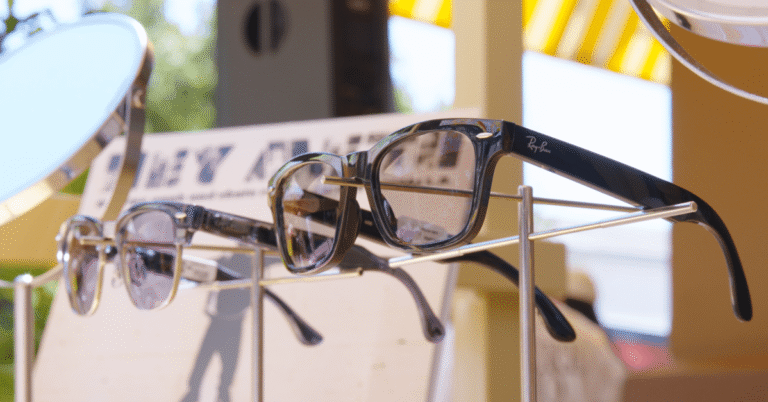
Building smart glasses without cameras seems to be growing more popular. The market is still dominated by Meta’s Ray-Ban smart glasses, even though those have garnered the “pervert glasses” moniker because the device’s built-in cameras have been abused to capture pictures and video of people, mostly women, without them realising it. Eager to differentiate, some companies have shipped ways to cover up their cameras, or, like Even Realities and now Halliday, are skipping them entirely. Still, those glasses are all-in on recording the audio around you.
In its press release, Halliday says that unlike smart glasses with cameras in them, the G2 is meant to be “a professional tool for real-world work and social environments. With no camera, the glasses are better suited for meetings, client conversations, secure workplaces, and other spaces where recording devices may be unwelcome.”
Privacy and disclosure
That acknowledgement aside, Halliday’s G2 glasses do not have an indicator light or other method to inform people around the wearer that the glasses are recording audio. Wearable devices like Bee’s Pioneer emit a light to indicate they are recording, though the device is so obscure that most people may still not realise.
“The user should disclose to the room that the recording is in progress, as it is required by any other recording device,” wrote a Halliday media contact in response to questions from WIRED.
History and target audience
The G2s are the second iteration of Halliday’s glasses. The company introduced its first pair at CES 2025, which received mixed reviews and wound up in the “Don’t Bother” category of WIRED’s smart glasses guide. They have also garnered criticism on sites like Reddit and had to field lots of frustration on the original Kickstarter-backed version of its device. Halliday is back for round two, aiming to boost the specs—and the price—of its previous offering. The G2 glasses are aimed squarely at “high-performance professionals” like founders, CEOs, or really anyone with enough disposable cash to cop a pair of $600 glasses for their meetings.
Display and hearing aid features
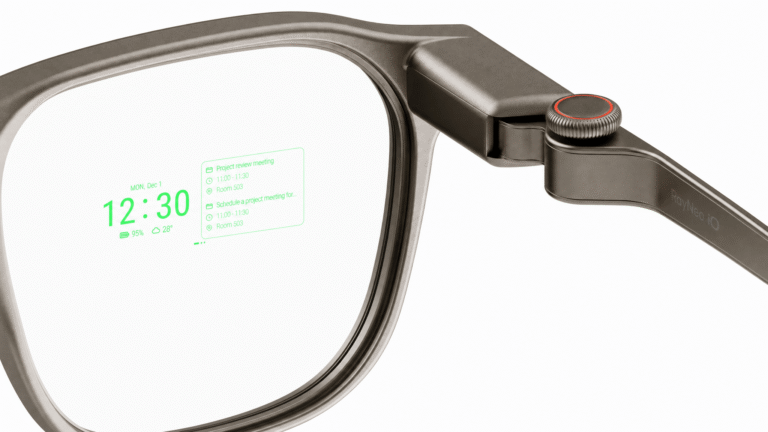
The glasses have a display field toward the top of the lens, meaning the wearer can look up to see text on the screen. Microphones embedded in the frame listen to what’s happening nearby and can translate spoken language into text subtitles right in the wearer’s field of vision. It is a handy use case that, in theory, can be a great tool for helping hard-of-hearing or deaf people capture conversations. Halliday says the display can also handle translation in 45 languages and notifications for messages and phone calls.
Meeting room focus
Halliday’s focus for its G2 glasses is on the meeting room. Like a bevy of other AI-powered note-taking devices, the goal is to have a device that can listen in and track all the details your coworkers are going on about.
It is powered by the company’s AI recording and transcription service, called Meeting Flow. The mics on the glasses listen in on a meeting, and then the AI helps organise and summarise what people are saying. Some of those insights will pop up on the display so the wearer can see them mid-meeting. After the meeting ends, Meeting Flow aims to summarise, transcribe, and pull out what it figures are the most pertinent topics from the conversation.
Halliday says the AI is specifically focused on the important bits of a meeting, keeping track of the topics even if people wander off course. Features called Thread Tracker, Decision Confirmation, and Commitment Check aim to sort the useful stuff into an overall view of what was said. Full transcripts and post-meeting summaries are available in a companion app.
Stealth and teleprompter modes
There are features built into the device to make it blend into the background, like a “Stealth mode” that automatically reduces the display’s light in dark rooms so as not to distract the wearer or others around. A teleprompter mode called Cheatsheet keeps bullet-point-style reminders of what the AI deems important details of your day on the screen for easy access. Anduril founder Palmer Luckey has said he has used a similar function in Even Realities’ G2 glasses to help him stay on track during a TED talk.
Market positioning
The smart glasses market is getting more refined, with smaller companies entering the second iteration of their product lifecycles. They are aiming to establish some foothold before the giant tech companies, like Samsung, Google, and Apple, move in and sweep up most of the market.
What it means
For people making things, the change is a trade-off between privacy and utility. You get a tool that can transcribe meetings and show subtitles without the social friction of a camera, but you must manually declare that recording is happening. The device assumes a professional setting where the wearer is comfortable with their audio being captured, even if the room is not.