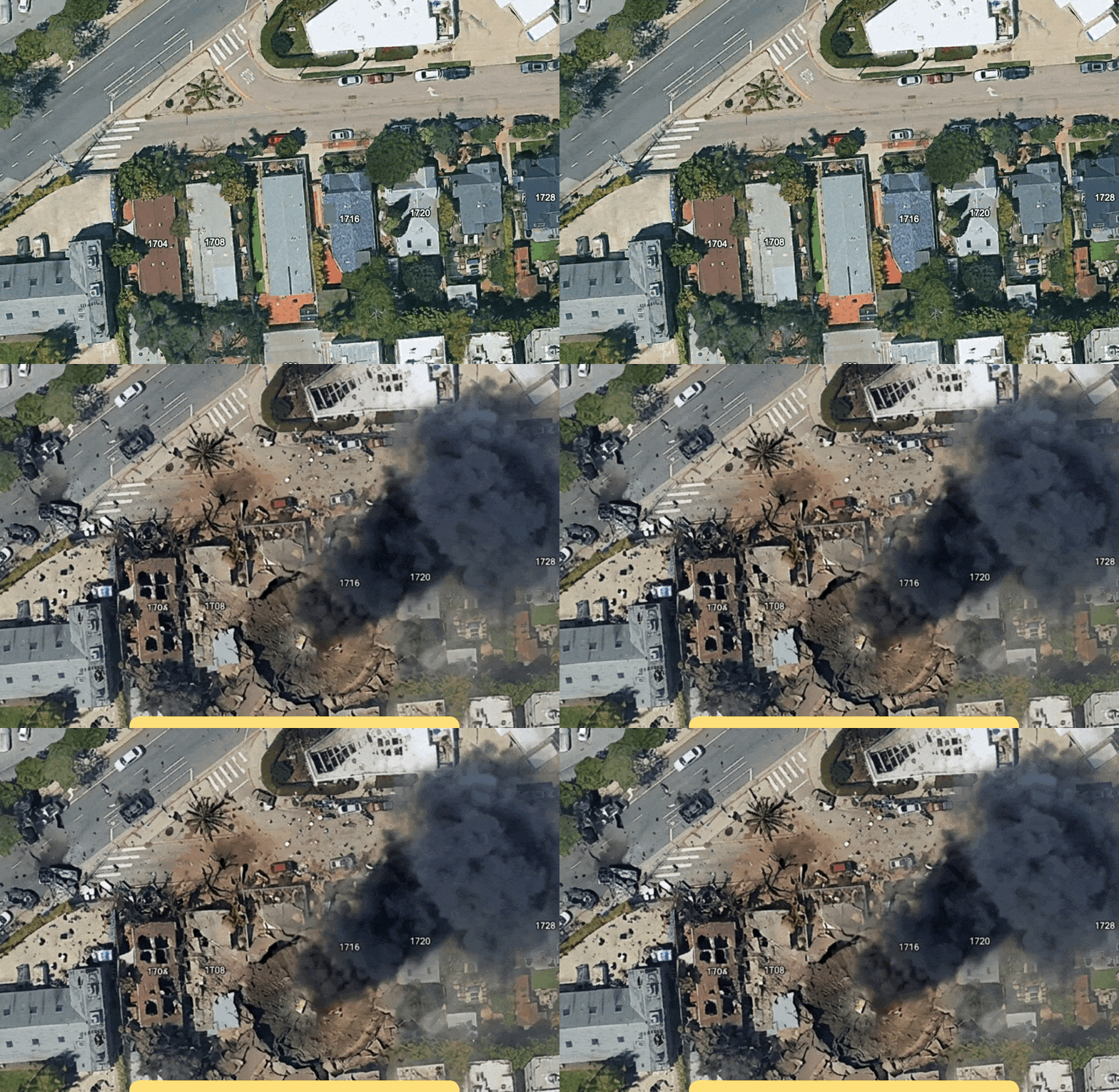
On Thursday, Google released an update to Google Earth that allows users to generate fake satellite imagery, including scenes depicting drone strikes or nuclear facilities in Iran.
The tool, powered by the Nano Banana model, lets a user hover over a location and type a prompt to alter what appears on the ground. Google says it prevents creation on harmful topics, but the capability remains to fabricate convincing visual evidence of events that never happened.
How the tool works
Testing by 404 Media showed the feature can add skyscrapers to rural zones, insert a homeless encampment in Los Angeles, or place a bomb blast crater on a street in the city. A video demonstration shows the process in action.
“Tonight I typed just one sentence into Google Earth and put refugees near the Mexican border. Then I planted a nuclear plant in Iran. Then I put a fatal crash on a street in Amsterdam. Google’s own satellite imagery underneath all three. What on earth is Google doing?”
Hank Van Ess, an OSINT researcher, shared these results in a blog post. The prompt interface sits directly on top of real satellite photos, making the resulting composites difficult to distinguish at a glance.
Impact on verification
Google Earth is a standard resource for open source intelligence analysts monitoring conflicts and disasters. The new feature complicates that work by allowing anyone to create damaging visuals that look authentic.
Ben Heubl, another OSINT professional, noted that typing an address and asking for a drone attack could produce an image resembling scenes from Ukraine, Russia, or the Middle East. Heubl described the situation as harrowing and said it will make verification much more difficult.
Google responded by pointing reporters to a tweet. The company stated that every image created with Nano Banana includes the SynthID digital watermark. Users can ask the Gemini app or use Lens in Search to check if an image was AI-generated. Google also claims to update protections against harmful topics.
Heubl argued that detection tools can be overridden and that reliance on watermarks is insufficient. He called the situation bad for the integrity of digital evidence.
The reality is that many people do not verify images before sharing them. Misinformation spreaders often do not care about being caught and can cause significant damage to a conversation before anyone notices the manipulation.
What it means
For people relying on satellite data to understand events on the ground, trust in the platform has eroded. The ability to insert false imagery directly into a trusted tool means that screenshots can no longer be assumed to be factual without independent checks.