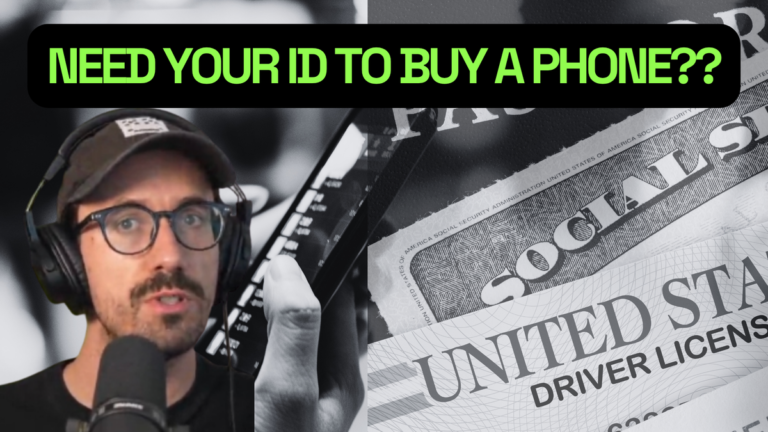
For artists and makers, the era of anonymous communication is under threat
The Federal Communications Commission (FCC) is moving to dismantle the ability to purchase unlinked mobile devices, effectively ending the use of “burner phones.” This move would strip away a critical layer of anonymity for journalists, domestic abuse survivors, and privacy-conscious individuals. The agency plans to enforce this by legally mandating that telecom providers store detailed personal data for every customer, including government-issued identification numbers and physical addresses. Civil rights activists warn this mirrors the surveillance models found in authoritarian regimes.
The stated goal is fraud prevention, but the scope is broad
While the FCC frames this data collection as a necessary step to combat scammers, the requirements extend far beyond simple identity verification. Telecoms would be compelled to gather information on business and foreign clients, including the intended use of bulk plans and IP addresses. The proposal applies to both new sign-ups and renewals, creating a comprehensive database that the FCC suggests could aid authorities in a wide array of investigations.
“For decades, civil libertarians have looked overseas at authoritarian countries where the government requires people to register to get a mobile phone to ensure they can be tracked. We never thought that would happen here,” said Jay Stanley, senior policy analyst at the American Civil Liberties Union’s Speech, Privacy, and Technology Project.
In its synopsis, the FCC explicitly seeks to require originating providers to obtain names, physical addresses, government identification numbers, and alternate telephone numbers before granting service access. The agency compares this approach to banking regulations designed to prevent money laundering, arguing it will help enforcers identify bad actors more easily.
Experts argue the proposal creates more risk than it solves
Security researchers and privacy advocates have pushed back hard against the plan. Cooper Quintin, a senior public interest technologist with the Electronic Frontier Foundation, noted that criminals can easily fabricate identities, meaning the rule would not stop fraud but would instead erode freedom of communication. He expressed concern that the administration’s recent crackdown on free expression makes this proposal particularly worrying.
Eric Null from the Center for Democracy & Technology described the move as a loss of privacy across the board, noting that victims of domestic violence, journalists, and whistleblowers often require anonymity to operate safely. He warned that the FCC might let a few bad actors spoil the entire system.
John Doyle, CEO of the privacy-focused carrier Cape, echoed these concerns. While supporting the elimination of robocalls, he argued that creating a nationwide ID registry is the wrong solution. He highlighted that mobile carriers have been breached repeatedly due to legacy architecture, and adding government IDs and physical addresses to these compromised datasets would harm national security rather than improve it.
The public comment period is open
The FCC is currently seeking feedback on several operational details, including whether “renewing” customers refers only to those switching plans or all returning clients, and whether P.O. boxes should count as valid physical addresses. The proposal remains open for comments until June 25. The FCC did not respond to requests for comment from 404 Media.
Key takeaways
- The FCC proposes requiring telecoms to collect government IDs and physical addresses for all customers to combat scams, a move critics say eliminates anonymous calling.
- Privacy advocates warn this mirrors authoritarian surveillance models and disproportionately harms journalists, abuse survivors, and low-income individuals.
- Security experts argue the plan fails to stop sophisticated fraud while significantly increasing the risk of mass data breaches.
- The proposal is currently in the public comment stage, with the deadline for submissions set for June 25.