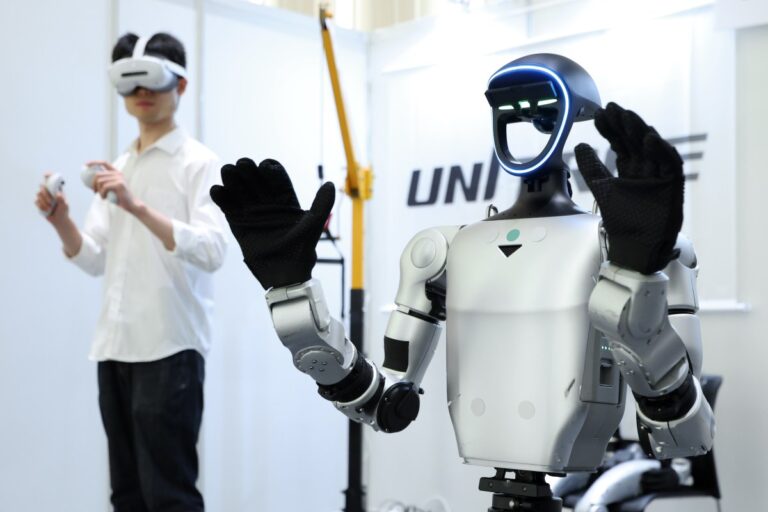
Amulya Vishwanath compares the current state of robotics to the LEGO era, describing it as the ChatGPT moment for physical AI.
She is the founder and managing partner of Techable Ventures. The firm focuses on physical AI. Vishwanath started the venture capital business after nearly seven years as a product marketer at Nvidia.
Before Nvidia, she held the same role at a company later bought by Intel. She was also a digital signal processing engineer at Interconnect Systems, which was later acquired by electronics manufacturer Molex.
She spoke to TechCrunch’s Equity about the future of physical AI, one of the industry’s latest buzzwords.
“A lot of companies and experts have been talking about the ChatGPT moment for robotics,” she said. “Right now the industry is more in a LEGO era.”
She noted that foundational software and building blocks for robotics are being rethought. She called this work super important for innovation to scale.
People are currently building the basics, such as robotic hands or actuators. These parts will eventually come together to form big-ticket items like LEGOs. There are general-purpose and special-purpose robots being built right now too. As people continue building them, they will get better and more advanced.
“We’ve done this during the internet era,” she said. “We’ve done this long, long time ago with the Industrial Revolution. I think it’s just a matter of time before things fall into place.”
Talent is going to be very critical. She added elsewhere in the conversation that talent is still a key definer of the US market. This is one of the moats of her firm.
She helps connect founders to top talent so they can stay competitive right now. So much talent is going to big companies like Anthropic and Nvidia. She pointed out that she has built up a strong network to help founders from her years of working in this space.
“This just makes it a lot easier for me to be the strength or the first call for founders,” she said.
What it means
For people making things, the focus shifts from trying to build a perfect robot from scratch to assembling modular components. Founders need to find the right hands, actuators, and software blocks to combine them effectively. The industry expects these pieces to improve over time as more builders work with them.