Hollywood is already using artificial intelligence, though the industry remains divided on how much it should do so.
Some screenwriters, directors and actors vow never to use the technology or work with those who do. Others treat it as a creative partner or a way to cut costs. Ben Affleck has already sold an AI startup to Netflix for $587 million, arguing the tool improves the filmmaking process.
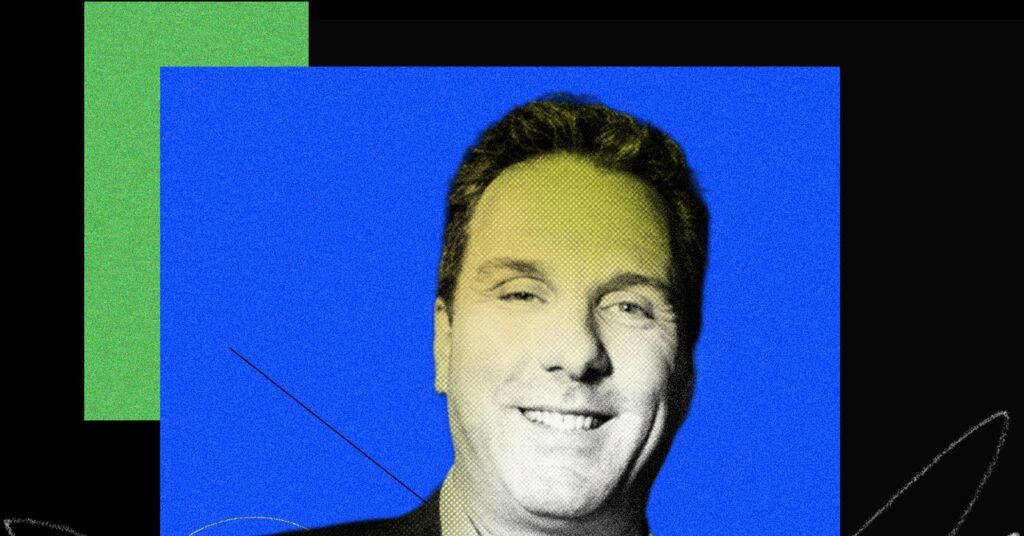
At WIRED, we have documented the transformation of the entertainment business. Ruth Fowler recently wrote about becoming an underemployed LLM trainer. To get a nuanced view, I spoke to Matt Belloni, a founding partner at Puck.
Belloni has covered Hollywood for decades. He writes a newsletter called What I’m Hearing and hosts a podcast, The Town. He also worked as a lawyer, which makes him suitable for discussing debates over AI, copyright, intellectual property and celebrity likeness.
We spoke for an hour. The conversation covered whether Hollywood types side-eyed Ben Affleck after his sale to Netflix, and how much control Big Tech now holds over entertainment. You can read the transcript below or listen to the podcast.
This interview has been edited for length and clarity.
Everyone is doing it
KATIE DRUMMOND: You have said multiple times that everyone is doing it. What do you mean?
MATTHEW BELLONI: There are two types of AI. Generative AI creates content. Corporate AI streamlines processes and improves search results. Everyone uses corporate AI.
I heard a story about a prominent showrunner who told her writing team to use ChatGPT to help with the process.
KATIE DRUMMOND: Creative process or admin and bookkeeping?
MATTHEW BELLONI: Creative process. Here is a scenario, suggest some jokes. Here is this, this and this. People do not always use the tools, but they use the output. Screenwriters use it to suggest scenarios or describe the inside of a building where a scene plays out.
The Writers Guild is OK with that. They require a credited writer on every script and the process must not impact jobs.
KATIE DRUMMOND: The other side is generative AI making content. That is murkier. Studios are purporting to create AI-generated movies, shorts and TV pilots. I have seen many of them. They are not great. They are better in animation. That is where disruption will happen first. You can always tell.
KATIE DRUMMOND: Are there members of Hollywood calling out AI publicly while using it privately? How much is still happening behind closed doors?
MATTHEW BELLONI: I know what people I talk to say. There is a taint on using it.
Amazon held a media day with a generative studio run by executive Albert Chang. They announced several shows, including animation projects with real creators. Almost immediately, backlash from one creator was so loud he stepped down. That is a tangible impact of AI shaming.
Netflix got a lot of leeway because they bought Ben Affleck’s AI company. They paid almost 600 million.
KATIE DRUMMOND: Was this a 600 million press release? Netflix wants to get into AI. They know Ben has credibility and cachet as a movie star, an Oscar winner and a filmmaker. Having him attached buys them leeway.
MATTHEW BELLONI: The product takes footage you have shot and makes it available for generative AI. It prevents costly reshoots if you need coverage. It allows you to extend the periphery of a scene or get a circle shot when you did not get it in camera. It is a tool for filmmakers. The big fear is that the technology will replace people.
KATIE DRUMMOND: Did people scratch their heads when Ben made that deal? Did they look at him differently?
MATTHEW BELLONI: I do not think so. Darren Aronofsky is doing this. Ben is doing the so-called right way. He has credibility and can articulate clearly what he is doing and what he is not doing. The biggest reaction was, Holy cow, 600 million? That is a lot of money.
KATIE DRUMMOND: He is going to make more money on that than on any of his movies put together.
MATTHEW BELLONI: He has had some expensive divorces.
KATIE DRUMMOND: Did he launch it when he was married to JLo? I imagine their prenups contemplate separate property.
MATTHEW BELLONI: They had a very expensive house they were trying to offload at one point. I am a big entertainment gossip reader.
Cost and control
There have been a bunch of deals between tech firms and Hollywood. Google DeepMind invested 75 million in A24, which pissed a lot of fans off. Lionsgate took a stake in Runway, a big name in AI-generated video.
KATIE DRUMMOND: Why is this happening? Is the technology ready? Is Hollywood more receptive to the idea that the technology can really have an impact?
MATTHEW BELLONI: The technology is better and applicable. There is a fear in C-suites of being left behind. The cost of movies keeps going up. The box office is not necessarily covering that.
Pixar originals cannot be made for less than 200 million. They are made in California with a California workforce. They have a special process that is very labor-intensive. They have not used AI to the extent they maybe could.
If we are looking at a new landscape where movies do not gross as much as they did, you have to look at bringing the cost down. The guilds are not bringing the cost of labor down. The unions are not willing to do that. It comes from non-unionized labor that is, for the most part, below-the-line people and technology.
KATIE DRUMMOND: This makes me think of Christopher Nolan and The Odyssey. It had a huge cast. It was made all over the world. It is making crazy money. Nolan still professes to not having a phone. He has been critical of AI while also being open to its uses. He is a fence-sitter.
MATTHEW BELLONI: He is a one of one. He came into this situation with all the credibility and clout in the world. He won the Oscar for Oppenheimer and made a billion dollars off that movie. The Odyssey, if it is made at all by another filmmaker, is made at a much lower cost. Not 250 million. Almost 300 million. You do not get to have all those stars in it. You just do not get to do it.
KATIE DRUMMOND: What would you argue to the studios? Why did it break through?
MATTHEW BELLONI: It smells different. If you look at the trailer and everything around it, it smells authored. The audience can tell when something is authored. In a world where you can create all the visual effects you want, there is something about seeing The Odyssey and knowing, because they are very good at marketing this, that this is the vision of one guy who you trust and who is going to show you something real.
I say real in the sense that movies are increasingly going to be split into movies that are filmed with real people and real scenarios and then those that are just either generative AI in practice or generative AI from the get-go.
KATIE DRUMMOND: There is going to be a split between things that we find authentic and those that we just kind of passively enjoy. Just sort of consume, for lack of a better term.
MATTHEW BELLONI: That is where social media is going. The more social video goes that does not have a human author, the more people will consume it without thinking about it.
What it means
The industry is splitting into two camps. One side creates content with real people and real scenarios. The other side creates content from the start with generative AI. Audiences will distinguish between the two. People will trust a single author’s vision over passive consumption of generated material.