Design a Complete Multimodal RLVR Pipeline with Open-MM-RL, Vision-Language Prompting, Reward Scoring, and GRPO Export
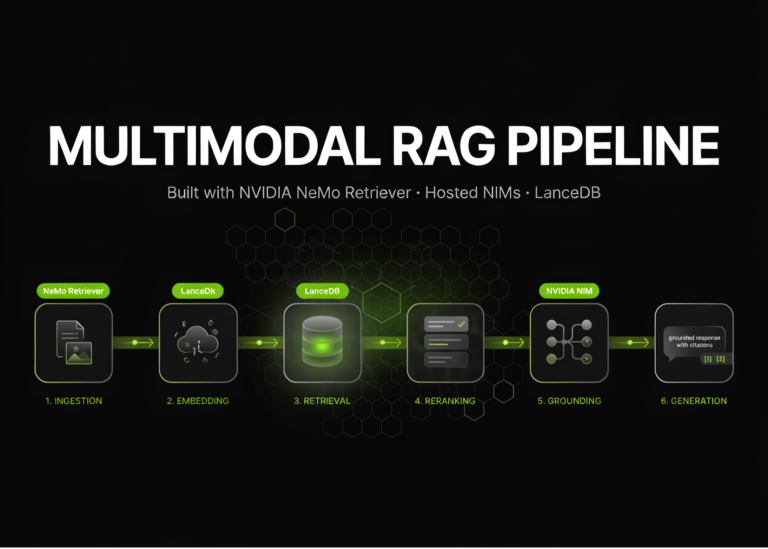
In this tutorial, we explore the TuringEnterprises/Open-MM-RL dataset as a practical foundation for multimodal reasoning and reinforcement learning with verifiable rewards. We load the dataset, inspect its schema, analyze domains, formats, question lengths, answer types, and image distributions, and visualize representative examples from each domain. We also build a lightweight reward function that checks exact, numeric, fractional, LaTeX, and symbolic answers, giving us a useful way to evaluate model outputs. Finally, we format prompts for vision-language models, optionally test SmolVLM on sample examples, and export the dataset into a GRPO-style structure for future multimodal RL training.
Setup
We install all required libraries and import the core tools needed for dataset loading, analysis, visualization, symbolic math, and file handling. We set random seeds for reproducibility and configure pandas so that longer text fields display clearly. We then load the TuringEnterprises/Open-MM-RL dataset from Hugging Face and inspect its size, features, and first-row structure.
Dataset Exploration
We convert the dataset into a DataFrame after removing the image column, then calculate useful fields such as the number of images, question length, and answer length. We analyze domain counts, format distribution, sub-domain breakdowns, and basic text/image statistics. We also create charts to visualize the number of examples per domain, the image formats, and the distribution of images per example.
Visual Inspection
We define a helper function to display one representative example from each domain, including its question, gold answer, and associated images. We use this visual inspection step to better understand how multimodal reasoning problems are structured across different domains. We then analyze LaTeX usage in questions and answers, classify answer types, and compare answer-type distributions across domains.
Building the Reward Function
We build a lightweight reward function that checks exact, numeric, fractional, LaTeX, and symbolic answers. This allows us to evaluate model outputs effectively by providing verifiable rewards based on the correctness of the predicted responses.
Prompt Engineering
We format prompts for vision-language models, optionally test SmolVLM on sample examples, and export the dataset into a GRPO-style structure for future multimodal RL training. This process ensures that our data is ready for use in reinforcement learning tasks involving both text and images.
Key takeaways
- The TuringEnterprises/Open-MM-RL dataset provides a rich foundation for exploring multimodal reasoning with verifiable rewards.
- We built a lightweight reward function to assess the correctness of model outputs across different answer types.
- Prompt engineering was performed to optimize our data for vision-language models and future RL training.