Demis Hassabis on AI and Job Displacement: A View from Google DeepMind
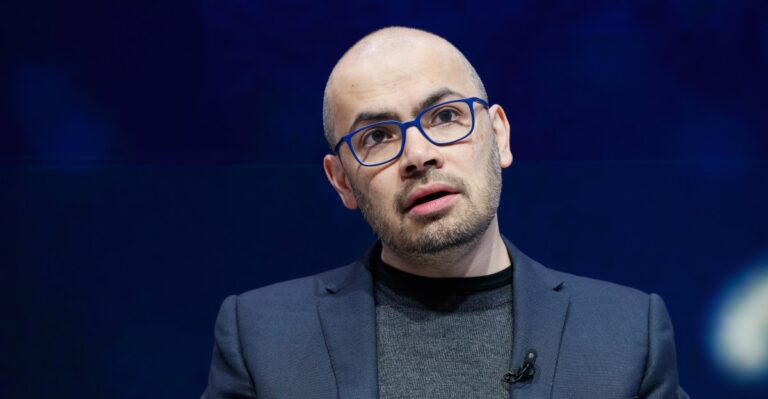
Google DeepMind CEO Demis Hassabis is keen to discuss the coding prowess of his company’s latest model, Gemini 3.5 Flash. This model can perform complex agentic tasks such as translating large code bases between languages, fixing bugs in intricate software, and even creating entire operating systems from scratch.
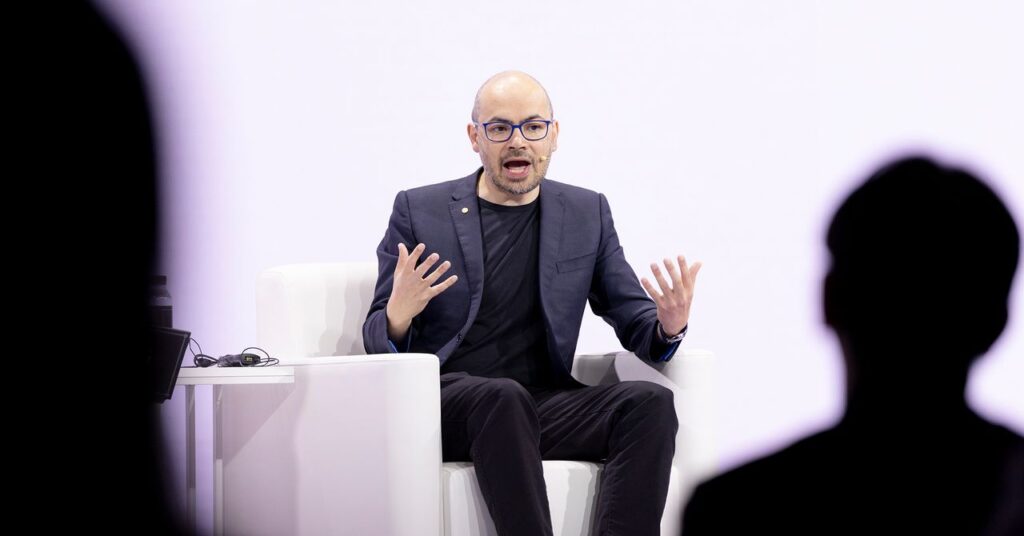
Hassabis does not believe this heralds a future where AI will displace all programming roles. “I have no idea why people are going around talking with certainty about that,” he told WIRED ahead of the reveal at Google’s I/O event. “Perhaps there is an ulterior motive for putting those messages out; raising money or whatever.” From their perspective, if engineers become three to four times more productive, they want to do three to four times more work.
The recent advancements in AI coding have led to a wave of concern that the rise of AI could render many programming jobs obsolete, prompting layoffs at some tech companies. Hassabis sees this as an opportunity rather than a threat. “I think it’s a lack of imagination-and a lack of understanding of what really is going to happen,” he says.
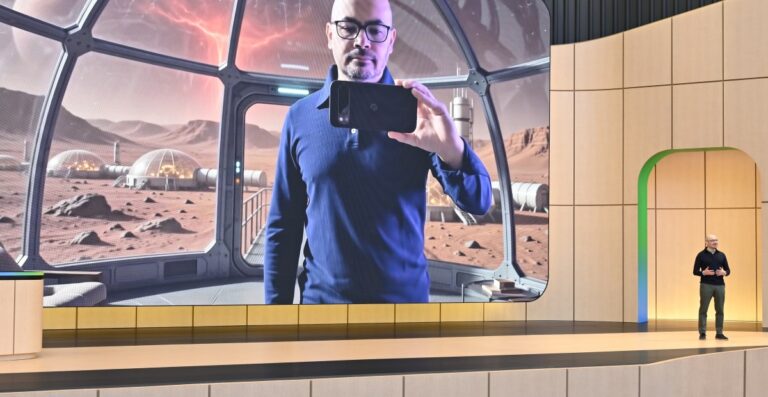
Google has unveiled several new AI tools at its I/O event. Antigravity, a coding tool by Gemini 3.5 Flash, offers advanced capabilities but does so more quickly and affordably compared to competitors. The company also showcased Spark, an agentic assistant embedded in Google Cloud with limited access to personal data.
AI coding has become a critical area for these models, as evidenced by the adoption of tools like Claude from Anthropic and Codex from OpenAI. Hassabis acknowledges that while AI can perform impressive feats in this domain, it hasn’t yet produced a groundbreaking app or game without human intervention.
He believes that to achieve true breakthroughs in science, AI models would need deeper understandings of the physical world and the ability to conduct experiments themselves. “I think there’s something missing,” Hassabis says, noting the current limitations of AI-generated apps and games.
Hassabis concludes by emphasizing that while AI can significantly enhance productivity and efficiency in coding tasks, it is unlikely to immediately lead to superhuman-level intelligence or completely automate all programming roles. “I have a million ideas, from lab drug discovery to game design,” he says. “I’d love to have some free engineers to go and do those kinds of things.” He sees opportunities for AI to augment human capabilities rather than replace them outright.
Key Takeaways
- Hassabis believes that AI models like Gemini 3.5 Flash can significantly boost productivity in coding tasks without displacing all developers.
- The rise of AI in the coding space has led to concerns about job displacement, but Hassabis sees it as a chance for innovation rather than a threat.
- AI coding tools like Antigravity and Spark are gaining traction due to their efficiency and safety features.
- While impressive, current AI models have not yet achieved breakthroughs in app or game development without human assistance.