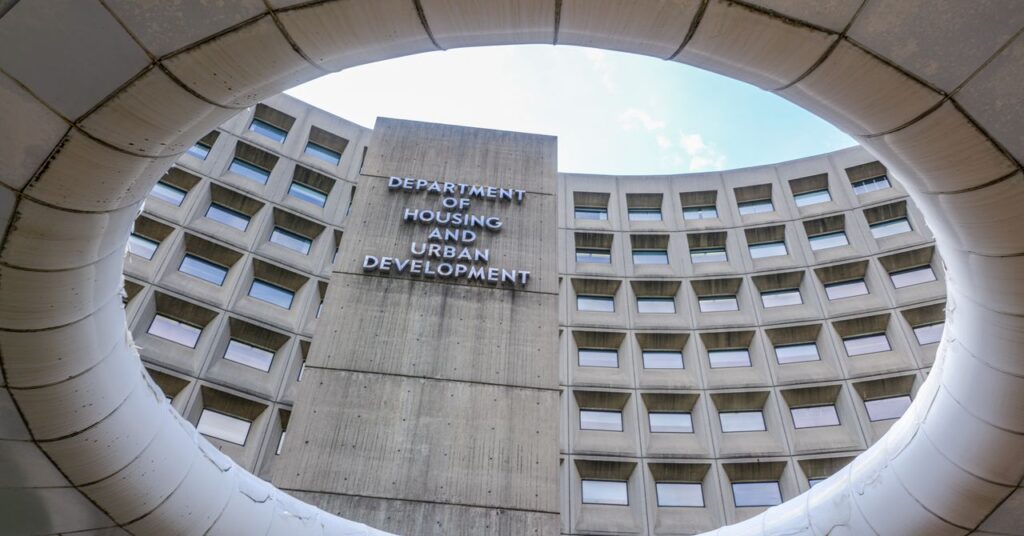
A team from the Department of Government Efficiency used artificial intelligence to shape housing policy at the Department of Housing and Urban Development, yet the agency is refusing to release details on how those tools were applied or what decisions they influenced.
Who was involved
Documents obtained by Democracy Forward, a nonprofit legal group, show that Christopher Sweet and Scott Langmack were part of the effort. Sweet was a third-year economics student at the University of Chicago when he joined the team last year. He left in June with a degree in economics. Langmack came from a property technology startup called Kukun. He is now the executive director of deregulation AI at the Office of Management and Budget under the White House.
At the time, HUD staff told WIRED that employees were asked to review regulations flagged by the AI for potential cancellation. Some workers described the task as redundant.
Documents withheld
Democracy Forward requested more than 100 documents regarding HUD’s use of AI for decision-making. The agency kept most of them. Reasons given included a claimed “AI privilege” and the presidential communications privilege, which usually applies only to the president and their immediate advisers.
One file, titled “GPT defined Econ Analysis approach 11 10 25.docx” and owned by Langmack, was exempted because it was marked “deliberative AI input.” Another, “RegulatoryAnalysisPrompt.pdf,” also belonging to Langmack, suggests the team was writing prompts for regulatory analysis. Other withheld files were labelled as “regulatory analysis” for various HUD programs, though it is unclear if AI helped create them.
Why the government is hiding the data
Nearly all the withheld documents fall under Exemption 5 of the Freedom of Information Act. This allows agencies to protect material created during the “deliberative process.” The rule is meant to encourage honest debate among workers before a final decision is made.
John Davisson, deputy director of enforcement at the Electronic Privacy Information Center, says this exemption protects candor. He notes that in many cases, the reason for withholding is listed as “deliberation of process” or “attorney-client privilege.”
However, a few documents were denied specifically because they were drafts of AI prompts or labelled “deliberative AI input.” Files named “Prompt.pdf” and “PROMPT+AB2(alr)+ab.dox” were exempted as “deliberation of AI prompt.”
Davisson argues that AI systems do not have rights to privacy. “There is no AI exemption under FOIA,” he says. “Any deliberation done between a person and an AI chatbot should not qualify for the exemption, because AI systems, computers are not entitled to candor.”
Concerns about transparency
Tori Noble, a staff attorney at the Electronic Frontier Foundation, warns that hiding how AI is used is dangerous. Tools can make mistakes, show bias, or hallucinate facts.
“It’s not necessarily the case that we’d always know how tools are being used,” she says. “So having access to the prompts is really the best way to be able to tell what officials are using these tools for and how harmful those uses might be.”
Currently, no US law requires the government to state if AI helped write a rule or policy. Mark Fagan, a lecturer at the Harvard Kennedy School, suggests that if AI is used to assess policy, officials should say so. He believes this builds confidence in government use of the technology.
Fagan also notes that some uses of AI might not need disclosure. If a policy reviewer uses Google to see how others have handled a problem, they do not always disclose that research. He argues that from a technical perspective, much of this work is part of the normal deliberative process.
Because so many documents were withheld, it is hard to know exactly how the AI was employed. Dan McGrath, senior oversight counsel at Democracy Forward, says the public has a right to understand the impact of AI on government.
“Withholding AI input into the policy process as deliberative and privileged raises serious questions,” he says. “Existing privileges are meant to ensure that public officials share their candid views, not to shield the impact of AI’s impact on our government.”
Sweet, Langmack, HUD, the Office of Management and Budget, and the White House did not respond to requests for comment.