For makers and artists building with AI, the latest funding news signals a shift away from handing your intellectual property over to the very giants you fear will eventually replace you. Niteshift, a new AI coding startup, has secured a $7 million seed round led by Greylock’s Jerry Chen. While modest compared to the usual AI hype, the capital comes with significant backing from Reid Hoffman, Olivier Pomel, Alexis Lê-Quôc, Ankur Goyal, and Misha Laskin.
The “SaaSpocalypse” fear
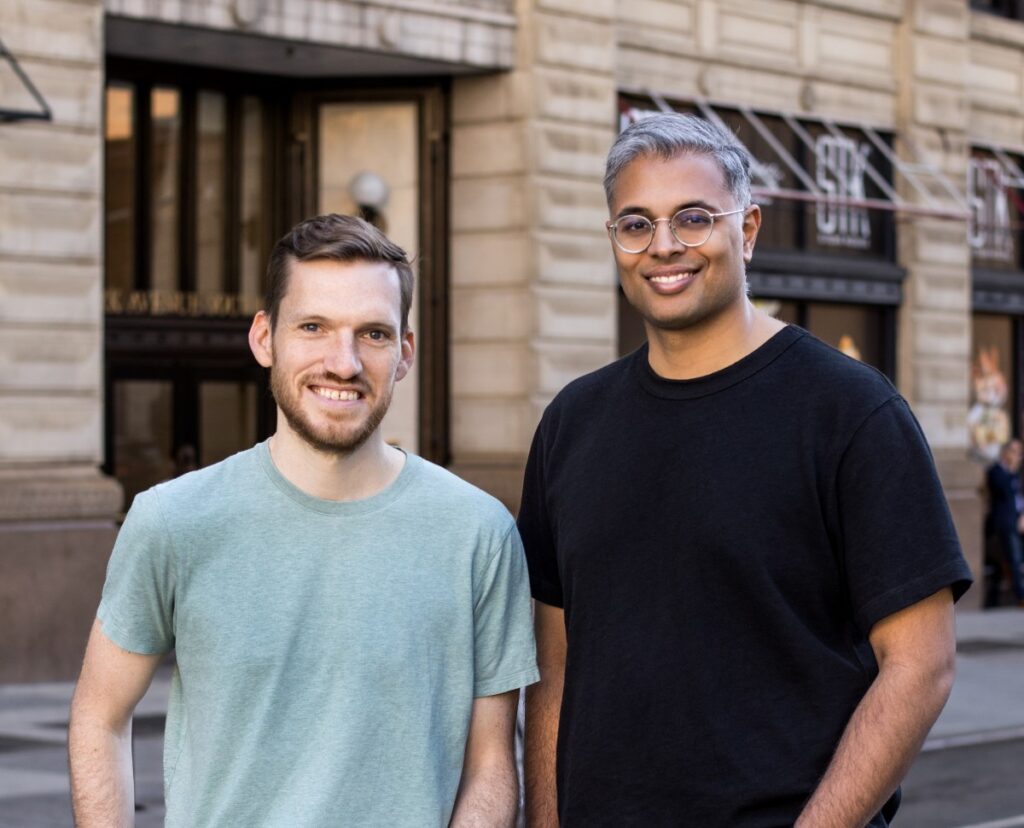
Founded by Sajid Mehmood and Conor Branagan, both ex-Datadog engineers who helped scale the monitoring firm to a multi-billion dollar valuation, Niteshift challenges the status quo of trusting sensitive code to model providers like OpenAI and Anthropic. The founders argue that handing your core product logic to these companies is risky, given their history of launching competing applications that effectively kill the startups they once powered.
Mehmood, who serves as CEO, compares this dynamic to Datadog’s early days. The monitoring company successfully courted e-commerce clients who refused to build on Amazon Web Services because Amazon was simultaneously driving traditional retail stores out of business-a phenomenon known as the “retail apocalypse.”
That scenario, Mehmood argues, is playing out in the software sector. As Anthropic, OpenAI, and others expand into vertical markets like legal, healthcare, and finance, they risk creating a “SaaSpocalypse” where the infrastructure provider becomes the competition.
“At Datadog we saw this clearly,” Mehmood stated. “A big part of our multicloud business came from e-commerce businesses who did not want to run on Amazon, right? … We are absolutely going to see the same dynamic as Anthropic goes to compete in legal and healthcare and finance and whatever else.”
Infrastructure over tokens
The core proposition is that companies will increasingly demand infrastructure that decouples the coding model from the orchestration required to vet and maintain AI-generated code. Crucially, this means seeking a vendor without a competing agenda.
To be clear, Niteshift does not aim to replace popular agents like Claude Code or Codex. Instead, it positions itself as a routing layer that directs requests between these models, alongside open-source options, based on specific project needs.
“Being able to switch between GPT and cloud models is important,” Mehmood said. “Everybody’s worried about getting stepped on by these giants.”
This strategy is what convinced Greylock’s Chen to invest.
“As the frontier labs move up the stack, there’s an opportunity to offer customers an alternate path: unbundling their agents from the infrastructure they run on,” Chen told TechCrunch. “Niteshift is building the platform that enables this for coding agents, letting customers invest deeply in their developer tooling without locking themselves into a single model or agent vendor.”
Furthermore, Niteshift is not selling tokens. It sells infrastructure, charging per minute of usage similar to a traditional cloud provider.
“Everybody else is selling labor replacement intelligence,” Mehmood said. “We’re selling software to agents, as opposed to humans, but we’re still out here selling software.”
Competing in a crowded room
Entering a saturated market of AI coding tools is no small feat. The concept of model independence is not new, and competitors hold massive advantages. These include Cursor (which could soon be acquired by SpaceX), Cognition (recently raised $1 billion at a $26 billion valuation), Amazon Bedrock, and OpenRouter (raised $113 million at a $1.3 billion valuation).
Mehmood’s counter-argument rests on the team’s deep experience. Mehmood and Branagan did not just theorise about these challenges; they lived them while scaling Datadog through the exact growing pains that large engineering organisations now face with AI-generated code.
Teams, he insists, need to run, test, and verify software autonomously within their real production environments. They require infrastructure built by people who have successfully managed this at scale.
Key takeaways
- Niteshift is raising $7 million to offer an alternative infrastructure layer for AI coding agents, aiming to prevent vendor lock-in with giants like OpenAI and Anthropic.
- The startup charges per-minute usage fees rather than selling tokens, positioning itself as a software provider for agents rather than a direct competitor to human labour.
- Founders Sajid Mehmood and Conor Branagan leverage their experience scaling Datadog to argue that code orchestration and verification must be separated from the underlying model providers.