A handful of cities across the U.S. have stopped using Flock’s automatic license plate reader cameras and immediately installed equivalent systems from law enforcement contractor Axon.
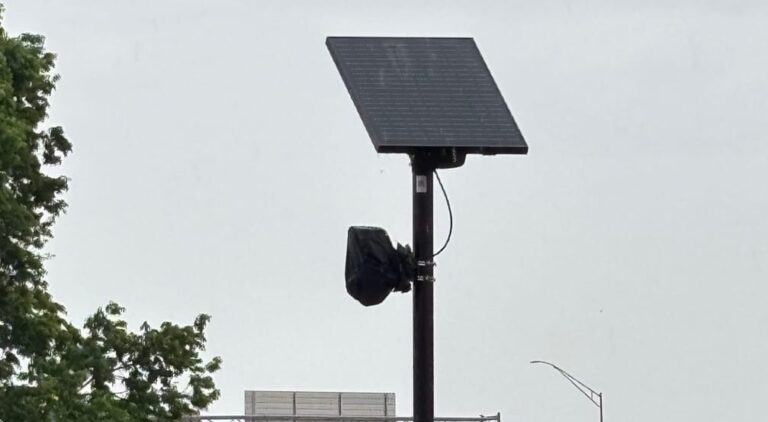
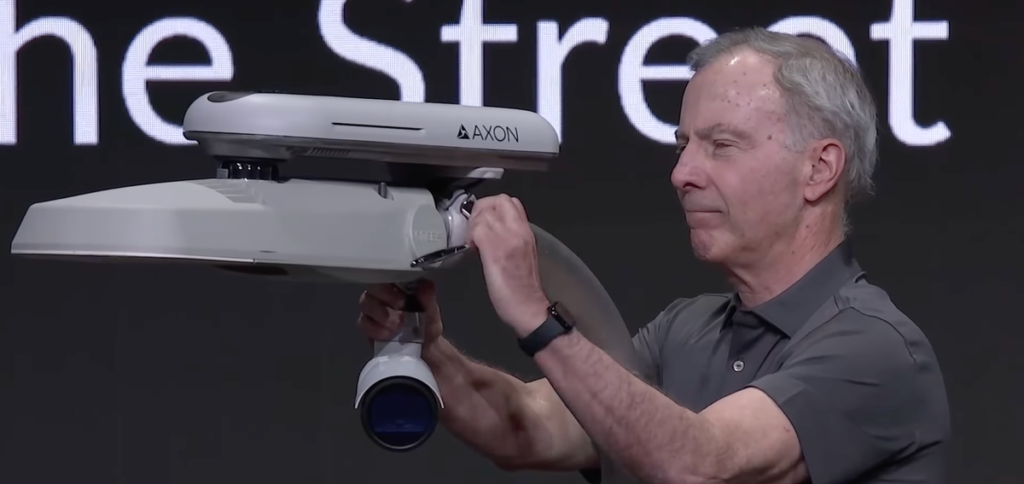
For example, Axon advertises AI-powered cameras that attach to existing streetlamps and are designed to blend in with their surroundings. The company also collects license plate data with cameras installed inside police officers’ patrol vehicles.
The switch
The move to Axon, which is not yet widespread but appears to be increasing as people oppose Flock, signals what might come next for the nationwide conversation around ALPR cameras.
Instead of doing away with the cameras entirely — which 404 Media has linked to ICE, the tracking of a woman who self-administered an abortion, and rampant abuse by cops stalking their exes — some cities may enter contracts with another company which has faced less scrutiny and backlash.
In February, Syracuse lawmakers voted 7-1 to approve a license plate reader contract between the Syracuse Police Department and Axon. That came after the department used Flock cameras starting in summer 2024.
In March, the Denver, Colorado, city council voted 7-6 to replace the city’s Flock cameras with Axon ones. The one-year contract was for 50 ALPR cameras, which is less than half of the total Flock cameras.
In June, Grand Chute, Wisconsin, voted to get rid of its Flock cameras and transition to Axon. The town was already evaluating Axon’s product, but repeated problems with Flock led officials to speed up the transition.
The Douglas County Sheriff’s Office in Colorado dropped Flock for a nearly $22.8 million contract with Axon in July. That deal included 100 Axon cameras, doubling the 50 Flock cameras the agency had, and first responder drones.
In December the City of Ferndale, Michigan, dumped Flock and approved a deal with Axon. The document explained it was making the switch because “citing privacy concerns and failures by [Flock] to protect images stored on the city’s ALPR network from unauthorized agencies […] Axon does not have a national look-up feature. Axon’s ALPR data sharing software only operates on a one-to-one’ basis.”
An 88-page report about the switch, however, shows that residents there are concerned about Axon’s ALPR cameras, too.
Longmont, Colorado, voted unanimously in March to approve a new deal with Axon. The purchase came after the city let its agreement with Flock lapse.
Knoxville, Texas, added a $9.4 million amendment to its existing contract with Axon, which included replacement ALPR cameras. That purchase came after the city’s contract with Flock expired and the city was unable to secure a short-term extension.
Why the change
As for why cities are switching, local cops performing lookups for Immigration and Customs Enforcement, data sharing, and Flock cameras sometimes being down or unavailable all came up in the media reports and documents.
One key feature of Flock is its national lookup tool. This lets, say, a police officer in Texas search ALPR cameras not just in their own neighborhood, or even state, but nationwide. That has included states which have explicit bans on sharing ALPR data out of state, like Illinois, or sanctuary states like California.
After 404 Media revealed ICE was indirectly tapping into Flock camera data, Flock removed various states from the national lookup tool and made other changes to its product. When 404 Media contacted some police departments during that reporting, some were not even aware their cameras could be searched by other agencies across the country.
Axon, simply, does not have a national network. Meaning that it would not be possible for cops in one jurisdiction to search cameras across the country.
Denver, just like the City of Ferndale, explicitly mentioned this lack of this national network as part of its decision to ditch Flock for Axon.
“As far as data sharing under this contract, Axon does not have a national network. There’s no way that we can share it nationally. No law enforcement officer in Texas, Ohio, New York, or California can log into our system. It’s only Denver Police officers and only when they’re investigating an actual criminal incident,” council member Kevin Flynn said.
Police departments using Axon can enter into data sharing agreements with each other, though. In Axon’s documentation for its ALPR product, a “shared data” option “extends the query to partner-agency detections once a sharing relationship is active.”
Of course, none of that changes the basic fact of how ALPR cameras work, which constantly scan all passing vehicles regardless of which vendor runs them. Switching vendors also does not address the more fundamental issue of whether such technology should require a warrant or not.
Neither Flock nor Axon responded to a request for comment.
How the tech works
Axon’s ALPR cameras differ from Flock’s in some key ways. First, many of them are installed inside police officers’ vehicles. These Axon Fleet 3 cameras constantly scan the license plate of every vehicle they drive past and create a timestamped log of where each was, collecting data from locations that may not be covered by a stationary camera.
Another is Axon Lightpost, a camera that fits onto an existing streetlight and adds a surveillance camera to it. Axon’s Lightposts are built in partnership with Ubicquia. Ubicquia’s pitch is that the devices “mount to existing streetlight infrastructure, blend seamlessly into urban landscape,” and “avoid complex permitting processes.” These cameras can also livestream, according to Axon’s website.
Sticking a camera onto an existing lamppost draws less attention than Flock’s purpose built cameras but provides similar functionality. According to Axon, “Lightpost uses an Axis Q1800-LE-based license plate camera engineered for high-accuracy captures in real traffic conditions.” The camera draws power from the local grid and runs on a cellular network maintained by Ubicquia.
Axon Outpost cameras are the ones that most closely resemble Flock’s. Like Lightpost, they also livestream, and, like Flock, record a vehicle’s characteristics like their color and make.
Axon also partners with surveillance doorbell company Ring to let Ring customers share video with law enforcement. Flock and Ring cancelled a similar planned arrangement after massive backlash.
Axon then brings essentially all of this data together in Fusus. Fusus started as a system and company that linked together a city or town’s security cameras, added AI capabilities to them, and let police query all of that data at once. 404 Media previously reported how Fusus was spreading across the country. In 2024, Axon acquired Fusus.
One reason why journalists, activists, and residents have been able to learn so much about what police use Flock for is that the company has built auditing tools that the public can access through records requests. Because of Flock’s nationwide network, it is often possible to get insight into the full scope of data collection.