For the millions of creators, educators, and small business owners in India, the promise of generative video is currently held back by prohibitive costs. While global rivals churn out content at lightning speed, the local market has struggled to keep pace. The government’s India AI Mission, a roughly $1.2 billion push to stimulate development, aims to shift this dynamic by subsidising compute for startups willing to open-source their models. One such beneficiary, Avataar AI, has just released Varya, a video generation tool specifically tuned to understand the local context, from regional festivals to traditional attire.
Speed and scale through distillation
Avataar, backed by Peak XV and specialising in e-commerce video tools, did not build Varya from the ground up. Instead, the team took Wan 2.2, a powerful model released by Alibaba, and applied a technique known as distillation. This process compresses the original model’s capabilities into a leaner, more efficient version tailored for specific use cases. The outcome is a system that executes in four steps rather than the original 50, delivering video 10 times faster at a fraction of the expense.
To illustrate the performance gap: on an NVIDIA H200 GPU, Varya can produce a 5-second clip at 720p resolution in just 45 seconds. By comparison, the Wan 2.2 baseline requires 1,230 seconds for the same task.
A price point for the masses
The most disruptive element of Varya is undoubtedly its cost structure. Avataar intends to charge ₹0.48 (approximately $0.005) per second on its hosted service. This stands in stark contrast to competitors like Veo, Kling, Luma, and Runway, which typically demand $0.10 or more per second. The disparity represents a roughly 20-fold reduction in pricing.
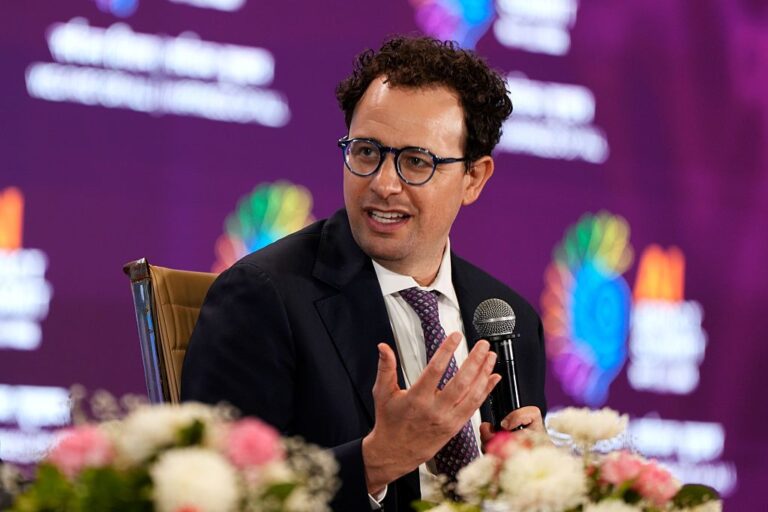
“India is a video-first market. We see this across every large consumer internet product in India: video wins over text. Current AI video models are too expensive for population-scale use in India. If video AI is going to reach students, teachers, MSMEs, creators, enterprises, and public services, costs have to come down dramatically. Cost is the biggest unlock for AI adoption in India,” said Rajan Anandan, managing director at Peak XV.
Understanding local nuance
Generative models often stumble on cultural details, defaulting to stereotyped or generic imagery-a flaw frequently highlighted in recent coverage. Avataar claims to have addressed this by training Varya on curated datasets that recognise specific cultural markers, including local cuisine, clothing styles, architectural features, and holiday traditions.
The model will launch as an open-weight offering on India’s AI Kosh portal, the government’s central repository for public AI models and datasets. Alongside the weights, the training data will be made available, allowing developers to self-host or modify the tool for their own requirements. Avataar also plans to grant access to enterprise clients and has expressed interest in partnerships with video platforms such as Higgsfield and Adobe Firefly. Users can test the system immediately via text prompts or reference images on the company’s website.
A pragmatic path forward
Varya’s release highlights a strategic reality in India’s AI landscape. Industry experts suggest that the region is better positioned to gain traction by building robust application ecosystems rather than competing directly on foundation models. This pragmatism stems from historical constraints, specifically a shortage of high-quality compute resources and limited access to premium training data compared to global rivals.
The India AI Mission is designed to bridge this divide. Last year, the initiative selected 12 startups, including Avataar, to develop models while providing them with subsidised compute power. Earlier this year, IT minister Ashwini Vaishnaw stated that the nation aims to attract $200 billion in AI investment by 2028 and more than double its GPU capacity within the next six months.
Key takeaways
Avataar AI’s Varya model reduces video generation time to 45 seconds for a 5-second clip, a 10x speedup over the Wan 2.2 baseline.
Pricing is set at roughly $0.005 per second, representing a 20x cost reduction compared to major US and Chinese competitors.
The model is culturally tuned to recognise Indian festivals, food, and clothing, addressing common generic output issues in global AI tools.
Varya is released as an open-weight model on India’s AI Kosh, encouraging local development while supporting the government’s goal of doubling GPU capacity.