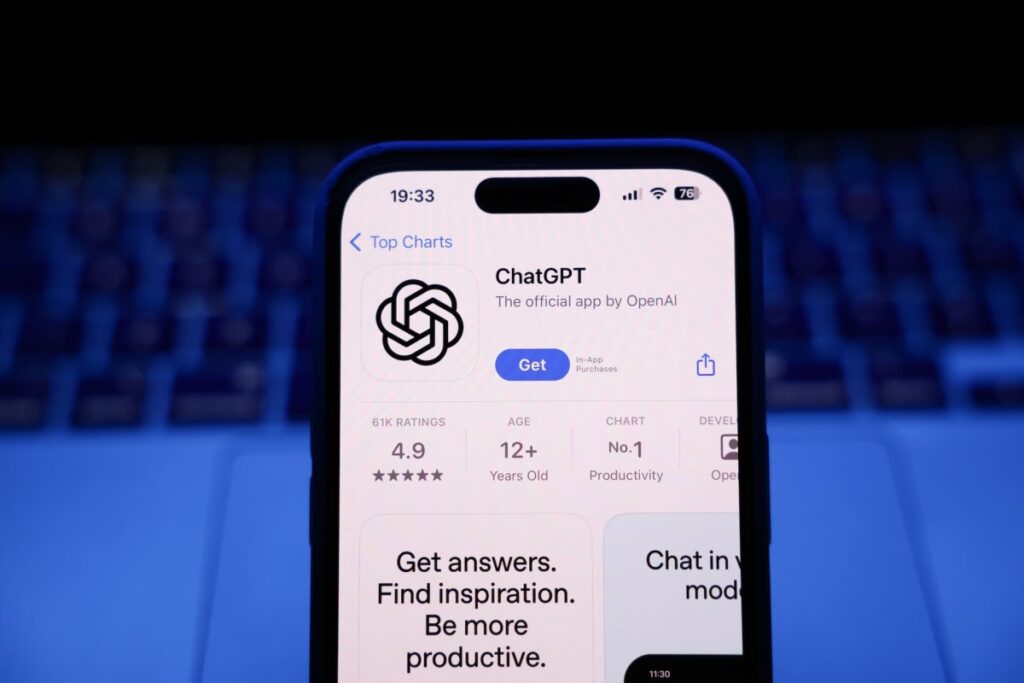
For makers and artists, the era of the single dominant AI tool is effectively over. After more than three and a half years since the initial launch, the competitive landscape has shifted decisively. While OpenAI’s chatbot remains the most popular assistant globally, its dominance has fractured. Analytics firm Sensor Tower’s State of AI Report for 2026 reveals that market share has dipped below 50% for the first time as users migrate between rivals like Google’s Gemini, Anthropic‘s Claude, and xAI’s Grok.
The fragmentation of the top tier
ChatGPT’s trajectory has been nothing short of historic. It achieved the fastest app growth ever recorded to reach one billion monthly users, a milestone Sensor Tower reported this month. OpenAI counts weekly active users, and its last figure from February stood at 900 million. Despite this, the chatbot still commands over 1.1 billion monthly users, followed by Gemini with 662 million and Claude with 245 million.
Until January, ChatGPT held a commanding majority. By the end of May, however, that figure had fallen to 46.4%. This decline was driven largely by the rise of Gemini, which now captures 27.7% of the market, and Claude, holding 10.3%. The remaining space is crowded by other assistants including Grok, Perplexity, DeepSeek, and Meta AI, all of which hold less than 5% market share.
User loyalty is dead
Users are increasingly willing to switch assistants based on specific events and values. For instance, OpenAI’s deal with the U.S. Department of Defense in February triggered a measurable spike in uninstalls. This suggests that brand trust and values alignment matter to users just as much as features do. Gemini’s momentum is largely due to its integration with Google’s broader ecosystem, while Anthropic’s Claude has built a strong reputation for productivity, closing in on ChatGPT’s user-retention rate.
Economic shifts and regional divides
In the first half of 2026, people are on pace to download nearly 2.3 billion AI apps and spend over $4.2 billion on them. Sensor Tower estimates this compares to $1.83 billion in spending in the first half of 2025. This jump indicates the industry is shifting its focus from pure growth toward monetization. However, both download and spend growth rates have decelerated, suggesting the market is maturing even as absolute numbers climb.
Regionally, Asia recorded its first download decline of 3.3% in Q1 2026, driven by dips in China and India. Despite leading globally in total downloads, Asia trails North America and Europe when it comes to in-app spending. This split is critical for companies deciding where to invest in premium features.
In the U.S., users are gravitating toward AI assistants for productivity tasks and spending more on premium features. Across platforms, average revenue per user has grown industry-wide, but Claude stands out. Thirteen percent of Anthropic’s users are paying for a subscription plan-a conversion rate that leads the field and will be a key metric for investors evaluating which AI businesses are building lasting revenue.
Sensor Tower estimates that hours spent on AI apps will have increased from 17.2 billion hours in H1 2025 to roughly 36 billion hours in H1 2026. The top three assistants command 89% of time spent on AI assistant apps. Meanwhile, adjacent categories like AI companions or AI content-generation apps remain fragmented and wide open to competition, representing both a risk and an opportunity depending on which players move first.
Ads and shopping
OpenAI started experimenting with ads in ChatGPT in February. According to Sensor Tower, the company has scaled the number of ads gradually, along with the share of users who see them. By May, an average of 17% of daily users were being served ads-a number to watch as ChatGPT’s monetization strategy evolves beyond subscriptions.
Software and shopping are the largest advertiser categories in ChatGPT so far, followed by media and entertainment and food and dining.
As ChatGPT deepens its shopping integrations, it is increasingly sending referral traffic to retailers like Target, Walmart, and Costco. Amazon, which has blocked ChatGPT’s web crawlers, has seen stagnant referral traffic from the platform as a result.
That creates an opening for others. Sites like Walmart have embedded their own AI assistants to help shoppers find products. While Amazon’s Rufus has seen flat user growth, Walmart’s Spark has been gaining ground. Sensor Tower also noted that Amazon shoppers who used Rufus spent more time in the app and converted at higher rates than those who didn’t, hinting that on-platform AI can meaningfully influence purchasing behavior when users actually engage with it.
Key takeaways
- ChatGPT’s market share has fallen below 50% for the first time, driven by significant gains from Gemini and Claude.
- The industry is pivoting from growth-at-all-costs to monetization, with U.S. users showing high willingness to pay for premium AI features.
- Regional disparities are widening, with Asia leading in downloads but trailing North America and Europe in in-app spending.
- Monetisation strategies are diversifying, with ChatGPT testing ads and retailers embedding their own AI assistants to capture shopping intent.