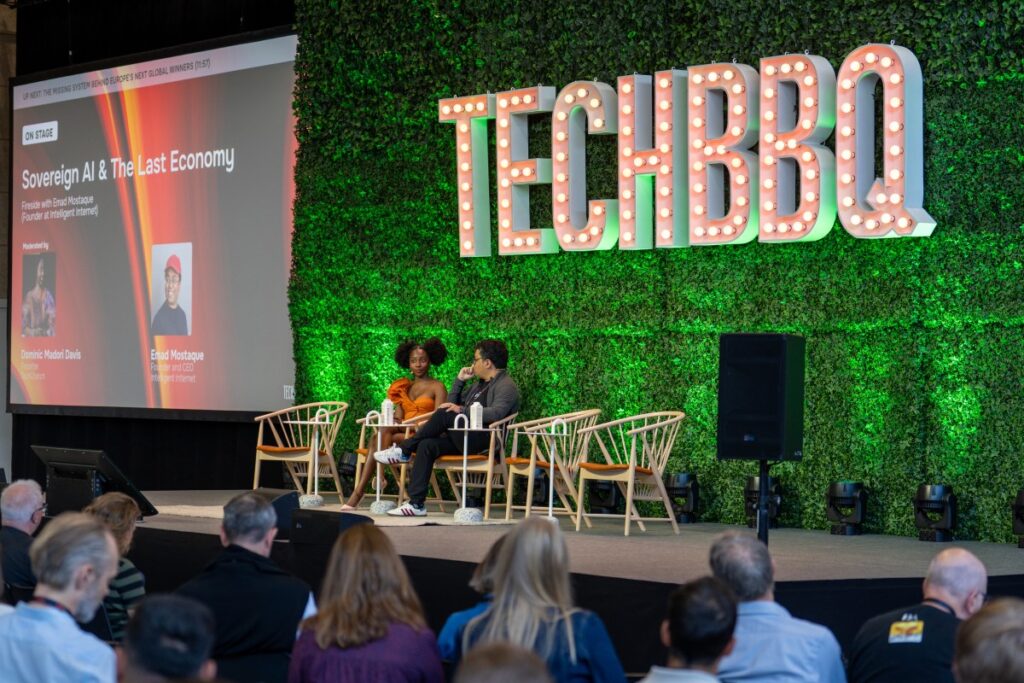
The conversation at TechBBQ in Copenhagen did not focus on what to build with AI, but on who should control it. Throughout the annual Nordic conference, from the main stage to the cocktail hour, the topic remained consistent: how Europe can take more power over the technology driving artificial intelligence.
This question of sovereignty aligned with the event’s theme, “Emerging from Agency”. The timing felt right following the earlier decision to make Anthropic‘s Mythos and Fable models unavailable to users outside Europe.
The incident pushed many in the European ecosystem to consider owning the models and infrastructure underpinning the AI wave, rather than renting that power from the United States or China.
One startup executive told me the unavailability of those models disrupted his software team. Another shrugged it off. He said relying on two other geopolitical powers for AI might cause severe headaches one day, but for now, everything remains pretty much OK.
“TechBBQ’s theme of agency felt particularly timely this year as the conversation shifted from what AI can do to what we’re actually willing to let it do,” Ellen de Brever told me during the conference, which ended August 27. She is an angel investor and head of partnerships at the Novo Nordisk Foundation Cellerator.
Panels covered the future of women’s health, a summit on collaboration between the Nordic and African ecosystems, and how to secure more growth capital for Europe. AI was an underlying theme in many discussions. As de Brever noted, “the debates weren’t about smarter machines, but about human judgment and who gets to stay in the driver’s seat.”
“The age of AI agents isn’t really a story about machines gaining agency,” she continued. “It’s a story about humans deciding what to give up.”
One attendee told me the panel with Signal president Meredith Whittaker was refreshing. I moderated the session to focus on whether privacy and AI can coexist. Whittaker spoke out against integrating AI assistants and agents into operating systems, such as what ChatGPT is doing with iMessage.
She said this AI era is creating a “data collection apparatus” and that AI labs use clever marketing to make people forget “about the collateral consequences” of acquiring so much data.
“There is still a huge market need for privacy,” she said. “And particularly with the sovereignty concerns, we will have customers here.”
Elsewhere, Emad Mostaque, co-founder of Stability AI and Intelligent Internet, sat on a panel with me about how an agentic workforce will impact the economy and what that means for personal sovereignty.
“Sovereignty is the ability to resist power being exerted over you,” Mostaque said. He spoke about the concentration of power in the hands of a few AI labs and said, “Inevitably, every country will be run by AI” and that “the person that controls the AI controls the country.”
Mia Negru, the advocacy and engagement director for the nonprofit Life With Artificials, sent me a message after the panel about what crossed her mind while listening.
“If intelligent agents perform cognitive work and robots increasingly perform physical work, we may be approaching something much bigger than another technological revolution,” she said in the message. “We may have to rethink ownership, work, democracy, economic participation and eventually even who gets to participate in society.”
When the panels were not in session, people let loose at happy hours and rooftop soirées, where lighter conversations eventually took over.
Lovable, Nvidia, OpenAI, AWS Startups, and HSBC hosted a rooftop barbecue where I spoke to founders about Denmark’s growing tech hubs. London’s Ada Ventures hosted a gathering at the cocktail bar Bird where I chatted with one health tech founder about increased innovation in the women’s brain health space. The speakers’ dinner took place on an island in the middle of Copenhagen where the international press sat together and watched fire dancers. The after-party continued upstairs, where everyone was tempted to stay for one more drink until the bar tab closed.
“In a room full of conversations about machines, the most memorable moments still come from the simplest thing,” de Brever said. “Human connection, face-to-face, building relationships, sharing ideas, and reminding each other of what technology can never quite replace.”
What it means
For people making things, the shift is from building on rented land to worrying about who holds the keys. The recent unavailability of major models showed that relying on foreign infrastructure is a risk. This means teams must decide if they can afford to build their own stacks or accept the vulnerability of using tools they cannot fully control. Privacy tools now have a clearer path to adoption because users want to keep their data local.