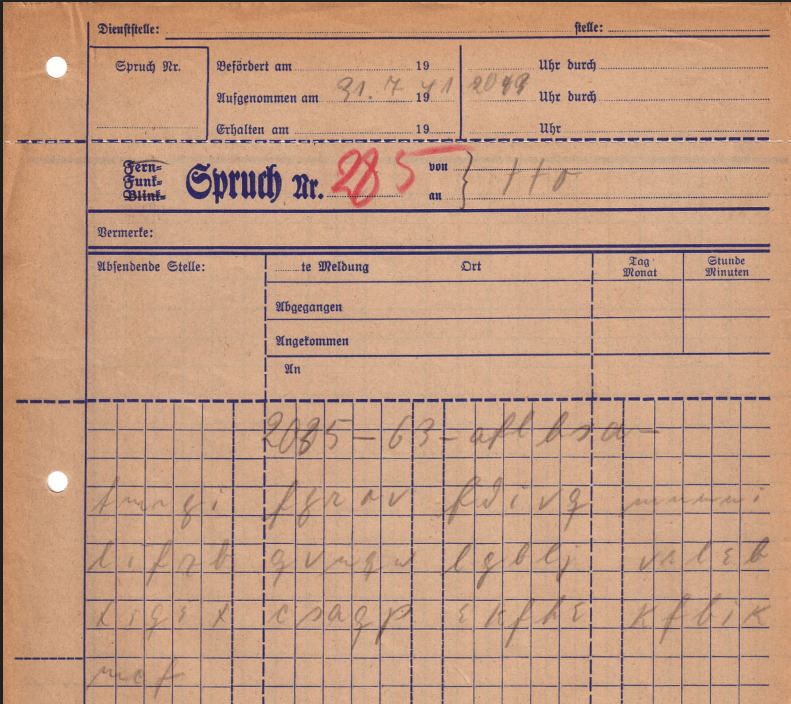
Alan Turing is famous for his test of machine intelligence, but the work that mattered to him was breaking the Nazi Enigma code during World War II. Now two researchers claim to have used large language models from OpenAI and Anthropic to solve two messages that had remained unsolved.
While Turing and his team built the Bombe to translate intercepted traffic, a handful of archival texts still sit unbroken. These failures usually stem from transcription errors or mistakes made by the original encoders.
Carter Leffen, a developer, asked OpenAI’s Astra model to search a database for an unbroken message and decode it. The system found context clues, built a simulator of the Enigma machine, and recovered the plaintext of a message that has baffled researchers since 2005. Leffen also used Astra to create an interactive website explaining the problem.
Frode Weierud, a retired electrical engineer who runs the Crypto Cellar website, validated Leffen’s solution. He said the result left him in “awe.” Weierud noted that the Astra logs showed discussion of archived messages in a “private collection” not hosted by him. He cannot confirm if the model accessed them, but speculates they may have been shared by another researcher online or pulled from German government public archives.
“GPT–6 Astra is behaving like a very professional cryptanalyst and archive researcher,” Weierud wrote. “What it has achieved in two days would take a human researcher weeks or even months. Personally, I spent several weeks researching the Bundesarchiv files GPT–6 Astra refers to.”
On September 21, Jack Willis contacted Weierud to say he used Anthropic’s Claude Opus 5 model to break a different unsolved message. Willis gave the system more guidance, allowing it to use the known signature of a particular officer’s name to crack the text.
There are currently seven unbroken Enigma messages remaining, plus one where the plaintext is known but the code is still unbroken.
Perhaps not for long.
What it means
This work shows how modern AI agents can act as independent researchers. They do not just fetch answers; they build simulators, cross-reference archives, and construct their own workflows to solve historical problems.