In October, more than one in four requests on Vercel’s AI model router went to decision models rather than large language models. That figure represents an enormous share of work for a kind of computerised intelligence invented only a month earlier.
What are decision models
These systems are large language models that do not produce output tokens. Instead, they are tuned to use their general intelligence to quickly and cheaply decide between preset options. They register their level of confidence in the choice. They are useful in production environments where fast decisions can be more important than the reasoning provided by a slower and more expensive frontier model.
TypeSafe dominates the early metrics
TypeSafe became a $7.5 billion company after releasing its Jev family of models. This technology continues to dominate usage, at least where we can see metrics from services like OpenRouter. That platform handled more than 1.5 billion queries to TypeSafe’s models last week.
Competition is arriving fast
It is easy to make a decision model, and dozens were released in the wake of Jev. One Amazon engineer made one in a weekend, and soon every hyperscaler had its own option. On Tuesday, Microsoft CEO Satya Nadella said that his company is rolling out its decision model, Microsoft-Decision-1.1, for wide use on Azure immediately.
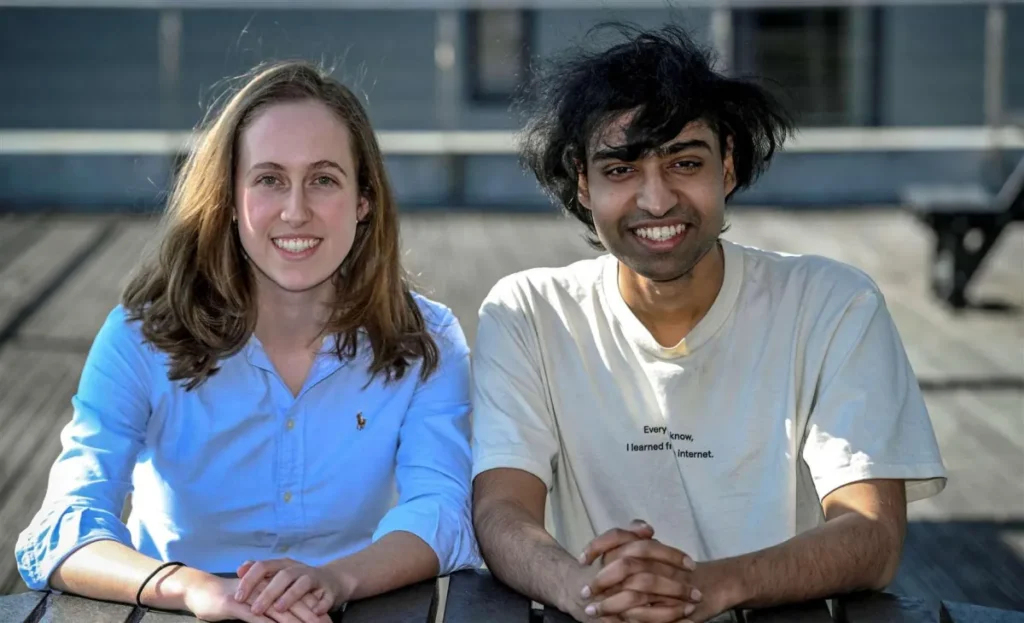
The action is happening on both ends of the ecosystem. Sqwish, a UK-based AI startup behind a decision model called kettei fat, announced a $3 million pre-seed round today. Cofounders Ushnish Sengupta and Federica Freddi, who met as Cambridge grad students, had been developing small LLMs when Jev arrived on the scene. They realised their architectures could be repurposed as a powerful decision model.
Data calibration is the key differentiator
Data appears to be the key to a successful model in this category. TypeSafe CEO Diogo Almedia told TechCrunch that the hardest part of building Jev was finely calibrating its judgement using statistically-adjusted synthetic data. Sqwish, too, has been working with synthetic data, but its unique offering is built-in post-training tools that use a customer’s own data to improve the model’s judgement.
“What makes us not a commodity, I think, is the fact that we are offering our customers the same power…they can keep uploading their production data, and just the same way that we trained our models, their models can also keep getting better at the tasks that they care about,” CEO Ushnish Sengupta told TechCrunch.
Benchmarks are just an invitation
Attempting to rank decision models is difficult. Sqwish’s “kettei fat” model has performed well on some benchmarks, but most builders of the technology say that the real proof is in the pudding: it is generally simple for developers to sub in one model for another and see how it does in a specific context.
“The benchmark is more of an invitation to try the model out, and then the continual tuning is the reason why why they should stick to us,” Sengupta says.
Enterprise reality beats lab scores
Microsoft’s Decision 1.1 model is also the result of the company carefully balancing across cost, latency, intelligence and calibration. Achint Srivastava, the engineering VP who led the project, agreed that too much focus on benchmarks is a mistake.
“What we see is that ‘benchmaxed’ models fall flat under real enterprise usage very quickly,” Srivastava wrote in an email. “Our testing underscores just how challenging it is to deliver accuracy, reliability, speed and cost efficiency in a single model. Microsoft-Decision-1.1 and Jev are among the few that perform strongly across all four dimensions, even when evaluated on ‘held out’ or unseen benchmarks reflective of real use cases.”
System One versus System Two
For startups like Sqwish, competition with hyperscalers and frontier labs is an opportunity. Freddi predicts that future systems will see so-called System One intelligence, like decision models, working in concert with System Two intelligence, like frontier LLMs.
“Even in that future, System One is maybe a $10 billion, $50 billion [opportunity], and OpenAI is doing this IPO with you know $1 trillion, $2 trillion market value in mind,” she told TechCrunch. “This is all we care about; whereas for them, this is just a side project.”