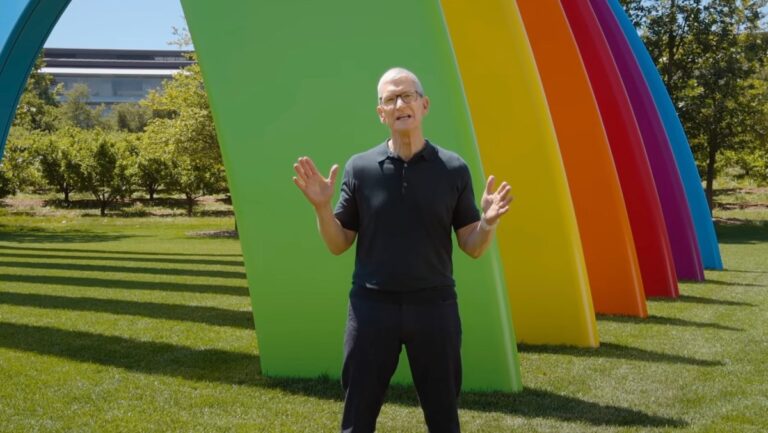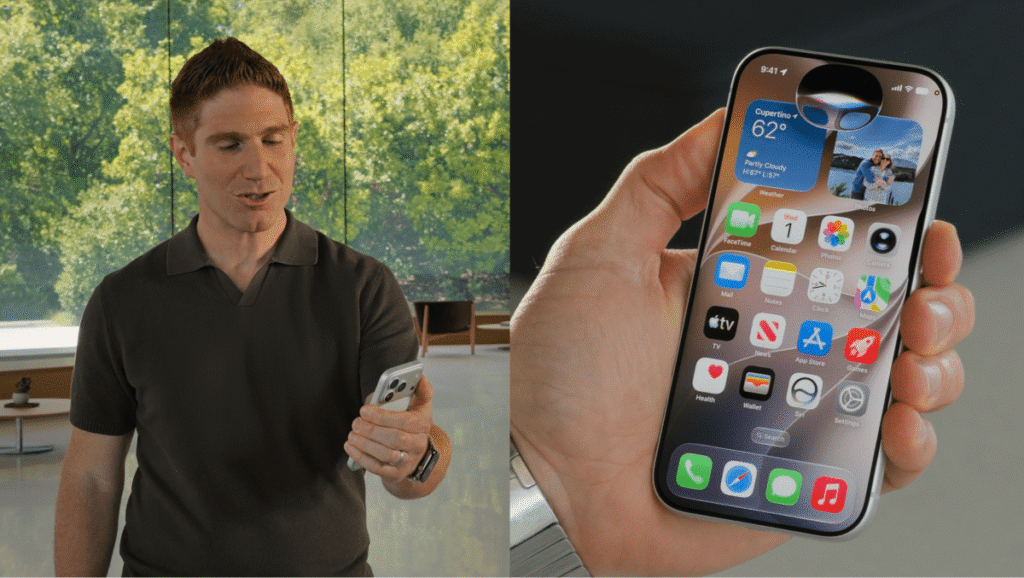
For makers and artists relying on generative tools, the shift in Apple’s recent presentation style signals a move away from theatrical promises toward tangible utility. While the 2026 Worldwide Developers Conference keynote focused heavily on refining existing features-such as updating the “Liquid Glass” design and improving search-the real story lies in how the company demonstrated its new AI capabilities. The demos felt significantly more grounded than previous years, featuring pre-taped footage of individuals actively using devices in real-time rather than relying solely on slick, unverified production videos.
A shift from promise to proof
The change in approach was a direct reaction to legal and reputational fallout from two years prior. At WWDC 2024, Apple unveiled a smarter Siri and a suite of AI features, but these were showcased through highly produced videos that critics quickly dismissed as “vaporware.” The company had promised these tools would arrive soon for users with iPhone 15 Pro devices and M1 chips or better. However, by March 2025, Apple admitted to Daring Fireball that the rollout would take longer than anticipated. This delay led to a federal lawsuit alleging false advertising, a serious charge for a brand built on the reliability of its hardware.
Consequently, Apple last month agreed to a $250 million settlement to resolve the case without admitting wrongdoing. The latest presentation appears designed to avoid repeating those mistakes. While some polished videos remain-such as one showing how to adjust Siri’s voice or demonstrating voice-to-text-the core AI demonstrations now feature actors using actual devices. This “live-like” format serves as implicit proof that the software functions on real hardware, moving beyond mere speculation.
Accessibility and hardware requirements
Perhaps most importantly for the user base, Apple is no longer locking these features behind the latest hardware. The updated Siri will launch with iOS 27 on iPhone 15 Pro and Pro Max models, all iPhone 16 models and newer, and the current iPhone 17. This means most users who upgraded within the last couple of years will not need to purchase new devices to access the technology. This is a notable concession, acknowledging that Apple cannot credibly promise features for iPhone 15 models if it cannot deliver them to those devices within a reasonable timeframe.
The ecosystem support extends beyond the iPhone. New capabilities will be available on the iPad mini (A17 Pro), iPad models with M1 or later, MacBook Neo (A18 Pro), and Mac models with M1 or later. Wearables are also included, with support for Apple Vision Pro, Apple Watch Series 10 or later, Apple Watch Ultra 2 or later, and the Apple Watch SE 3, provided it is paired with an Apple Intelligence-enabled iPhone nearby.
Key takeaways
- Apple’s recent WWDC demos prioritised “live-like” footage of actual device usage over slick, unverified videos to rebuild trust after previous failures.
- The company settled a federal lawsuit over false advertising claims regarding the 2024 AI rollout for a reported $250 million without admitting liability.
- New Siri and AI features are now accessible on iPhone 15 Pro and newer models, removing the requirement to buy the latest hardware to gain access.
- Support extends across a wide range of devices, including the MacBook Neo, iPad mini, and various Apple Watch models when paired with a compatible iPhone.