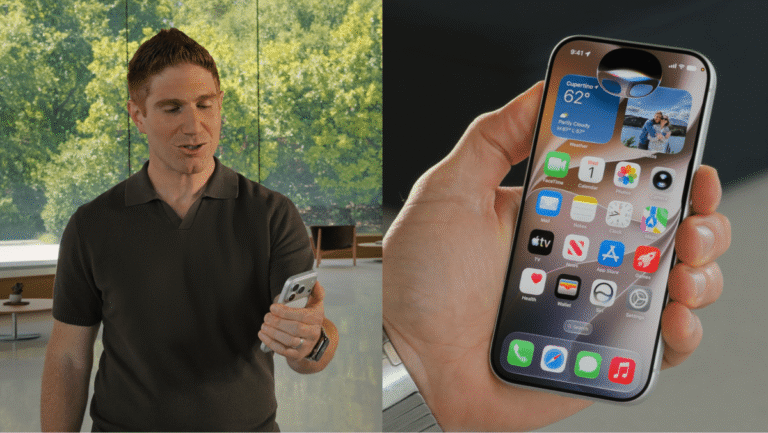
For creators and artists relying on Apple’s ecosystem, WWDC 2026 marked a strategic pivot from flashy AI promises to essential reliability fixes. Before unveiling a revamped, AI-powered Siri, Apple’s senior vice president of Software Engineering, Craig Federighi, spent the opening segment addressing a backlog of neglected software issues. The keynote structure itself served as an admission that the foundation of the operating system required reinforcement before the company could credibly deploy consequential AI features.
Fixing the foundation
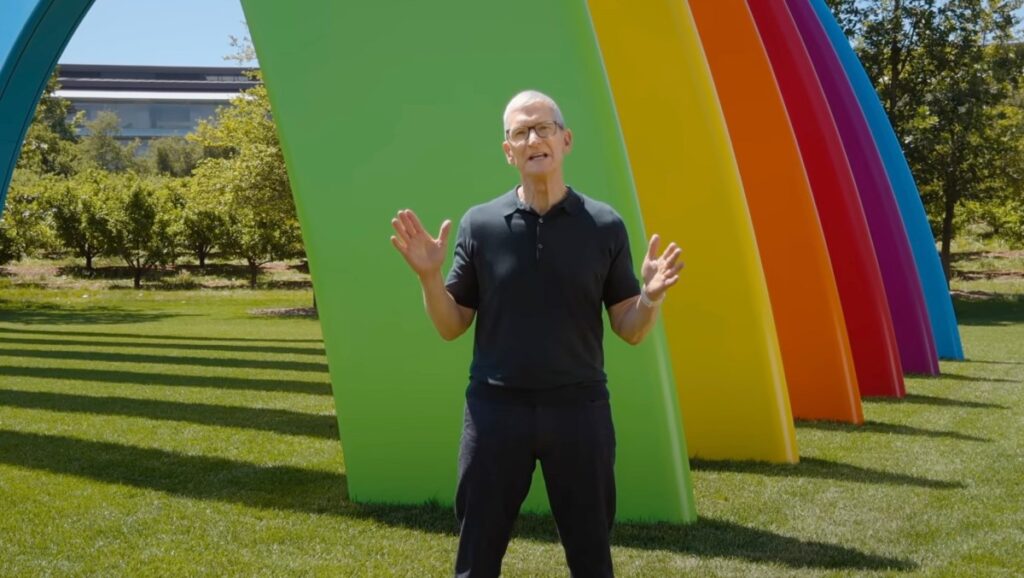
“Instead of just introducing a host of new features, we’re also taking the features you already rely on and making them even better, because we believe the best operating systems aren’t just built on big breakthroughs, they’re built on sweating the details,” Federighi stated. While this sentiment is common across the tech sector, for Apple it functioned as a direct concession to critics who argued the company had neglected granular usability.
The first item on the repair list was the controversial Liquid Glass design language, introduced in iOS 26. While visually striking, its glass-like aesthetic compromised readability for many users, particularly on Macs, prompting widespread requests for a return to the traditional frosted look. Apple acknowledged this feedback, noting that while they consider the new default appealing, they recognise some users prefer a more tinted appearance.
To address this, Apple has added a slider allowing users to revert the design entirely to “fully tinted.” Other usability improvements included a more uniform toolbar in macOS to better separate controls from content, and refined app icons that appear sharper and more defined even in clear mode.
Performance and long-tail support
Significant performance gains were also announced. Apps on iPhone and iPad now launch 30% faster, new photos appear up to 70% faster in the library, and AirDrop file transfers have seen an 80% speed increase. In a subtle nod to users upgrading less frequently, Apple extended these performance improvements to all models dating back to the iPhone 11, released in 2019.
Several persistent friction points were resolved, including smoother transitions between Wi-Fi and cellular data. A new indicator now alerts users when messages are delayed, which is particularly useful on low bandwidth or when sending large files. The search experience has been rebuilt to be more stable and comprehensive, with new content indexed almost immediately and a new ranking system in Mail ensuring relevant results appear first.
Perhaps most notably for health-conscious users, the Health app finally added support for perimenopause and menopause tracking. This move addresses a gap where the app had ignored half its user base for years. It arrives as the menopause care market matures, following a period where telehealth startup Midi Health crossed a $1 billion valuation and dedicated investment in the category topped $294 million between 2022 and last year.
AI features and creative tools
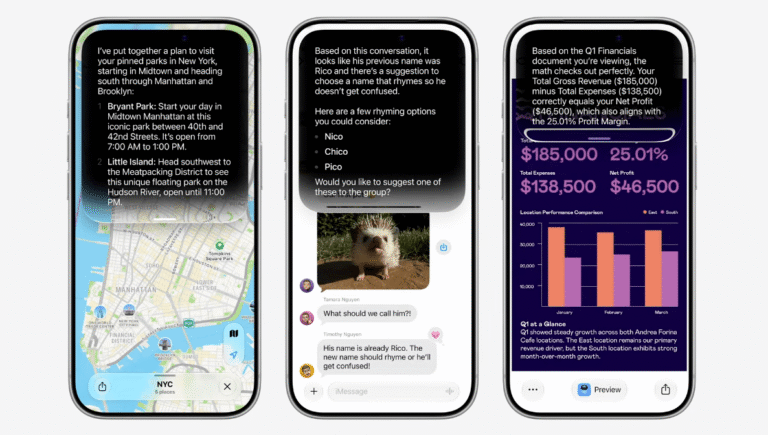
Following the fixes, Apple turned to its AI enhancements, framing them as part of a broader effort rather than a singular make-or-break moment. Siri is launching into “beta” for consumers later this year, but notably not in the EU or China, where regulatory hurdles remain. This cautious rollout serves as a hedge given the feature’s central role in Apple’s AI strategy.
Apple Intelligence will now organise webpages’ tabs, analyse content for information, and check pages for updates. Users can generate custom Safari extensions on the fly using AI. Passwords and Safari can collaborate to suggest and apply stronger passwords automatically, while Messages will offer reply suggestions based on conversation context, such as pointing to relevant photos when asked.
Calendar can now create events from natural language commands, a capability third-party apps like Fantastical have offered for years. During calls, AI will surface key information, such as confirmation codes when contacting an airline. The Home app will use AI to summarise events, catching up to competitors like Amazon and Google in areas like fire detection, though Apple has notably avoided facial recognition.
Image Playground, Apple’s AI image generation app, appears to have moved from novelty to utility. The updated model can produce functional assets like business flyers or cleanly edited photos, a significant improvement over earlier kitschy outputs. Apple also announced it will open image generation to developers via an API, transforming a consumer feature into a potential platform.
Photo editing capabilities have expanded to allow the removal of distracting items and the expansion of image edges using generative models. The standout feature is Spatial Reframing, which lets users adjust a photo’s composition post-capture using on-device spatial models. Crucially, this works retroactively on existing images in the library, making years of stored photos eligible for enhancement.
Key takeaways
- Apple prioritised fixing fundamental usability issues, such as the Liquid Glass design and search performance, before introducing new AI features.
- The Health app’s addition of menopause and perimenopause tracking addresses a significant gap for a large segment of its user base.
- Image Playground and Spatial Reframing mark a shift from novelty to practical utility, allowing for functional image generation and retroactive photo editing.
- Siri is launching as a beta feature with specific geographic exclusions in the EU and China, reflecting a cautious approach to AI deployment.