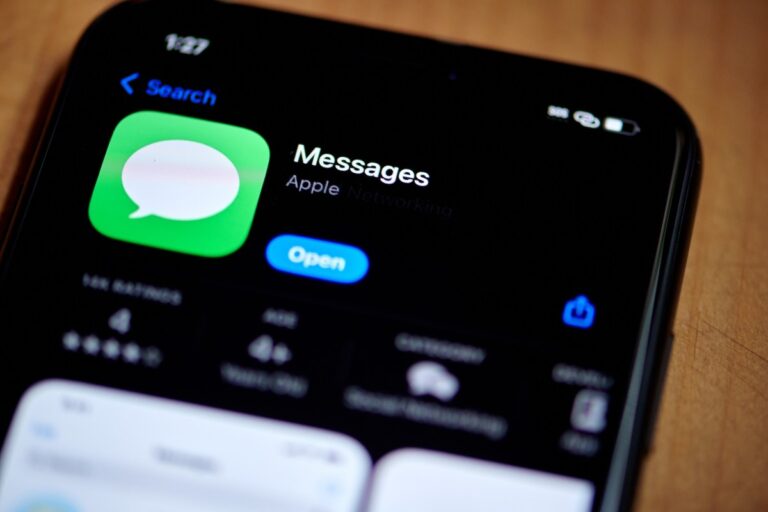
For makers and artists relying on the App Store, the latest numbers from Apple suggest a landscape where the platform’s financial engine is largely decoupled from its traditional commission model. The tech giant’s annual update, released ahead of the Worldwide Developers Conference, emphasises that the vast majority of economic activity on its platform happens without Apple taking a cut. This shift in narrative is crucial for creators, as it reframes the company’s revenue share as a minor fraction of the total value generated by the ecosystem.
The .4 trillion figure and what it means for creators
Apple reported that developer billings and sales facilitated through the App Store reached $1.4 trillion in 2025, a rise from the $1.3 trillion recorded the previous year. However, the company is careful to define this total to include physical goods and services, such as retail items and grocery delivery, which bypass the standard 15% to 30% commission entirely.
According to Apple’s breakdown, 90% of the $1.4 trillion involved transactions where developers paid no commission whatsoever. The remaining slice, representing digital goods like subscriptions and in-app purchases, accounted for $149 billion in billings and sales. This is a significant increase from the $131 billion reported last year, yet it represents a minority of the overall activity.
Beyond direct sales, the App Store saw in-app advertising revenue climb to $151 billion in 2025, up slightly from $150 billion the year before. This highlights a growing avenue for monetisation that often operates under different, and frequently more favourable, terms for publishers and developers.
AI apps are driving the growth
The data points strongly towards artificial intelligence as the primary growth vector for independent developers. Apple noted that 40 of the top 100 apps in 2025 featured consumer-facing AI capabilities. These AI-powered applications demonstrated stronger billing growth compared to their non-AI counterparts within the top 100.
This trend suggests that the platform is increasingly prioritising tools that leverage generative models and intelligent agents. It also fuels speculation that Apple may soon announce plans to formally support AI agents on the App Store, a move that has been rumoured for some time. The company is expected to reveal its own AI advancements at the upcoming conference, including a major overhaul of Siri and deeper system-wide integrations.
Global expansion and regional shifts
The growth is not confined to Western markets. Apple highlighted significant expansion in China, where App Store billings and sales have more than doubled over the last six years. In the U.S. and Europe, the figures have more than tripled during the same period.
Once again, this surge is largely driven by the sale of physical goods and services-such as ride-hailing, travel booking, and food delivery-rather than digital content. For creators selling physical products or offering services through their apps, the App Store remains a massive, untaxed marketplace.
Key takeaways
- The App Store’s total ecosystem value has hit $1.4 trillion in 2025, with 90% of that value flowing through transactions where Apple takes no commission.
- AI-powered applications are outperforming traditional apps in growth, suggesting a strategic pivot towards intelligent tools for the next generation of software.
- Physical goods and services remain the dominant revenue stream for the platform, particularly in the U.S., Europe, and China, effectively shielding many developers from standard commission fees.