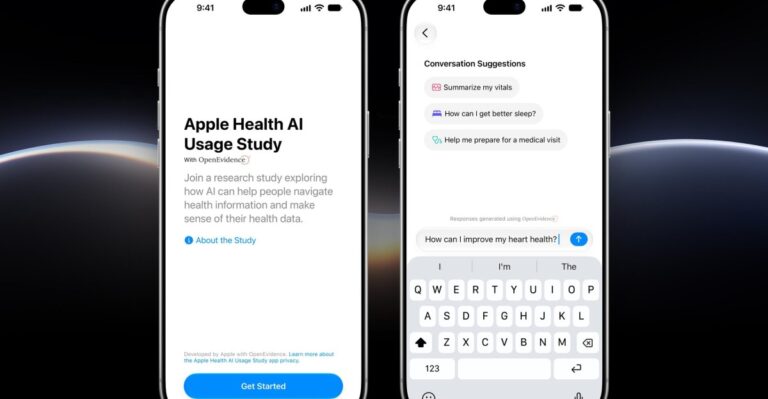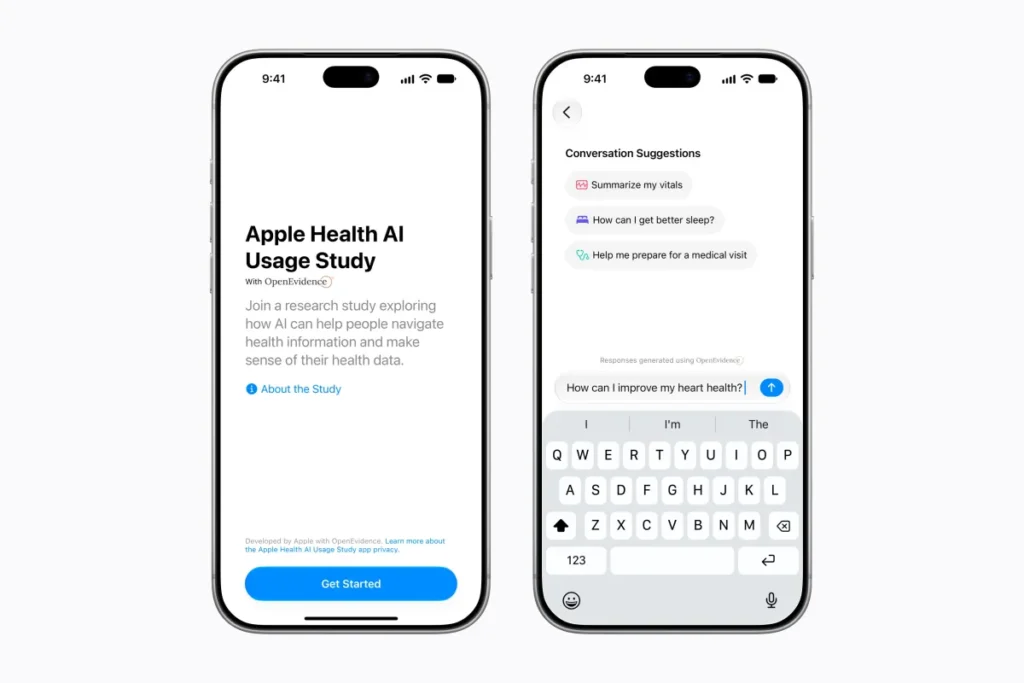
Apple has released a new application to observe how Americans interact with artificial intelligence for health purposes. The launch marks a departure from the strategy of major AI labs like OpenAI and Anthropic, which are currently prioritising chatbots with specialised medical features. Instead, Apple intends to gather data on how clinically grounded responses assist individuals in daily life.
The setup
The iPhone manufacturer is collaborating with OpenEvidence, a company focused on healthcare artificial intelligence, to run this study. Eligibility is restricted to users in the United States who are over 21 years old and possess an iPhone 15 or newer running iOS 26 with Apple Intelligence turned on. Apple plans to recruit up to 200,000 participants for a period exceeding 12 months.
The application allows users to submit health questions similar to those asked to ChatGPT or Claude. Answers are derived from clinical data sources including The New England Journal of Medicine, Journal of the American Medical Association, and Nature. Apple states the tool aims to provide simplified explanations for common medical inquiries. Participants can rate these answers and submit feedback. The app also requests monthly survey participation.
Users may share HealthKit data such as resting heart rate, activity levels, sleep patterns, or lab results. This information enables the app to offer more personalised suggestions. The company claims the tool can help users prepare for doctor appointments and will direct them to specific providers when they face concerning medical issues.
Privacy and data handling
Apple specifies that all data will be anonymised before transmission to a secure third-party cloud provider. The data will not be used to train any artificial intelligence models. OpenEvidence removes query and response data after 24 hours.
“At Apple, we believe responsible innovation starts with scientific rigor and clinical grounding. Health is deeply personal, and conducting a dedicated research study is the most thoughtful way to understand how people engage with, comprehend, and evaluate health AI in everyday life,” said Sumbul Desai, M.D., Apple’s vice president of Health and Fitness.
Desai added that insights from the study will advance the broader scientific conversation. She noted the goal is to ensure technology continues to build trusted tools that genuinely support people throughout their health journey.
The app is available for download now for users in the U.S. It remains unclear if Apple plans to release AI-powered answering capabilities within its Health app or Siri at this time. The potential remains significant. Earlier this year, OpenAI reported users were submitting over 300 million health-related queries each week.