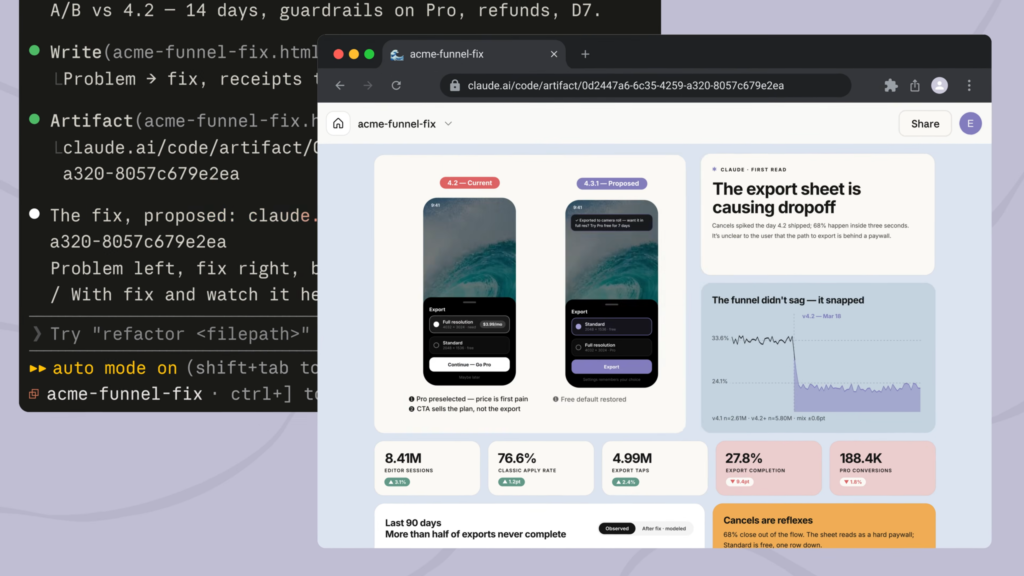
Anthropic has extended its Artifacts feature to Claude Code, enabling development teams to share live web pages directly from coding sessions. Previously introduced in the Claude chat interface, this capability allows users to transform session outputs into interactive pages that reflect the full context of the work, including code, connected tools, and chat history. When the underlying content changes, the displayed page updates automatically at the same URL while maintaining a version history. Users can request these artifacts during a session, receiving a browser link or desktop app access to share via the application header. The feature is currently available as a beta for Claude Team and Enterprise customers, supporting both the command line interface and the desktop application.
This development matters because it bridges the gap between internal development workflows and external stakeholder communication. By generating visual representations of code and architecture, teams can conduct PR walkthroughs, review incident timelines, or present license audits without requiring non-technical members to navigate complex repositories. The automatic updates ensure that stakeholders always view the current state of a project, reducing confusion caused by outdated documentation. Furthermore, the default privacy settings and admin controls ensure that sensitive code remains secure within authenticated organisational boundaries, making it a viable tool for collaborative enterprise environments.
- Claude Code now generates interactive web pages from coding sessions that update automatically when code changes.
- Artifacts support use cases ranging from PR walkthroughs to architecture overviews for both technical and non-technical audiences.
- Access is restricted to authenticated organisational members by default, with administrators controlling roles and retention policies.