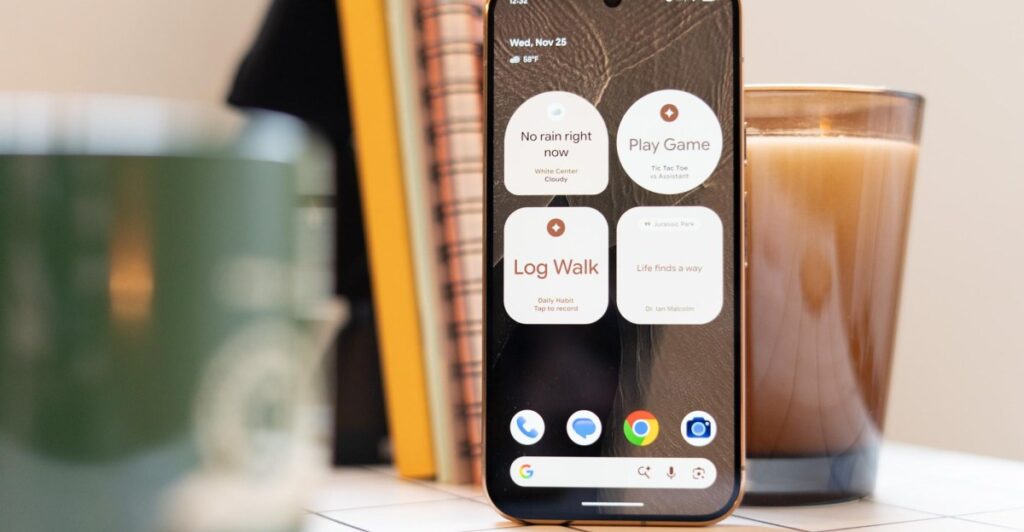
Google announced the ability to create custom widgets using AI at I/O in the spring. The feature is called Create My Widget and it allows users to generate interactive home screen elements through natural language prompts. A user testing the tool on a Pixel device found that while the system could produce a calendar widget, it failed to generate a real-time bus arrival tracker despite the user’s specific request. The AI struggled to access live location data or integrate with transit APIs without manual configuration. This limitation highlights a gap between conversational prompts and the complex data requirements needed for functional utilities. The tool currently relies on pre-defined templates rather than building custom logic from scratch.
The actual significance lies in the distinction between decorative elements and functional tools. Users expect AI to bridge the gap between abstract requests and working applications, but the current implementation restricts output to static or semi-static designs. This approach prevents the creation of dynamic widgets that pull live data without developer intervention. Consequently, the feature serves as an experiment in generative UI rather than a replacement for traditional widget creation. It demonstrates potential for rapid prototyping but falls short of delivering immediate, data-driven solutions for daily tasks.
- Generated widgets lack real-time data integration.
- Users must manually configure app connections.
- Current output is limited to static templates.